Staff Reporter
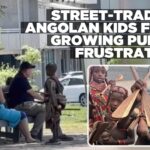
THE initial sympathy towards Angolan minors who roam the streets of urban and peri-urban centres of Namibia selling wooden handicrafts is fading away gradually, with many people now labelling them “a nuisance.”
Earlier this year, former president Hifikepunye Pohamba said that the presence of such kids on the streets of Namibia is tarnishing the country’s image. He urged Angolan President João Lourenço to intervene.
Previous attempts to solve the problem by deporting them failed. The kids and their female parents return to Namibia immediately after being dropped at the border.
They mostly sell wooden products such as traditional cups, knobkerries, and spurtles, but also sell okati kokutimbifa (a stick to help produce an erection).
“That is blatant child abuse when a child of six to seven years goes around marketing medicine for erectile dysfunction, something he or she does not fully understand,” said Jonas Nghilunanye, himself a street vendor at Oshakati.
When you encounter them — mostly at the parking lots of shopping malls — you really have only two options: either buy from them or donate; otherwise, you would be subjected to a prolonged explanation as to why you ought to give him or her at least N$1. He or she needs to buy bread. Or a cake. He or she is very hungry.
Chances are, however, that you don’t even understand what he or she is saying to you, since he or she speaks a little-known dialect spoken only in Angola’s southern provinces of Namibe, Huila, and Cunene.