
Staff Reporter
THE Ministry of Environment and Tourism has announced that it has authorized the export of 42 live white rhinoceroses of Namibian origin from a Namibian private farmer to the USA.
Romeo Muyunda, spokesperson for the Ministry of Environment, clarified the misconceptions that may have arisen from previous reports about the export of the rhinos.
“We wish to point out and make it clear to the public that the rhinos being sold are not government-owned but privately owned. In Namibia, the law allows any private person to buy and sell white rhinos, provided it is in line with the law. Only black rhinos are strictly owned by the government in Namibia,” Muyunda said.
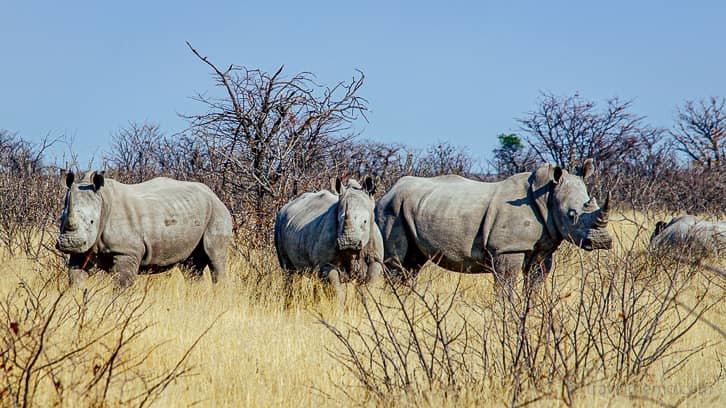
He added that Namibian law, in its current state, does not restrict such transactions.
“However, the Ministry is concerned by the high interest in sending white rhinoceroses from Namibia to the United States of America, particularly for breeding purposes. We have also said with concern that individuals are importing live white rhinos from South Africa to Namibia with the sole aim of further exporting them to the USA for breeding purposes. South African laws do not allow such exports, and Namibia is being used as a conduit. However, with the recently issued permit for 42 live rhinos, all are of Namibian origin, as proven by DNA analysis.
It is our conviction that the export of live white rhinoceroses outside their natural range, if not well managed, will be detrimental to the conservation of this species,” Muyunda said.
Moreover, he said that the Ministry sees no conservation value in ex situ conservation efforts.
“In line with the Ministry’s position, and in consultation with Namibian private white rhinoceros owners, a notice will be published in the Government Gazette soon to better regulate the export of live white rhinoceroses outside their natural range in the future.
The population of Namibia’s white rhinos is included in Appendix II for the exclusive purpose of allowing international trade in live animals for in-situ conservation only, within their natural and historical range in Africa. However, if the export is outside the natural and historical range, it will be treated as species listed in Appendix I, which makes provision for the trade to be regulated accordingly, and the species should not be used for commercial purposes. Therefore, the trade in question is being conducted under Appendix I and is in full compliance,” Muyunda said.