Staff Reporter
URANIUM One, a Russian company exploring for uranium in the Omaheke Region, has invested heavily in the community around which its explorations are taking place, spending millions to uplift the socio-economic circumstances of the residents.
Riaan van Rooyen, the Communications Consultant for Uranium One, said that the company has already started to invest heavily into the upliftment of the Leonardville community, even though the actual mining is slated to only start a few years from now.
“So far Uranium One has repaired the Leonardville police vehicles, donated money to the local farmers union, provides food for the learners of Noasanabis Primary School, is in the process of constructing a modern kitchen and a roof to provide shade and create an area where the learners can enjoy their meal in dignity, have kitted out the one soccer team (sponsorship for traveling and participation to continue),” van Rooyen summarised.
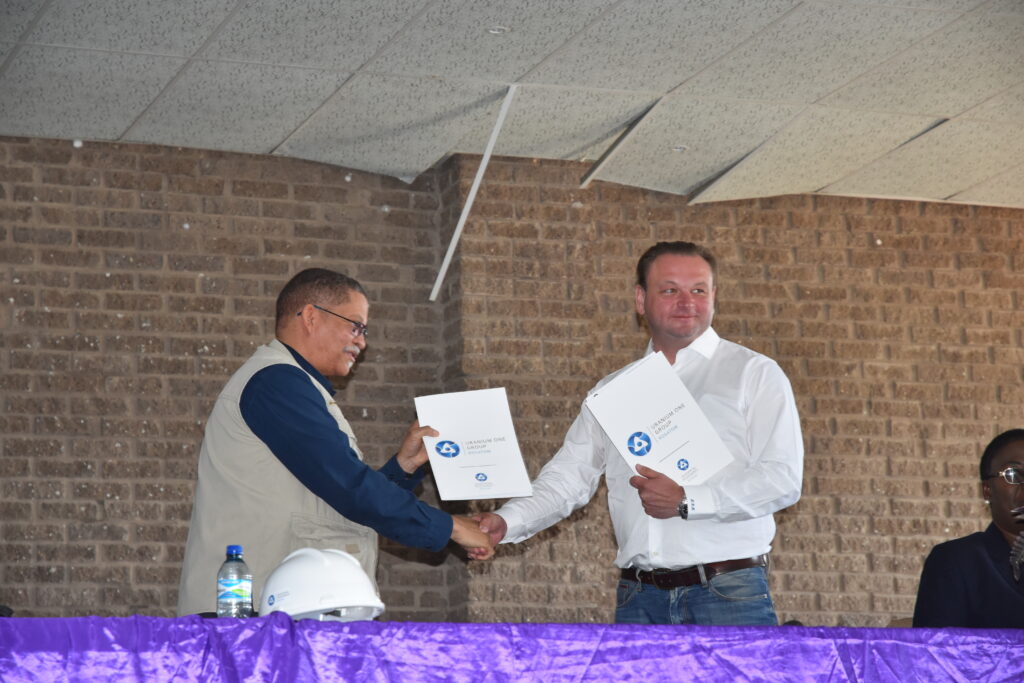

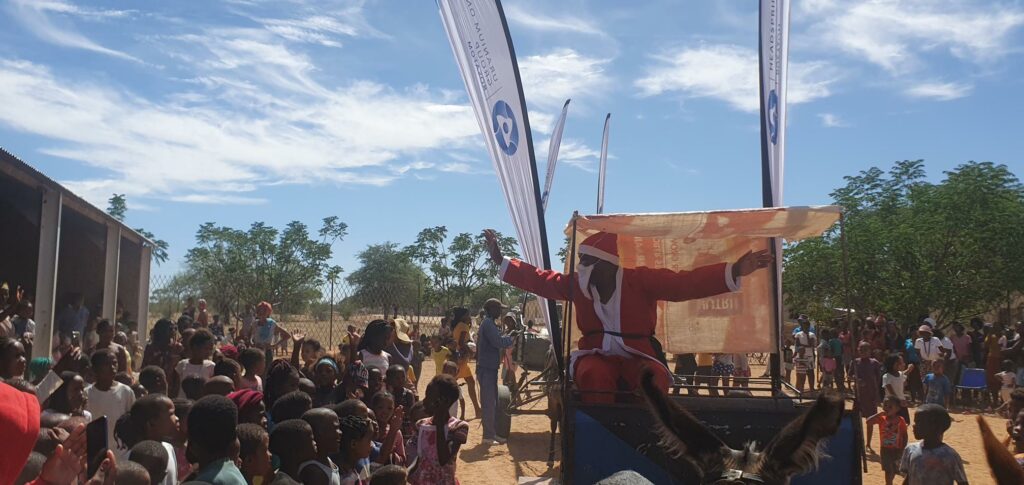
He added that the company also held a Christmas Festival in 2022 and is sponsoring the career fair in Leonardville as well as in Gobabis. A donation of a double cab vehicle was also made to the Ministry of Health and Social Services for a medical outreach programme for the Omaheke Region.
He added that all these Corporate Social Responsibility (CSR) activities were done over and above the payments that were made to farmers for exploring on their farms. In one instance, a farmer received cash and assistance of N$5.1 million in three years while exploration was done on his farm.
Many more educational and upliftment programmes are planned for Leonardville, of which most will come to fruition in 2023-2024.
Giving a background of the mining companies in other countries, van Rooyen used the Karatau Uranium In-Situ Recovery mine in Kazakhstan as an example of Uranium mine’s community upliftment success stories.
“The Turkistan Region in Kazakhstan was a desperately poor region which survived on subsistence farming. Since the discovery of uranium in the region, the region has shown exceptional economic growth and social upliftment,” van Rooyen said.
He noted that the Suzak village, around 60km from Karatau mine, was a village of extreme poverty.
“After the uranium mines have started, the village has been growing constantly and today there exists a great symbiotic relationship between Karatau mine and the Suzak residents. The mine buys all the produce they need, to feed the mine workers three proper, nourishing meals per day from local farmers. One of the farmers has, as a consequence, grown from being a subsistence farmer to a commercial farmer with 800 camels, 400 cattle, over a 1 000 sheep and about 400 horses. Other farmers supply the mine with fresh produce like vegetables, fruit, milk, oats, eggs and butter. So, by supplying the mine directly, the middle man is cut out and a market for agricultural products are created on the farmers’ doorstep,” van Rooyen said.
He concluded that this model of a symbiotic relationship with the community is also what is planned for Namibia, once the in-situ recovery (ISR) mine of Uranium One becomes a reality in Namibia.
“The Omaheke Region will see a transformation that will be of astounding proportions. The planned mine in Namibia will employ at least 600 employees, with each an above-average monthly income, and, therefore, another additional 4 200 secondary jobs will be created. A market for local farmers will be created, which will maximise their profits, as the market will be close to their farms. Without the planned CSR contributions, one looks at a conservative monthly economic injection of at least N$51 000 000 into the region, of which Leonardville will be the main hub. All this could become reality, without harming the ground surface, or the precious water resource,” van Rooyen stressed.