Staff Reporter
PRESIDENT Hage Geingob at the Opening of the 2022 Legal Year on Thursday expressed concern about Namibian court cases not being finalized promptly.
Geingob in his statement made general observations on aspects that specifically affect the legal profession, the judiciary and the overall administration of justice in the country. The president said there has been a consistent outcry in recent years that court rolls are full, and that matters brought before the courts take a long time to be finalised.
He noted that the Caprivi Secessionists matter is a case in point. “While I am not privy to the reasons for such a long delay, it brings into sharp focus the principle of ‘justice delayed is justice denied’,” Geingob said.
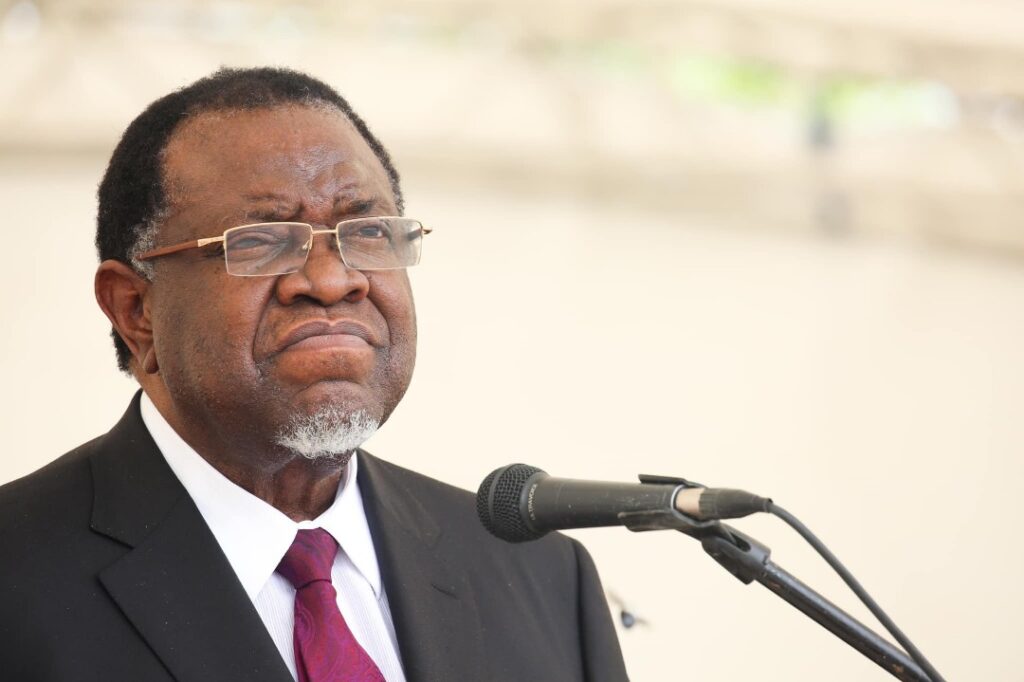
He further implored role-players in the administration of justice to ensure equitable access to justice and speedy finalisation of matters before the courts.
“It is clear that the escalating volumes of uncleared backlog contribute to negative public perceptions and experiences. This in turn clouds the overall image of the administration of justice which creates a lopsided image of the rule of law in the country,” the president said.
“I am cognisant of budgetary constraints the Judiciary, Legal Aid and the Prosecuting Authority face,” Geingob said.
He stated that budgetary constraints are mostly experienced in filling critical vacancies, especially in the lower courts, increasing the pool of legal aid lawyers and providing, upgrading or renovating court buildings and facilities.
Geingob noted that given the economic outlook this year, with projected marginal growth, the fiscal space remains seriously constrained.
“We must therefore continue to do more with less. Despite rising needs and demands and the pressure to increasingly perform, the judiciary has reasonably always heeded this call. I thank you for doing your best under very trying circumstances,” Geingob said.
Also speaking at the occasion, Chief Justice Peter Shivute highlighted the challenges faced by the judicial system and noted that fewer cases were completed by courts compared to previous years, because at the height of the pandemic court personnel would take off sick or go into isolation or quarantine.
Shivute further noted that all national institutions have a constitutional responsibility to ensure gender balance in appointments and stated that in the magistracy there is a remarkable improvement. He said female magistrates constitute over 55% of the total strength of the magistracy.
“At the High Court, we have lately experienced an improvement in the female to male ratio and women now represent 42% of the High Court bench. There are no female judges in the Supreme Court. In the past, we had relied on acting female judges from within the SADC region but due to their commitments at home it was no longer possible for us to retain their services. The issue has been the subject of intense debate in the Judicial Service Commission and we will work towards addressing the imbalance,” Shivute said.