
Maria David
PRELIMINARY findings of an assessment carried out following the 2012/13 drought situation in Namibia estimates that over 330 000 people are food insecure, while over 447 000 people are moderately food insecure and over 859 000 people are food secure.
Food insecurity is said to be more prevalent in the north-western regions mainly due to prevailing chronic poverty and droughts.
Deputy Minister of Agriculture, Water and Land Reform, Anna Shiweda, during the recent commemoration of World Food Day in Walvis Bay, said addressing hunger, malnutrition and poverty remains a high priority on the agenda of the government.
Shiweda stated that government is implementing programmes and projects to address food and nutrition insecurity, as well as poverty.

COMMEMORATION: World Food Day was celebrated in Walvis Bay recently. Photo courtesy of Ministry 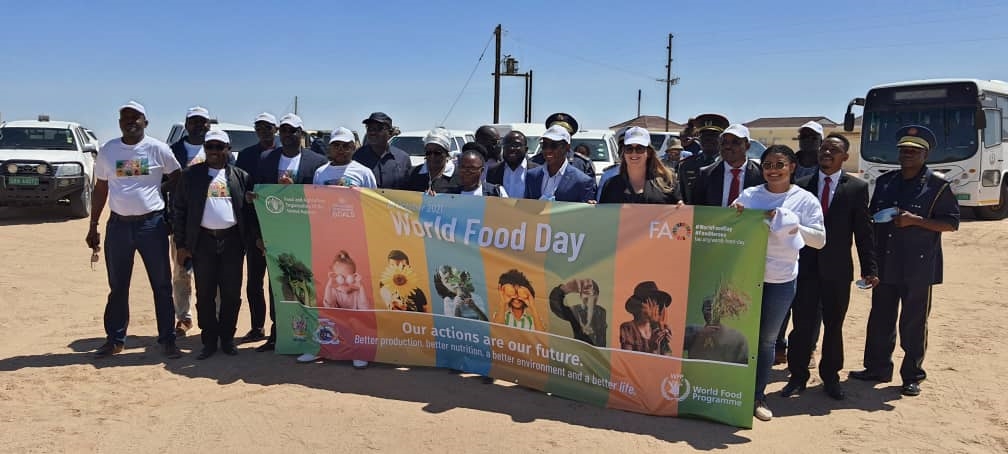
COMMEMORATION: World Food Day was celebrated in Walvis Bay recently. Photo courtesy of Ministry 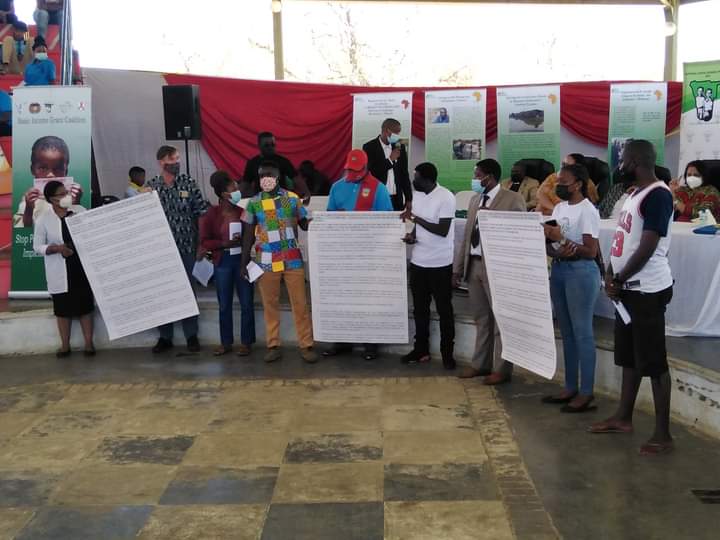
COMMEMORATION: World Food Day was celebrated in Walvis Bay recently. Photo courtesy of Ministry 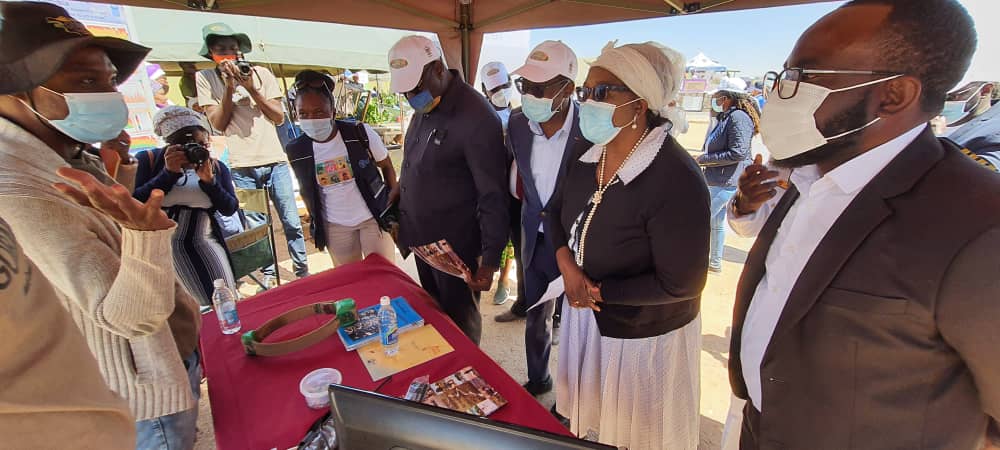
COMMEMORATION: World Food Day was celebrated in Walvis Bay recently. Photo courtesy of Ministry
She added that 70% of Namibians depend on the agriculture sector supports their livelihoods.
“This year, we are commemorating the World Food Day under a difficult situation of the Covid-19 pandemic. In addition to its drastic impact to human health, the pandemic is having a devastating impact on the global economy and national economies,” she said.
Shiweda further said that the pandemic affected all sectors across the economies, including the agriculture sector.
It is for this reason that governments, including that of Namibia, have put restrictions in place to contain the spread and to mitigate the impact of Covid-19.
In the case of the agriculture sector in Namibia, rescue and mitigation intervention measures were implemented in order to ensure food security during the difficult period.
Food and Agriculture Organisation (FAO) representative in Namibia, Farayi Zimudzi, said about 81% of the Namibian population dependent on a semi-arid environment which constitutes 50% of the total land area.
“The theme calls for the transformation of agri-food systems to ensure that everyone everywhere has access to enough, affordable, safe and nutritious food to lead active and healthy lives,” she said.
She said with more than 3 billion people – which is almost 40% of the world’s population – who cannot afford a healthy diet, and obesity on the rise in all regions, relevant stakeholder must do their best to produce food, and thus contributing to zero hunger.
Zimudzi stated that this exposes the agri-food system in the country to various shocks and threats such as climate risks and commodity price fluctuations, which in turn pose a threat to food security in the country, placing the lives and livelihoods of many Namibians in jeopardy.
“This predicament draws attention towards the need to transform Namibia’s agri-food systems and make it more resilient to the effects of climate change and other shocks,” she said.
Additionally, Zimudzi stated that there is also an increasing need to diversify the agricultural systems to enable them to adapt to climate change and disasters.
Even before COVID-19 shone a spotlight on the vulnerability of the world’s agri-food systems, she said, hundreds of millions of people worldwide were afflicted by hunger and that that number has increased in the last year to 811 million.
“This is despite the fact that the world is producing sufficient food to feed all of us. This situation is unimaginable and certainly difficult to accept,” she said.
Erongo governor, Neville Andre, said although the food and nutrition security situation has improved considerably in the last two decades since independence, it is still a top priority for the government.
Andre explained that the main contributing factors to food insecurity and under-nourishment is the high poverty rate, inequality of income distribution, and the incidence of HIV/AIDS.
“Other factors specific to rural areas include amongst others, chronic drought and consequent water shortages resulting in death of animals and crop failures, widespread soil erosion and land degradation,” he said.
He added that they have been on the receiving end as they had more than seven years of drought in the Daures Constituency and Utuseb.
This year’s World Food Day is being commemorated under the theme, “Our actions are our future. Better production, better nutrition, a better environment and a better life.”