Staff Reporter
LIVE cattle exports increased by 47.4% during the first half of 2026 compared with the corresponding period in 2025, while live sheep exports rose by 58.1% year on year over the same period.
This was announced by the Minister of Agriculture, Inge Zaamwani, during the 22nd Aminuis Annual Agricultural and Industrial Show in the Omaheke Region, held under the theme “Cultivating a Legacy of Excellence.”
The minister revealed that, in the cattle sector, 126,672 head were marketed during the first half of the year, compared with 122,865 head during the corresponding period in 2025. On a year-on-year basis, she noted, 23,249 animals were marketed, representing a 10.8% increase on the 20,985 recorded during the same period in 2025.

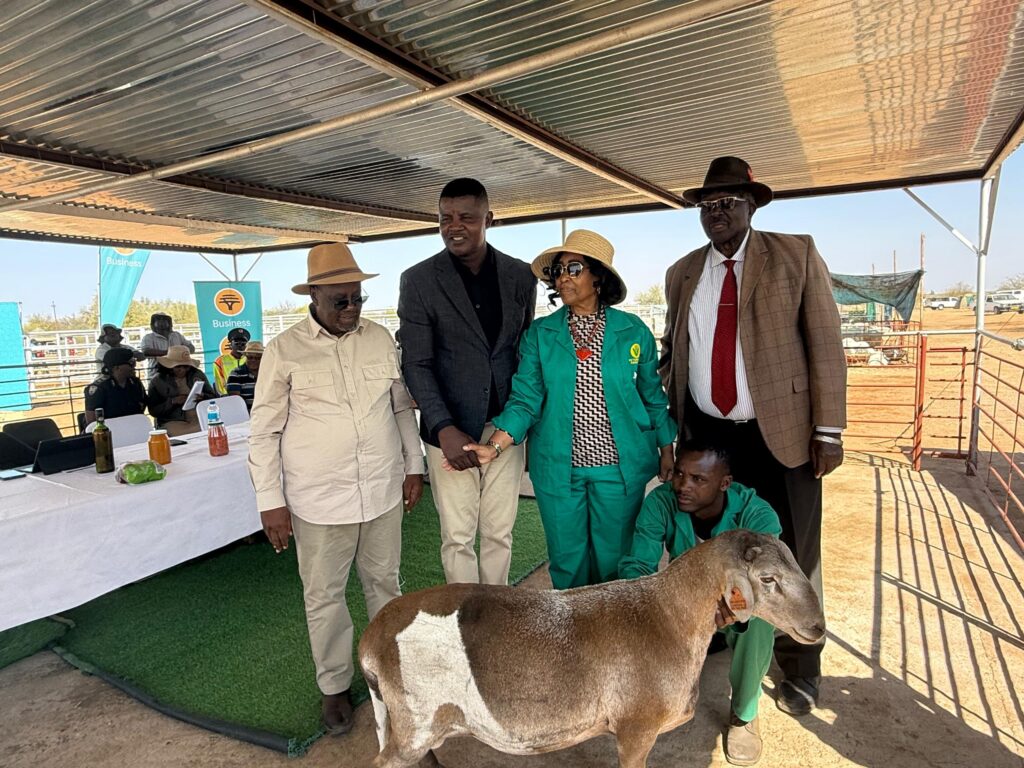
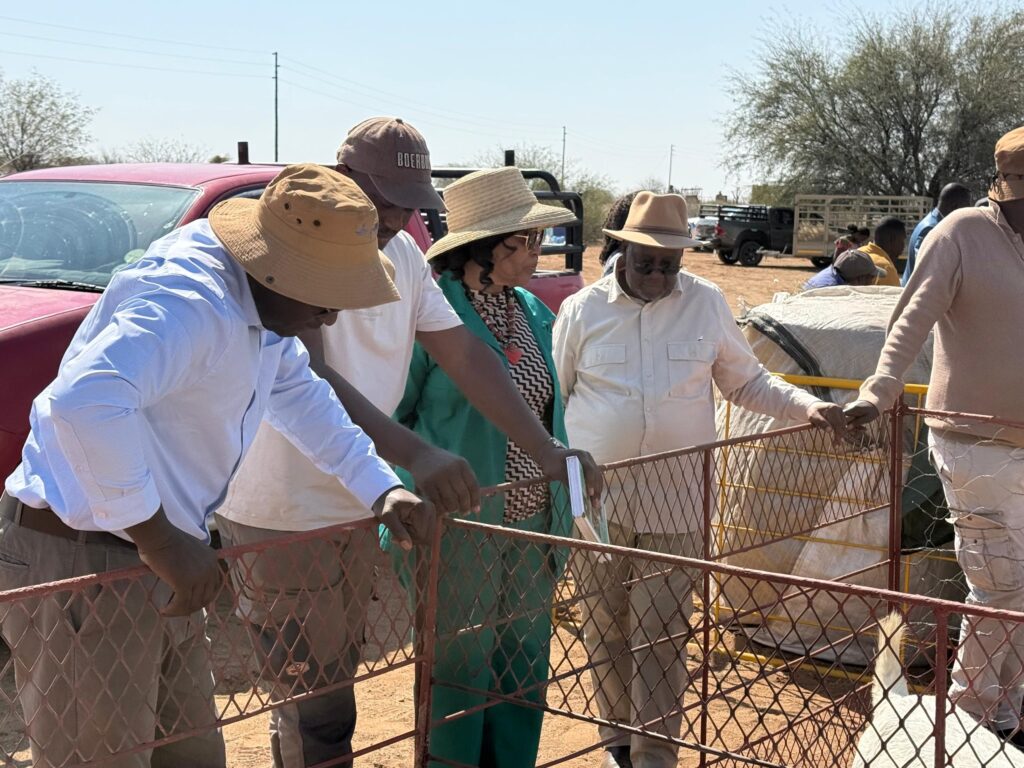
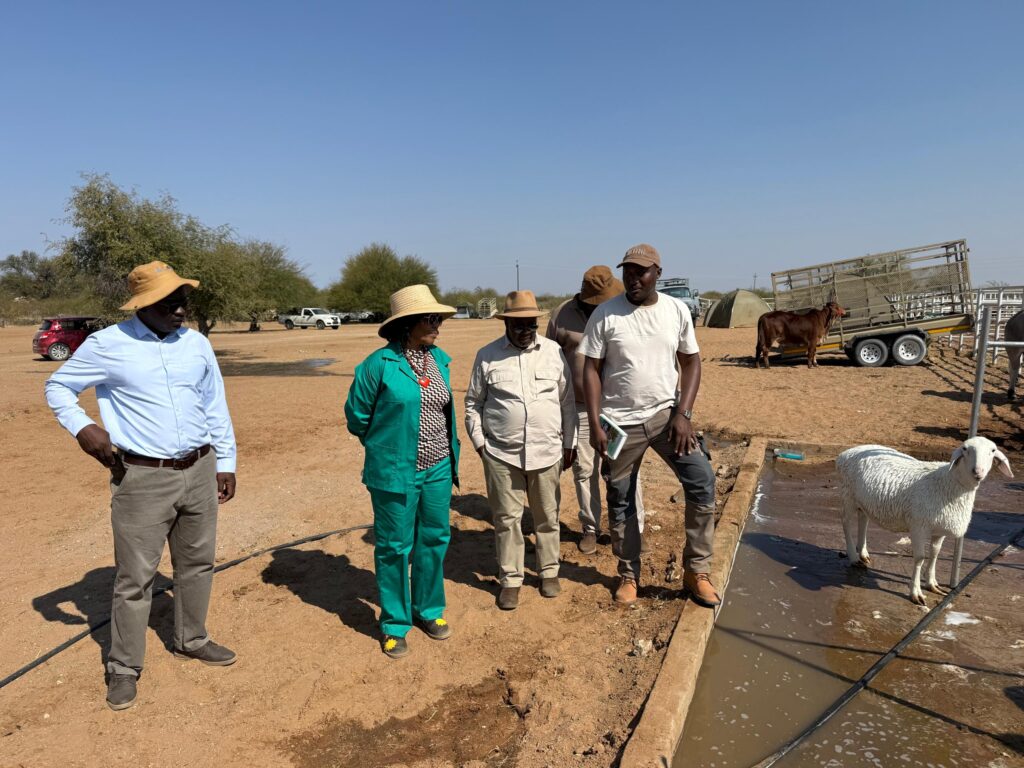
LIVESTOCK SECTOR REMAINS STRONG: Scenes from the 22nd Aminuis Annual Agricultural and Industrial Show. Photos: Ministry of Agriculture.
“Live exports rose by 47.4% to 39,083 head, up from 26,523 a year earlier, while year-on-year live exports advanced by 55.8% to 7,513 head. Export-approved abattoirs also recorded a 12.5% increase in throughput, reaching 13,151 head in June 2026, a clear signal of the confidence the market places in our producers and our pricing,” Zaamwani said.
She also revealed that, in the sheep sector, marketing reached 447,299 head during the first half of 2026, a 39.8% increase on the 320,015 head recorded during the corresponding period of 2025. The minister added that June marketing increased by 44.3% year on year to 92,311 head.
“Slaughter activity at export-approved abattoirs rose by 37.9% to 42,421 head, from 30,762 a year earlier, and live sheep exports increased by 58.1% year on year to 77,724 head, with South Africa absorbing the majority of that volume and Angola, Zimbabwe and Tanzania together accounting for the remainder,” Zaamwani said.
She further revealed that lamb and mutton exports increased by an estimated 60.5%, from 215,610 kg in 2025 to 346,109 kg in 2026, with South Africa, Norway, the United Kingdom, Botswana and the Netherlands as the principal markets.
“These figures matter because, without the sheep and cattle farmers gathered here today, Namibia could not have recorded this performance. Our livestock sector supports close to 70% of our population, with the communal sector covering some 41% of our total land area and home to roughly 60% of our people. Aminuis is not a marginal contributor to that story; it is one of its foundations,” Zaamwani said.
She emphasised that the Omaheke Region has a comparative advantage, as it has extensive sandveld grazing that is well suited to both small and large stock, a strong tradition of livestock husbandry, and growing crop diversification. She also highlighted the region’s proximity to the Trans-Kalahari Corridor and the Botswana border, noting that this opens regional trade routes beyond South Africa.
“The opportunity before you is not only to continue producing at the primary level, but to move higher up the value chain into feedlotting, hide and leather processing, wool handling, packaging and logistics — areas where value is added and retained closer to home rather than exported as a raw commodity. As our beef, hides and leather exports show, value addition is where the real growth is happening,” Zaamwani continued.
She noted that Namibia’s export markets are also expanding and urged farmers to take advantage of these opportunities by preparing accordingly.
“Beyond our traditional partners, interest from markets such as China is growing for Namibian beef and livestock products. Taking advantage of this requires preparation: consistent animal health record-keeping, traceability, and compliance with the sanitary and phytosanitary standards our trading partners require. I encourage producers, and particularly younger farmers entering the sector, to engage our extension and veterinary services early so that Aminuis is ready to supply these markets when the opportunity is confirmed, rather than catching up after the fact,” Zaamwani added.