Staff Reporter
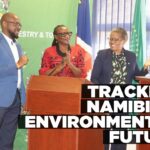
ENVIRONMENT Minister Indileni Daniel has launched a new Multilateral Environmental Agreements (MEA) Monitoring and Reporting Platform aimed at improving access to environmental information and supporting national planning, research and decision-making.
The platform was launched at the University of Namibia’s Main Campus in Windhoek and serves as a central repository for environmental data that can be used by government, researchers and development partners.
Daniel said the platform will help stakeholders assess progress, identify gaps and determine areas requiring urgent intervention.
“It will help the government and partners understand where progress is being made, where gaps remain and where action is most urgently required,” she said.
The platform was developed with technical support from the University of Namibia to enhance public access to environmental information and strengthen policy development. It was established through the Ministry’s Namibia Integrated Landscape Approach for Enhancing Livelihoods and Environmental Governance to Eradicate Poverty (NILALEG) Project, with the United Nations Development Programme (UNDP) as a technical partner and funding from the Global Environment Facility.
The launch was attended by UNDP Namibia Resident Representative Amanda Serumaga, UNAM Vice Chancellor Professor Kenneth Matengu, NILALEG Project Manager Jonas Nghishidi and UNAM’s Professor Simon Angombe, among others.
The MEA Division serves as Namibia’s national focal point for several international environmental agreements, including the Convention on Biological Diversity (CBD), the United Nations Framework Convention on Climate Change (UNFCCC) and the United Nations Convention to Combat Desertification (UNCCD).
The division is responsible for supporting the implementation of environmental policies and legislation related to biodiversity, climate change and sustainable land management, coordinating related programmes, raising awareness and ensuring that Namibia meets its international reporting obligations.
The NILALEG Project focuses on reversing environmental degradation and promoting sustainable livelihoods through an integrated landscape approach that balances conservation, agriculture and other land uses.
The project recognises that environmental challenges in Namibia are closely linked to livelihoods, with many communities depending directly on natural resources for survival. It aims to strengthen the management of rural landscapes to address environmental degradation, protect biodiversity and support sustainable economic development.
Officials said the new platform will contribute to Namibia’s ability to meet global environmental commitments while providing a stronger information base for national development planning.
Photo: Ministry of Environment, Forestry and Tourism