
Staff Reporter
NAMIBIA will host matches at the ICC Men’s Cricket World Cup for the first time after Windhoek was confirmed as one of 12 host venues for the 2027 tournament, which will be jointly staged by South Africa, Zimbabwe and Namibia under the theme “Three Nations, One Heartbeat.”
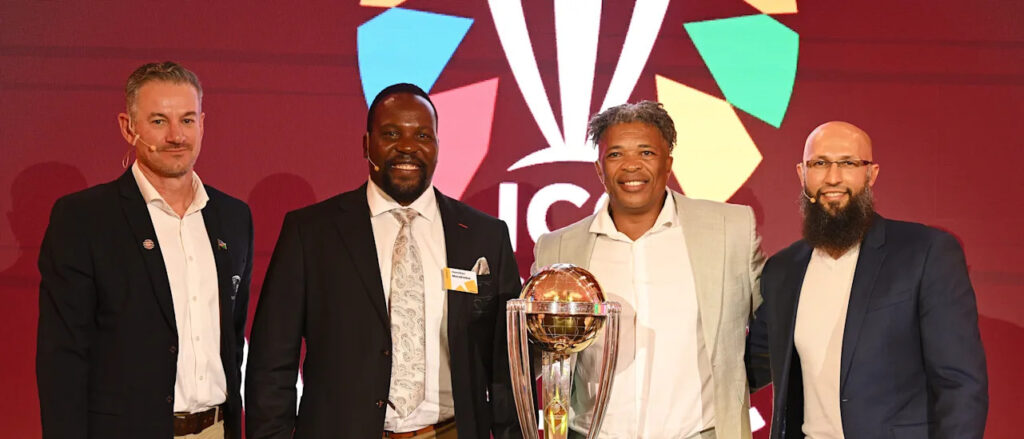
The International Cricket Council (ICC) unveiled the host venues and official tournament brand during a launch ceremony in Johannesburg, marking the return of the men’s 50-over Cricket World Cup to Africa for the first time in 24 years.
While South Africa and Zimbabwe previously co-hosted the 2003 Cricket World Cup, Namibia will make history by staging its first senior ICC tournament. Both Namibia and Zimbabwe also hosted matches during the ICC Under-19 Men’s Cricket World Cup earlier this year.
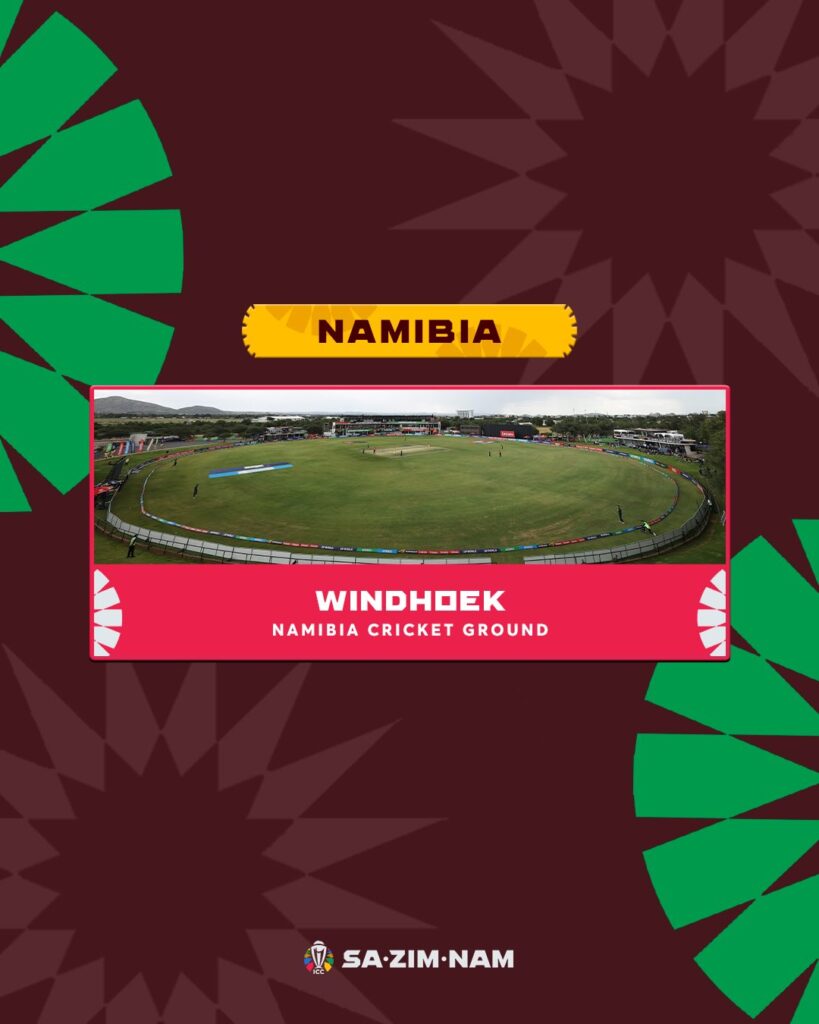
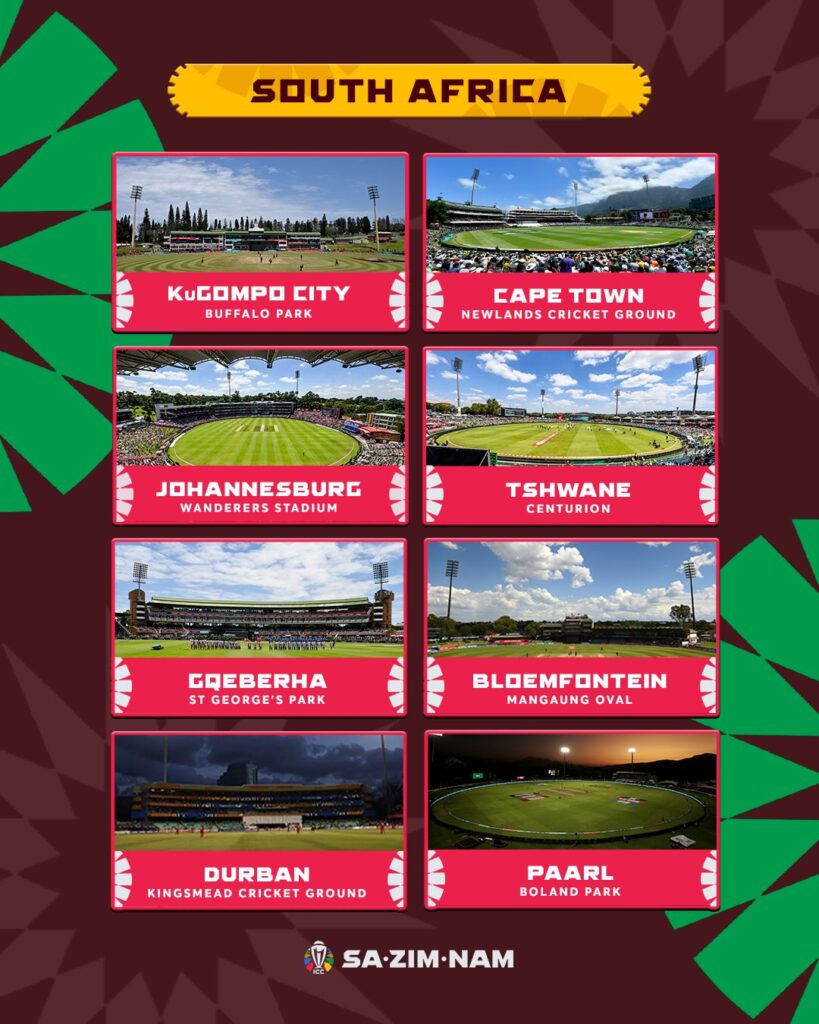
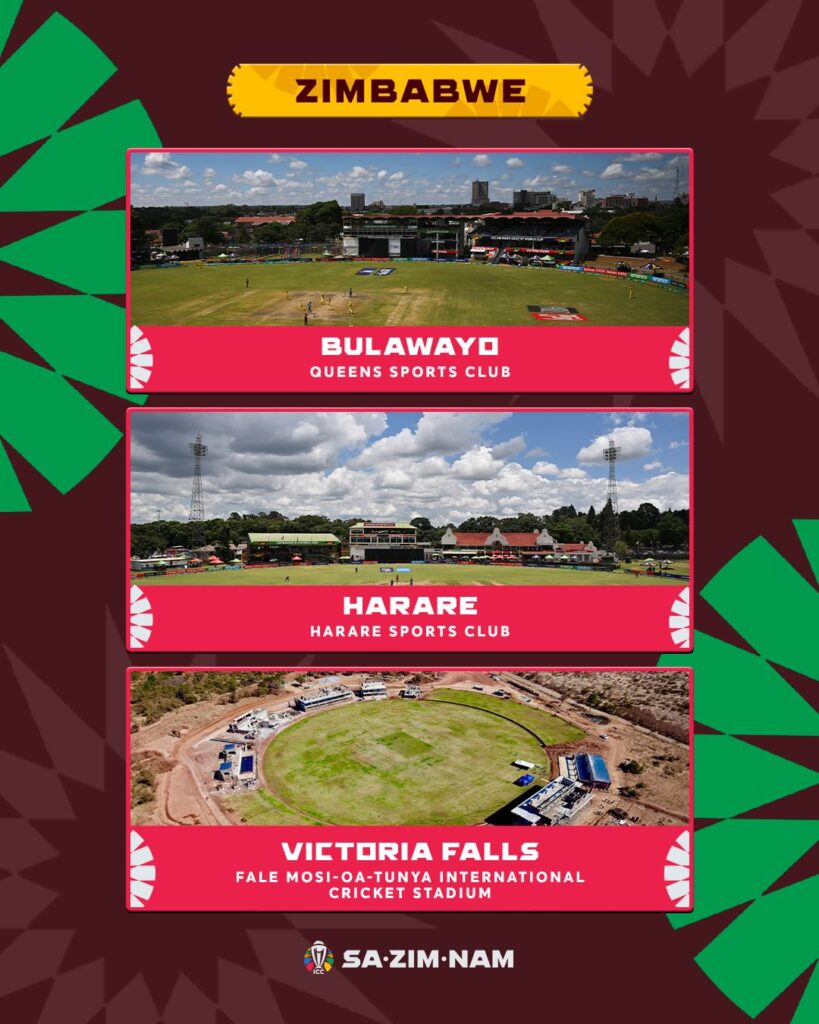
Photos: International Cricket Council (ICC)
The other host venues include eight stadiums in South Africa — Wanderers Stadium (Johannesburg), Centurion (Tshwane), Newlands Cricket Ground (Cape Town), Kingsmead Cricket Ground (Durban), St George’s Park (Gqeberha), Mangaung Oval (Bloemfontein), Boland Park (Paarl) and Buffalo Park (KuGompo City) — as well as Harare Sports Club (Harare), Queens Sports Club (Bulawayo) and Fale Mosi-oa-Tunya International Cricket Stadium (Victoria Falls) in Zimbabwe.
The tournament, which will feature the world’s top 14 teams, returns to Africa after South Africa, Zimbabwe and Kenya jointly hosted the 2003 Men’s Cricket World Cup.
The 2027 edition will be played under the brand “Three Nations, One Heartbeat”, reflecting the hosts’ shared spirit of optimism, diversity and community. The tournament also embraces the African philosophy of Ubuntu — “I am, because we are” — and the campaign theme “Make the Circle Bigger,” celebrating unity, cultural diversity and the growth of cricket across the continent.
ICC Chair Jay Shah described the announcement as a major milestone on the road to the tournament.
“This marks an exciting milestone on the road to the ICC Men’s Cricket World Cup 2027. The unveiling of the host cities and the tournament brand signals the start of a journey that will unite fans around the world and build anticipation for one of our sport’s biggest global events.
“The return of this prestigious tournament to Africa after 24 years is a landmark moment for cricket. We are confident that South Africa, Zimbabwe and Namibia will deliver an unforgettable event, showcasing the warmth, passion and rich diversity that make this region truly unique,” Shah said.
ICC Chief Executive Officer Sanjog Gupta said the event would celebrate both cricket and Africa’s rich cultural heritage.
“The ICC Men’s Cricket World Cup represents the legacy and spectacle of limited-overs cricket. It also marks the return of the pinnacle event to Africa after more than two decades and will celebrate a continent defined by extraordinary people, vibrant cultures, breathtaking experiences and a deep love for sport.
“The vibrant brand unveiled today reflects the energy, ambition and spirit of the event, while every host city offers fans a unique opportunity to experience the warmth and diversity that make Africa truly memorable,” Gupta said.
The launch was attended by several cricketing greats, including South Africans Graeme Smith, Makhaya Ntini, Hashim Amla, Temba Bavuma and Kagiso Rabada, Zimbabwe’s Hamilton Masakadza, and Namibia’s Rudolf Jansen van Vuuren.
The tournament’s visual identity is inspired by the traditional African wire bowl and incorporates colours representing the three host nations, including Namib Dune, alongside Zimbabwe Chilli, African Root, Fynbos Pop, Harare Dawn and Two Oceans.
The 2027 World Cup will feature 57 matches under a new three-stage competition format designed to increase competitiveness.
A Super Series involving the teams ranked 12th to 14th will determine the final qualifier for the main tournament. The remaining 12 teams will then compete in two groups of six, with the top teams progressing to a Super 7 stage before the semi-finals and final.