Staff Reporter
THE Ministry of Health and Social Services has dismissed claims that it has increased public healthcare tariffs by aligning them with those of the Namibia Association of Medical Aid Funds (NAMAF), stressing that it does not have the authority to determine or amend Public Service Employees Medical Aid Scheme (PSEMAS) tariffs.
“At the outset, it is important to clarify that the Ministry of Health and Social Services does not have the authority to determine or change tariffs for the Public Service Employees Medical Aid Scheme (PSEMAS). The authority to determine and approve PSEMAS tariffs falls strictly under the mandate of the Ministry of Finance,” the Ministry of Health’s Executive Director, Penda Ithindi, explained.
Ithindi noted that these tariffs have not been comprehensively reviewed for the past 11 years, despite significant changes in healthcare costs, service complexity and billing systems.
He added that the Ministry of Health implements regulations relating to the classification of state hospitals, the admission of patients to state hospitals, and the fees payable by patients at state hospitals, in accordance with the Hospitals and Health Facilities Act (Act No. 36 of 1994).
“The current tariff structure applied by the Ministry of Health and Social Services for services rendered to PSEMAS members and other medical aid beneficiaries has not been fully aligned with the tariff and coding frameworks used by PSEMAS, NAMAF and private healthcare providers,” Ithindi said.
According to him, this misalignment has resulted in inconsistent revenue collection, inadequate cost recovery for services rendered, administrative and billing inefficiencies due to differing coding systems, and reimbursement disparities between public and private healthcare providers.
“NAMAF serves as the regulatory and coordinating body for medical aid funds in Namibia and provides a standardised tariff and coding framework widely used by private healthcare providers and medical aid schemes, including PSEMAS. The Ministry of Health and Social Services references historical NAMAF tariff structures only as a technical basis for alignment and billing efficiency, not as a target for adopting its tariff structure,” Ithindi said.
He emphasised that the principle underlying the Ministry of Health and Social Services’ tariff proposals is to align these rates with PSEMAS tariffs and ensure they remain within, and do not exceed, PSEMAS funding levels at any point in time.
“All proposed tariffs, both for non-hospitalisation and hospitalisation services, are within and do not exceed PSEMAS tariffs. The tariffs are within PSEMAS funding levels and are significantly lower than NAMAF tariffs,” Ithindi said.
With regard to non-hospitalisation (outpatient) services, Ithindi explained that, while the basis for estimating the ministry’s non-hospitalisation tariffs is the 2014 NAMAF tariffs plus 20%, the actual tariffs do not exceed PSEMAS tariffs. This adjustment, he said, is intended solely for billing all private patients, not only PSEMAS patients.
He highlighted that these rates are 56% lower than the 2026 NAMAF tariffs, making public healthcare services about 44% more affordable than their private-sector equivalents. This approach, he said, ensures affordability while remaining within the approved PSEMAS budget over the medium term.
With regard to hospitalisation services, Ithindi said that the ministry’s tariffs are based on the 2017 NAMAF tariffs plus 20% and still fall within PSEMAS tariffs. He added that these rates equate to approximately 70% of the 2026 NAMAF tariffs, making public hospital services about 30% more affordable than equivalent private healthcare services.
“Deliberately basing Ministry of Health and Social Services tariffs on older NAMAF benchmarks, with a modest adjustment, is intended to ensure the tariffs remain within PSEMAS funding levels while promoting affordability for patients and medical aid schemes, the long-term sustainability of PSEMAS, and improved efficiency, transparency and consistency in billing and revenue collection,” Ithindi said.
He assured that public healthcare services for private patients remain significantly more affordable than those in the private sector and that the revised tariffs do not disadvantage PSEMAS members in any way. He also said the ministry is not aligning its tariffs with the 2026 NAMAF tariffs, adding that the adjustments are aligned strictly with the PSEMAS tariff framework and funding levels.
He explained that this exercise represents a long-overdue tariff realignment aimed at improving billing efficiency, strengthening cost recovery and ensuring the long-term sustainability of public health services while safeguarding affordability for patients.
“By way of illustration, for decades, the Ministry charged approximately N$600 per night for the admission of a private patient to a state facility. In contrast, private medical aid schemes generally reimburse around N$2,900 per night for the same admission in a private hospital. The revised public tariff of N$2,030 per night remains well within the reimbursement limits of PSEMAS and other medical aid schemes, meaning patients will not incur any out-of-pocket costs when accessing services at state facilities,” Ithindi said.
He emphasised that this adjustment ensures that public facilities receive a more appropriate level of reimbursement for services rendered to private patients, thereby enabling reinvestment in infrastructure, equipment and service quality across the public health system.
“Importantly, the revised tariff remains significantly lower than NAMAF tariffs, reaffirming the Ministry’s commitment to affordability and equity. The Ministry remains committed to transparent communication and equitable access to quality healthcare for all Namibians,” Ithindi added.
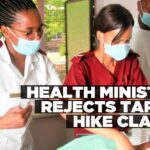
Picture for illustrative purposes only. Photo: WHO