


Staff Reporter
A TOTAL of 19 schools in the Zambezi Region have been affected by the floods, disrupting the education of 509 learners.
This was confirmed by Knox Otto Imbuwa, the Deputy Executive Director of Finance and Administration within the Ministry of Education. He revealed that learners from the affected schools have lost approximately two weeks of learning and will, therefore, be expected to make up for the lost time during the holidays.
“We’ve lost about two weeks of teaching and learning, now the remedial plan that we have to put in place is that the teachers and learners that are affected will have to undergo teaching and learning while others are on holiday. In other words, we have to extend their teaching hours, and possibly even their tuition days in order to catch up,” Imbuwa said.
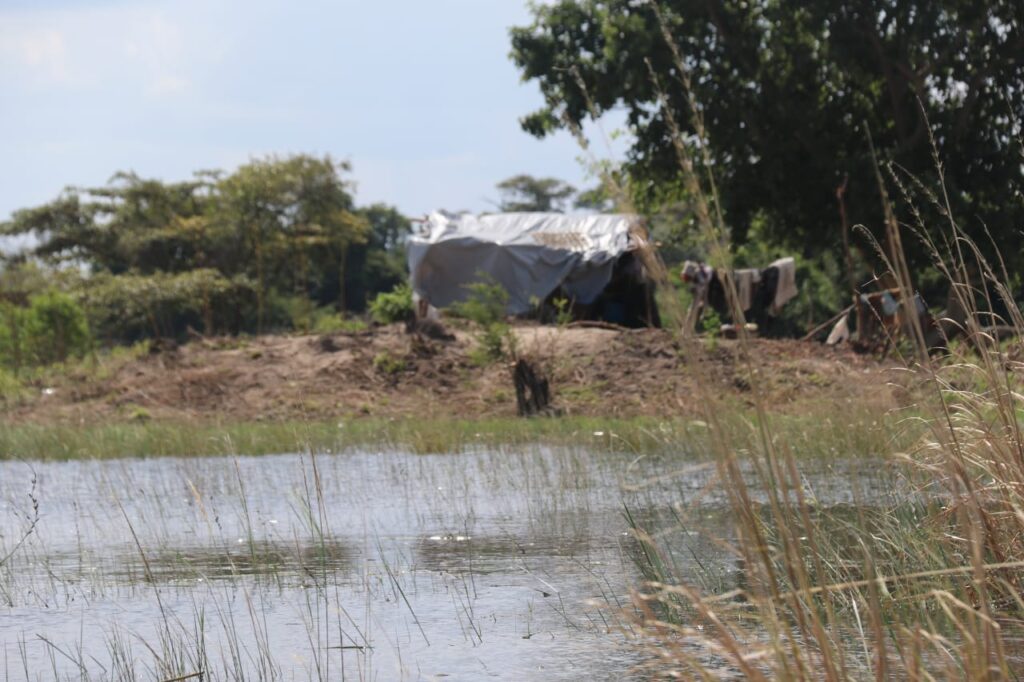
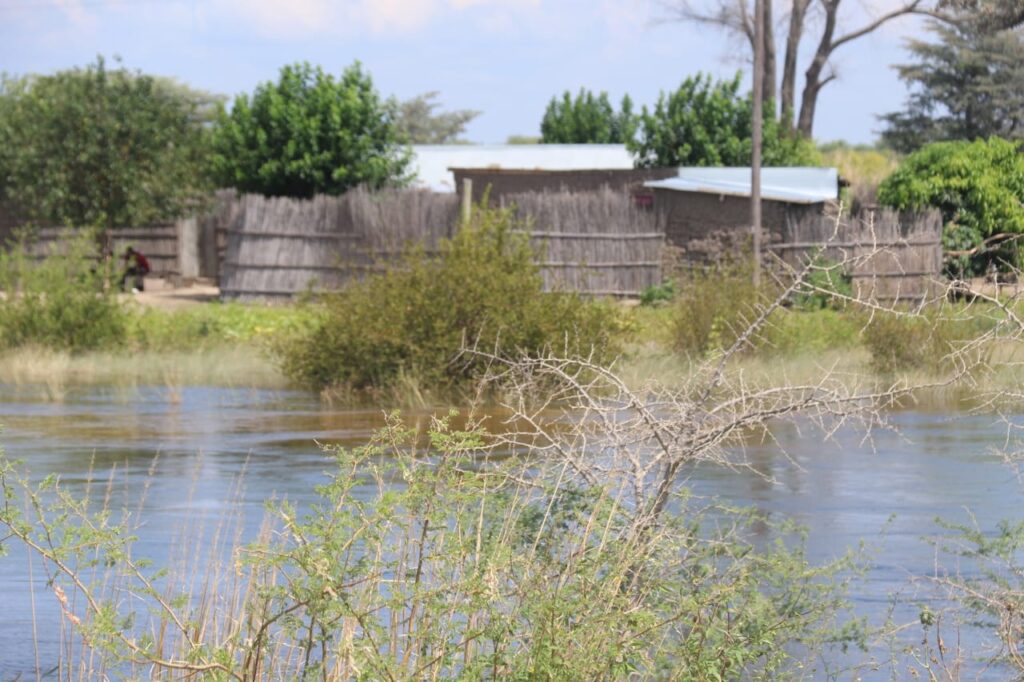
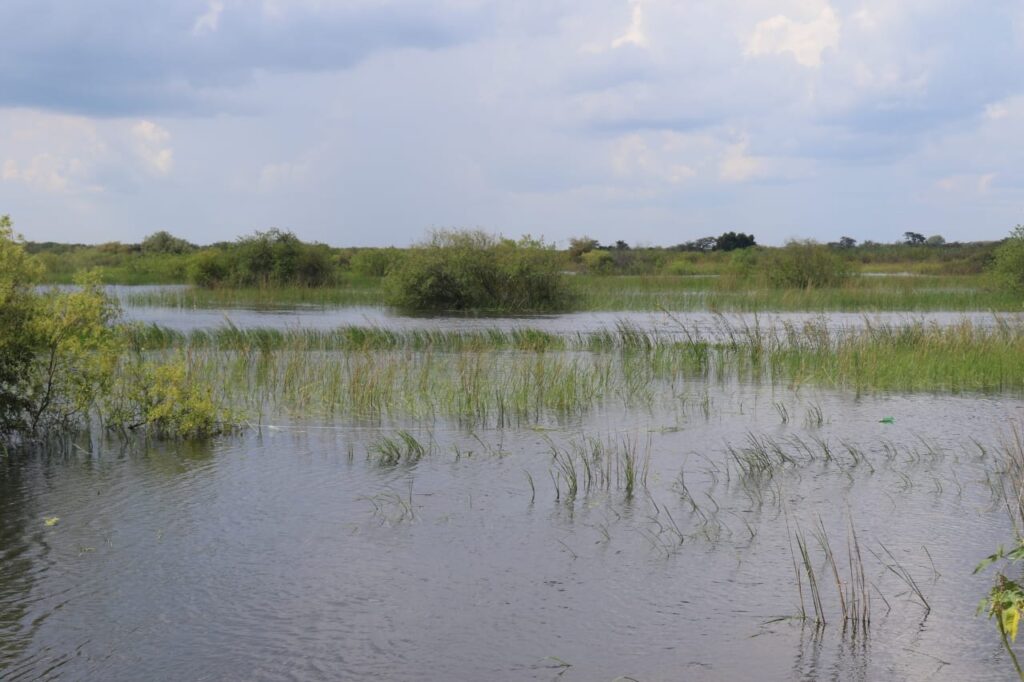
PERSISTING DESPITE THE FLOODS: Scenes from the flood-affected areas. Photos: Facebook (Office of the Prime Minister OPM_Namibia; Matengu Bayo Bahwile).
He highlighted that some schools have been completely submerged by the floods, while others are surrounded by water.
“The impact has been such that most of the learners who commute to schools are now unable to travel due to the flooded pathways. In other words, they cannot reach the schools, and teachers who were not on the premises have also been cut off. Given that much of our infrastructure is ageing, we will be able to determine the extent of the damage once the floods have subsided,” Imbuwa said.
He confirmed that the Ministry of Education has identified two key relocation sites to support the affected learners, specifically those from schools submerged by floodwaters. Some of these learners will be relocated to Luhonono, where they will attend Schuckmansburg Combined School, while others will be moved to Lusese. However, he emphasised that there are logistical challenges to consider.
“What we are faced with now are logistical problems, such as moving the furniture from these schools and ensuring that learners trapped in the villages can access education at the centres that have been identified,” Imbuwa revealed.
However, that’s not all: he also highlighted challenges related to providing meals for the relocated students. Nonetheless, he assured that efforts are underway to ensure the relocated learners have sufficient nutrition.
“And you know, situations such as these have quite some logistical challenges in the sense that you need to feed these learners that you are bringing to these sites. We have gotten assistance from the Regional Disaster Risk Management Support Line in terms of the supply of food to our learners. We also have in place the school feeding programme, where we are in contact with the suppliers to see if we can increase the quantities that we initially ordered from them to the normal school feeding programme. And we are fortunate that we now have a very state-of-the-art hostel at Schuckmansburg that was not capacitated to full capacity. So we have identified that we are still able to accommodate 180 learners in the hostel. So what we need to do is increase the ratios so that these children have feeding,” Imbuwa added.


