Staff Reporter
THE European Union (EU) has committed N$3.5 million to support the implementation of the second phase of the Support Towards the Operationalisation of the SADC Regional Agriculture Policy Programme (STOSAR II) in Namibia.
This was announced by Alfred Sikopo, the Deputy Executive Director for Land Management within the Ministry of Agriculture, Fisheries, Water and Land Reform. He was speaking on behalf of the Ministry’s Executive Director, Ndiyakupi Nghituwamata, during the official national launch of STOSAR II.
He explained that the programme will focus on five priority areas: Agricultural Information Management Systems (AIMS), Animal Health, Plant Health, Food and Nutrition Security, and Value Chain Development.
Video: Ministry of Agriculture, Fisheries, Water & Land Reform
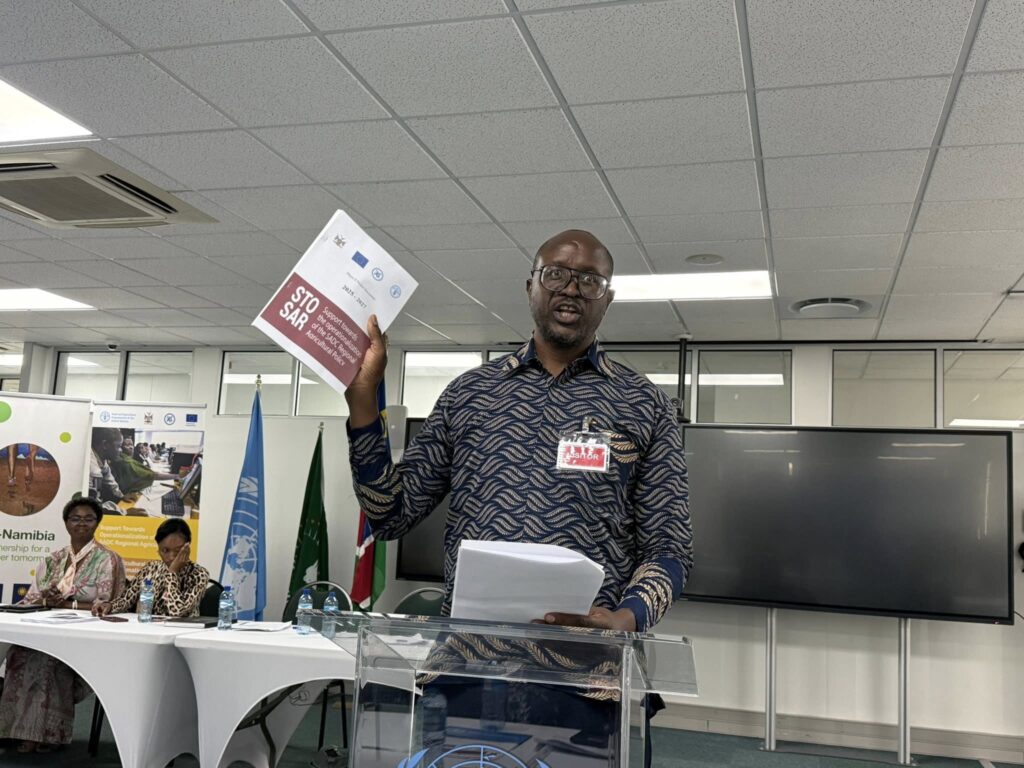
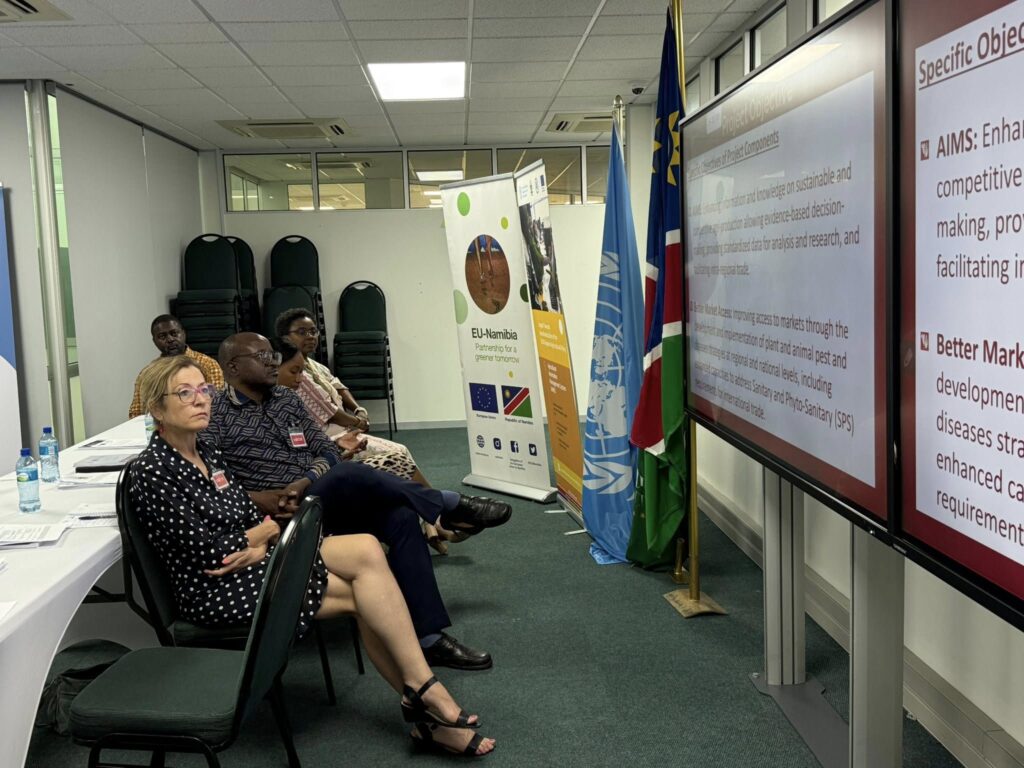
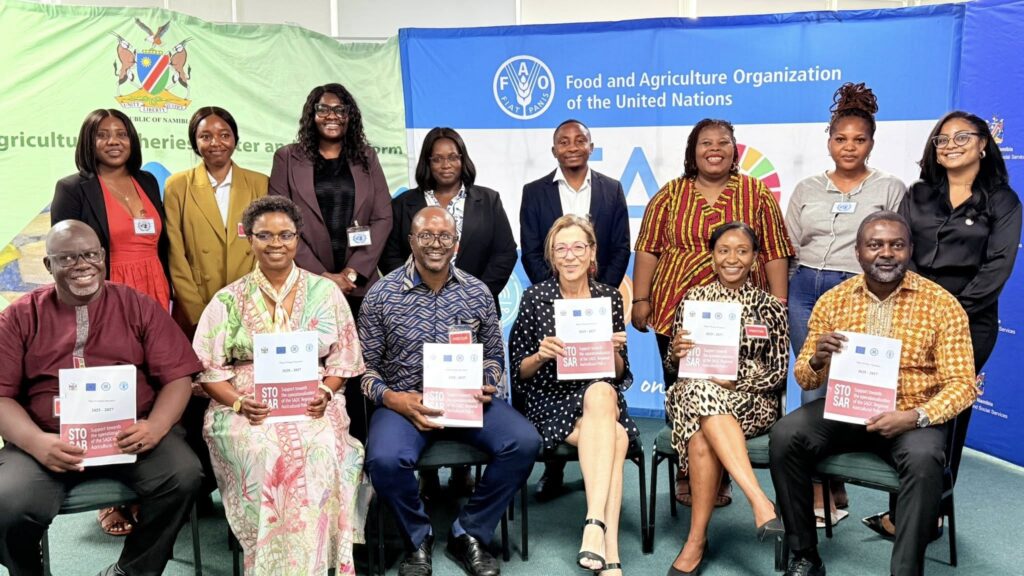
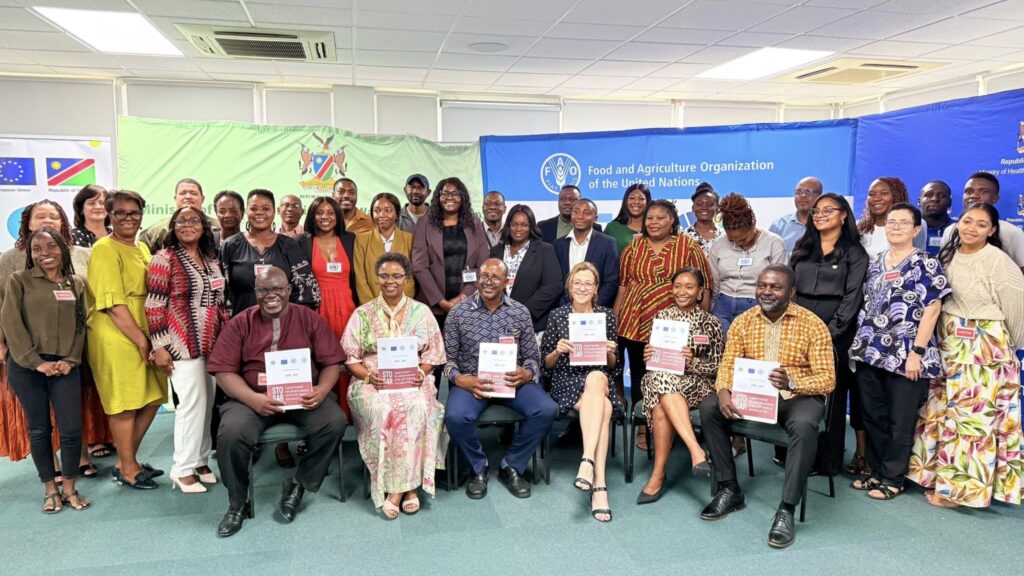
Photos: Ministry of Agriculture, Fisheries, Water & Land Reform
“The Agricultural Information Management Systems (AIMS) component, with a total investment of N$707,650, will strengthen our capacity to collect, manage and utilise agricultural data for planning and informed decision-making. Key activities include the procurement of laptops to support field data collection, training on the SADC AIMS Portal and data collection tools, and capacity building on the National Agricultural Management Information System indicators to ensure alignment with regional standards. These investments will improve the quality, accessibility and consistency of agricultural data across the sector,” Sikopo revealed.
Speaking on the Animal Health focus area, Sikopo said that N$750,000 has been allocated to strengthen Namibia’s ability to prevent, detect and respond to animal disease outbreaks.
“Planned interventions include the procurement of reagents, consumables and diagnostic kits for priority diseases, training of veterinary officials in inspection, disease surveillance and use of the NamLITS system, and the digitalisation of veterinary certification processes through the development of an e-veterinary certification system. Additionally, stakeholder awareness sessions on sanitary and phytosanitary (SPS) regulations, participation in international proficiency testing, and staff training on risk assessment and communication will ensure Namibia remains aligned with international animal health standards,” he explained.
On the Plant Health component, Sikopo said that N$707,918 will go towards strengthening the country’s phytosanitary systems to protect crops and enable safe trade.
“Activities will include validation workshops on national control systems, training of inspectors and stakeholders on ePhyto, and capacity building in pest surveillance and the establishment of Pest Free Areas. Furthermore, the project will support awareness-raising on control measures for Foc TR4 and Goss Wilt, training on pest risk analysis and digital surveillance, and the procurement of ICT equipment such as laptops, printers and projectors to support data capture and training efforts,” he added.
Sikopo further highlighted that the Value Chain Development component, with a total cost of N$725,000, will focus on strengthening competitiveness and inclusivity across selected agricultural value chains. He added that planned activities include a country capacity assessment of farmer organisations and industry associations, the development of fundable project concepts for prioritised value chains such as tomatoes, watermelons, dairy and mangoes, and the procurement of agro-processing equipment for use during training and demonstration exercises.
“National experts and officials will also receive methodology training on innovative value chain development, focusing on modern tools such as inclusive aggregation systems, rural investment models, and ICT-driven solutions,” Sikopo added.
He explained that the Food and Nutrition Security focus area, valued at N$740,000, will help strengthen Namibia’s national nutrition data systems and promote improved health outcomes.
“Activities will include training of surveillance officers, procurement of laptops and printers for enhanced coordination, and nutrition assessments among children under five and women of reproductive age in selected regions,” Sikopo explained.
He revealed that the project will also support an Iodine Status and Thyroid Health study in the Ohangwena, Oshana and Oshikoto regions, as well as capacity building on data management during emergencies.
“In addition, Namibia will benchmark with Zambia on the implementation of multiple micronutrient supplementation for pregnant women, to address the high prevalence of anaemia and related health conditions,” Sikopo added.