Staff Reporter
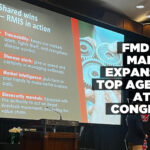
THE congress of South Africa’s Red Meat Producers’ Organisation (RPO), held on 14 August, placed a strong emphasis on tackling Foot-and-Mouth Disease (FMD) and advancing growth in the livestock sector.
Namibia Agricultural Union (NAU) President Thinus Pretorius, Livestock Producers’ Organisation (LPO) Chairperson Jako van Wyk, and NAU Executive Manager Roelie Venter attended the event. Their participation also included meetings with the Red Meat Industry Services (RMIS) on FMD, and discussions with GENDAC and AgriSA on a data project.
A new RPO chairperson, Frik van Rooyen, was elected during the congress. Dr Dirk Verwoerd, Chief Veterinarian at Karan Beef, highlighted traceability as the key to unlocking both market access and growth. He cautioned that South Africa’s FMD status remains classified as “infected” and warned that mass vaccination is not sufficient, as only about 10% of cattle show symptoms of SAT-type FMD. He stressed the importance of targeted vaccination to curb the spread.
RMIS’s Dewald Olivier said that sustainable sector growth depends on full value-chain collaboration and called for a regional plan to achieve FMD-free status across the Southern African Development Community (SADC). He revealed that South Africa exported a surplus of 36,000 tons of beef in 2024.
Government representatives reiterated that biosecurity is a national priority and pledged to work with SADC partners. Action plans include vaccine development and free distribution to farmers through state veterinarians. Negotiations with the USA on beef tariffs are underway, while the upcoming G20 summit is expected to provide an opportunity to influence the global agricultural agenda.
Dr Jan Greyling of Stellenbosch University underscored agriculture’s contribution to the economy, noting that the sector accounted for 13.3% of GDP in 2024 and employed around one million people, largely due to citrus expansion. He described agriculture as the “engine of growth,” with a multiplier effect of 2.74.
On market opportunities, Dr Nicolette Hall of Cavalier Abattoir said Sub-Saharan Africa’s cattle herd matches that of the United States but produces only 10% of its output. Cavalier, South Africa’s largest sheep and fourth-largest cattle abattoir, supplies more than half of Woolworths’ “free range” lamb. She noted that meat remains the retailer’s main sales driver, with more than 60% of its customers buying meat, which accounts for 95% of Woolworths’ total sales.
The congress proved highly informative, offering valuable insights and direction for the future of the red meat industry.
Photo: BKB