Staff Reporter
THE fishing sector’s contribution to the country’s Gross Domestic Product (GDP) has seen a slight decrease between 2023 and 2024, dropping from 4.5% to 4.1%.
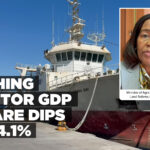
“The Namibian fishing sector remains an essential pillar of our economy, contributing 4.1% to the GDP in 2024, a slight decline from the 4.5% recorded in 2023. This reduction is largely attributed to continued decreases in the Total Allowable Catches (TACs) across key commercial species such as hake and horse mackerel. For the 2024 fishing season, the TAC was set at 438,080 MT, down from 457,380 MT in 2023, resulting in total landings of 429,013 MT (inclusive of non-TAC regulated species),” revealed the Minister of Agriculture, Water and Land Reform, Inge Zaamwani.
The minister made these remarks during a recent consultation with the fishing industry in Walvis Bay, aimed at deliberating on key issues affecting the sustainability and prosperity of the sector.
Zaamwani also noted that the decline in catch volumes impacted the country’s international trade performance. She revealed that export earnings stood at N$13.8 billion in 2024, slightly down from N$14.1 billion in 2023. Despite these challenges, the minister emphasised that the industry remained resilient.
“Notwithstanding the reductions in the TAC, the sector maintained robust operations, with a fleet of 235 vessels and 30 onshore processing plants. These facilities produced a total of over 39 value-added fish and fish products, reinforcing the sector’s commitment to employment creation, value addition, and economic growth,” she added.
In terms of public revenue, Minister Zaamwani reported that the sector contributed N$278 million in 2024 through streams such as quota fees, fund levies, licence fees, and penalties related to bycatches and over-catches.
“The industry provides significant employment opportunities, supporting over 19,440 Namibians, with 71% of workers engaged in onshore operations. The onshore segment has a notable female presence, with women accounting for 45% of the workforce, while offshore operations remain male-dominated, employing only 140 women at sea. This gender distribution highlights the sector’s evolving workforce dynamics and the importance of advancing inclusivity,” the minister added.
Photos: Ministry of Agriculture, Fisheries, Water & Land Reform