Business Reporter
THE Namibia Power Corporation (NamPower) has said that Namibians will most likely face higher electricity tariffs for the 2025/26 financial year, as they added that the rising costs of imports, the slow take-off of local Independent Power Producers (IPPs) to add to the local electricity supply, and high debt of about N$1 billion have led to the application for the high tariff increase of 17.44%.
This would take the bulk tariff from 198.56c to 233.18c/kWh. The 17.44% increase is due to return and depreciation. The bulk tariff application, which still seeks approval from the Electricity Control Board of Namibia (ECB), was revealed at a public consultation on the possible electricity increments for this year.
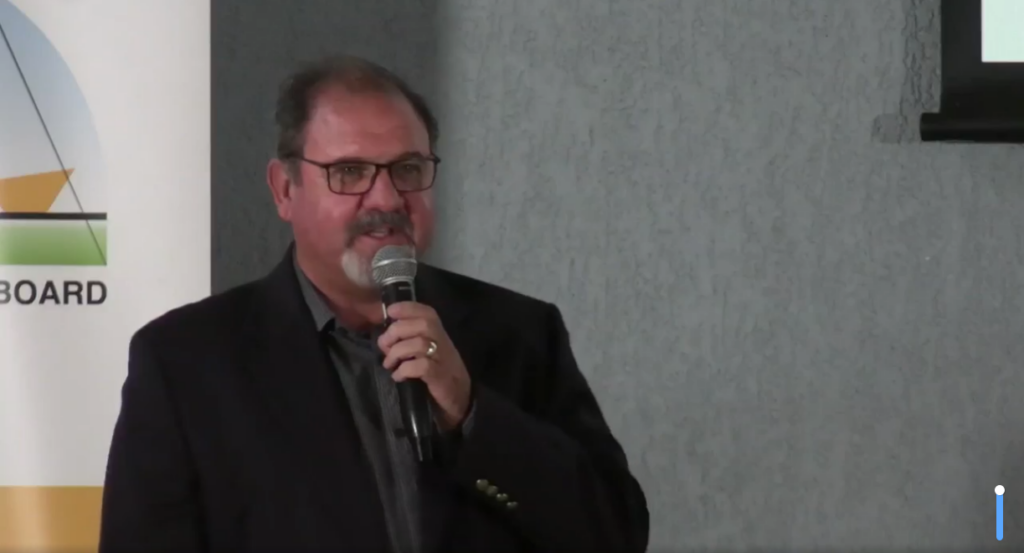
Christo Visser, Senior Manager of Electricity Pricing and Financial Modelling, said that currently, NamPower’s electricity costs are not cost-reflective, as it buys electricity for N$10 and sells it for N$8. He added that tariff costs include transmission (27%), NamPower (12%), imports (54%), and IPPs (7%). It was shared that Inflation going up for the next few years is on account of an under recover of N$ 2 billion that NamPower needs to recover.
“This is how we built the tariff; we only have control over the 27% and 12%. If you look at this scenario, the lowest river flow was in 2022 for Ruacana, and the best was in 2024. This has a significant impact, as Ruacana is run off from water. We can supply cheaper energy as water is free. A high-flow scenario gives a lot of energy. We can see that NamPower supplied more than 40% of the energy at a cost of nearly 15%. IPPs supply 9% at a cost of 10%, and the remaining we import at a huge cost. We struggle to get output from IPPs; we need backup, but that comes at a price. That’s why we have a transparent tariff. In a dry year where there is little water at Ruacana, we still supply roughly 20% of the energy at a cost of 10%. What is evident is that NamPower remains the cheapest supplier of energy. We want to stay cost-reflective, as we cannot afford to not recover our money, as we need to pay for imports and the IPPs. We can’t say the customers didn’t pay; we have to pay them,” Visser said.
He added that in the application for the 2025/26 financial year, they have requested N$1.4 billion, whilst their overall budget would be N$2 billion. Visser said that Ruacana is set to supply around 30% of the electricity needs, about 1,320 GWh, with Eskom supplying 12.7% and Zeco 2.4%.
Visser said that it is essential to pay for electricity imports, as load shedding has a detrimental effect on the economy, more so than NamPower being out of pocket. He added that the company will spend around N$15.6 billion on projects to improve the network and increase the generation of electricity.
“Today, NamPower is applying for a 17.44% increase. It sounds high; it is very high. All of us are going to pay for this. As mentioned, we have to cover that N$1.4 billion of fixed costs, cover N$6 billion in imports, as well as IPP costs. Last year, the regulator approved an increase of 8%, which they withdrew. Had we had that increase of 8% last year, our application today would have been 8.7%. That is the knock-on effect. We do not keep the tariff costs reflective; today we have to apply for a 17.44% increase because of that knock-off effect. IPPs—many of them are delayed. This costs us to have extra contracts to back up that energy, which increases energy costs. IPPs go back to the regulator and ask for higher tariffs, which passes through to consumers, and this is a concern. A total of N$1.67 million was impaired in bad debts for the 2024 financial year, and our total outstanding debt is about a billion dollars—N$950 million—which our clients did not pay. We have to spend N$15 billion on securing reliable energy, with little funding. We are on the rim, burning our cash, investing in new projects, and sitting with a tariff that is not cost-reflective for NamPower. Behind the scenes, it is not bright for us, and customers are not paying their debts,” Visser said.