As over 50% of constituents unemployed
Staff Reporter
THE Kavango West region has the highest unemployment rates in Namibia, with the region seeing an increase in unemployment from 33% in 2018 to 52.8% in 2023.
In contrast, Omusati saw the second-largest increase in unemployment, jumping from 24% in 2018 to 41.5% in 2023, and Ohangwena from 33.3% in 2018 to 47.22% in 2023.
Notably, decreases were only observed in //Kharas, Hardap, Kunene, Omaheke, and Otjozondjupa regions.
This was revealed in the newly released Labour Force statistics derived from the 2023 Population and Housing Census (PHC).
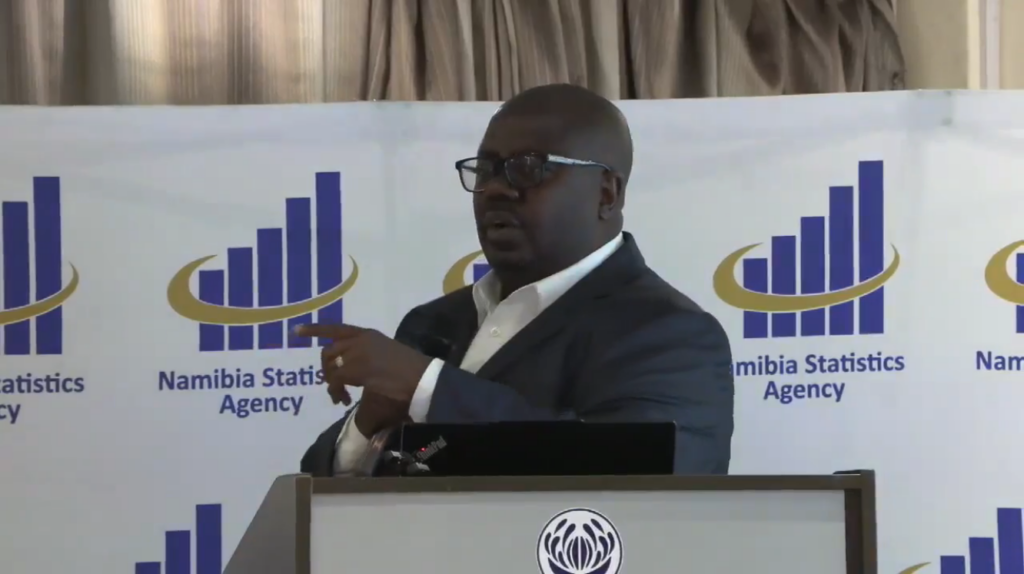
Launching the report, Alex Shimuafeni, Statistician-General at the Namibia Statistics Agency, explained that the most recent Namibia Labour Force Survey (NLFS) was conducted in 2018. For this reason, the NSA incorporated a labour force module into the 2023 PHC questionnaire to obtain the most recent data on the labour force.
The 2023 PHC collected data on the labour market activities of persons aged 15 years and above (considered the Working-Age Population) who were present in Namibia on the Census Reference Night (CRN) of 24 September 2023 and residing in private/conventional households, educational hostels, prisons, orphanage shelters, etc.
The report excludes special populations, including hospital in-patients, hotel residents, homeless persons, travellers, etc., who were defined as the special population and had a shorter questionnaire administered to them during the 2023 PHC.
“The 2023 PHC LF report is limited to employment and unemployment statistics. It excludes job types, working conditions, and informal employment that a Labour Force Survey (LFS) would produce,” Shimuafeni said.
According to the report, in 2023, the population of the working-age group (15 years and older) was estimated at 1,876,122.
Overall, the population in the labour force (all persons of working age who were either employed or unemployed) was 867,247, while the population outside the labour force was 1,008,875.
Of the 867,247 persons in the labour force, the employed population was estimated at 546,805, and the unemployed population was 320,442, resulting in an unemployment rate of 36.9%.
The employed population decreased by 178,937 people, from 725,742 persons to 546,805 persons, since the last survey was conducted in 2018. Of the employed population in Namibia, 55% were males and 45% were females.
The unemployed population also decreased from 364,411 in 2018 to 320,442 in 2023.
The unemployed population comprises all persons of working age who were not employed, who carried out job search activities during a specified recent period, and who were currently available to take up a job should the opportunity arise.
The unemployment rate stood at 36.9%, with a youth unemployment rate of 44.4%. This indicates an increase in the overall unemployment rate of 3.5%, from 33.4% in 2018 to 36.9% in 2023.
The results show that out of the total of 341,931 potential labour population, 96.8% are discouraged job seekers. The potential labour force consists of unavailable jobseekers and available potential jobseekers (discouraged job seekers).
Shimuafeni explained that the combined rate of unemployment and the potential labour force indicator shows the extent of the unmet need for employment for the unemployed and the potential labour force.
“It reflects the unemployment situation in Namibia, including discouraged job seekers who have ceased searching for work after an unsuccessful period. Over half (54.8%) of the Namibian working-age population is either unemployed or part of the potential labour force,” Shimuafeni said.
The total youth unemployment rate was 44.4%, indicating a decrease of 1.7%, from 46.1% in 2018 to 44.4% in 2023.
The youth unemployment rate was higher in urban areas (46.1%) than in rural areas (41.3%).