Staff Reporter
THE Ministry of Health and Social Services (MoHSS) is calling on all stakeholders to support the development and implementation of a national responsive roadmap to promote the introduction of a Human Papilloma Virus (HPV) vaccine in the country.
This announcement was made by the Acting Executive Director of the ministry, Taimi Amaambo, who spoke on behalf of the health ministry’s Executive Director, Ben Nangombe, during the recent Stakeholders’ Meeting for the HPV Vaccine Introduction. Amaambo highlighted that cervical cancer, primarily caused by HPV, ranks as the second most prevalent cancer among women in Namibia and the third most common cancer among women aged 15 to 44.
“The HPV has the best chance of protecting against infection if a person gets vaccinated before becoming sexually active. It will help to protect them from HPV-related cancers and genital warts. Virtually all cervical cancer cases (99%) are linked to genital infection with human papillomavirus (HPV), which is the most common viral infection of the reproductive tract,” Amaambo explained.
Amaambo detailed that the ministry initiated the consultation process for introducing the HPV vaccine into the Expanded Programme on Immunization (EPI) in 2018. These efforts resulted in the accumulation of substantial evidence, which informed advocacy efforts and garnered financial support from the government and technical assistance from development partners. As a result, the health ministry approved the inclusion of HPV vaccination in the Routine Immunization Schedule, targeting girls aged 9-14 years, in 2022.
“With the establishment of the National Immunization Technical Advisory Group (NITAG) in May 2023, scientific Evidence to Recommendation (EtR) process was conducted and provided a compelling recommendation to the Ministry to introduce HPV vaccines for the 9-14 years age group in girls. On that basis, the MoHSS will require the line Ministries, Partners, Stakeholders, Political, Traditional and Religious leaders, NGOs, the Media and the community at large to play a role in this national endeavour to ensure that a national responsive road map is developed and implemented,” he explained.
Amaambo stressed that the roadmap should focus on advocacy directed at all key stakeholders and audiences, a clear health promotion strategy related to HPV introduction, innovative delivery methods to enhance coverage, partnerships between programs within and outside the health sector, monitoring and evaluating interventions to ensure synergy with data reporting systems, and stewardship and financing to ensure a consistent commitment to funding HPV vaccines, implementation, and evaluation.
“Vaccines against HPV have several features that require special consideration. Their use requires new approaches to programme delivery; the target population is different from that usually addressed by national immunization programmes; multiple stakeholders need to be involved in advocacy and social communication. For the first time, sexual and reproductive health communities will be working with a vaccine directed against a sexually transmitted infection that is linked to a fairly common genital cancer,” he said, emphasizing the need for a multi-sectoral approach.
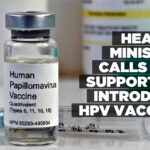
File photo for illustrative purposes only.