
Zorena Jantze
IN the thermometer topping heat of the Namib Desert, the life passion of Prof. Norbert Jürgen is ignited.
The German scientist who first came to Namibia in 1980 as a student, has since frequently returned to the country to observe the fairy circles phenomena which are barren patches of sand, surrounded by a circular ring of tall grass.
The Fairy Circles expert, together with termite specialist Felicitas Gunter, over the past weekend took journalists as well as tourists on an excursion to Gondwana Collections Namib Desert Lodge, south of Solitaire.
The Lodge is situated at the foot of the Tsondab sandstone, a fossilized dune that towers ominously over the lodge, it’s terrain, reminiscent of old western film locations where cowboys and marauding thief’s battle it out on the edge of the abyss.

PICTURED: Some scenes from the Fairy Circle excursion with Prof. Jürgen. Photos: Zorena Jantze and Prof. Jürgen. 
PICTURED: Some scenes from the Fairy Circle excursion with Prof. Jürgen. Photos: Zorena Jantze and Prof. Jürgen. 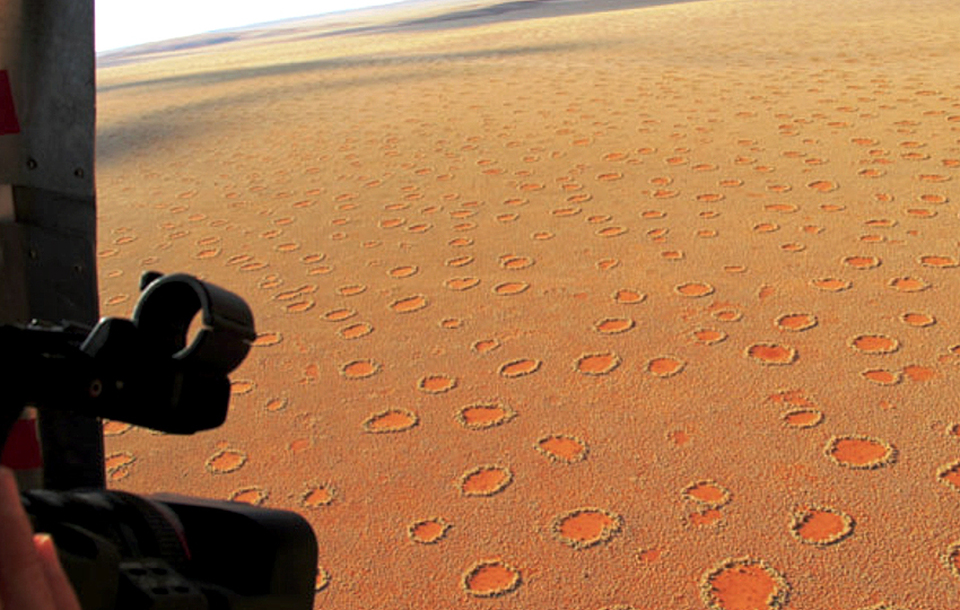
PICTURED: Some scenes from the Fairy Circle excursion with Prof. Jürgen. Photos: Zorena Jantze and Prof. Jürgen. 
PICTURED: Some scenes from the Fairy Circle excursion with Prof. Jürgen. Photos: Zorena Jantze and Prof. Jürgen. 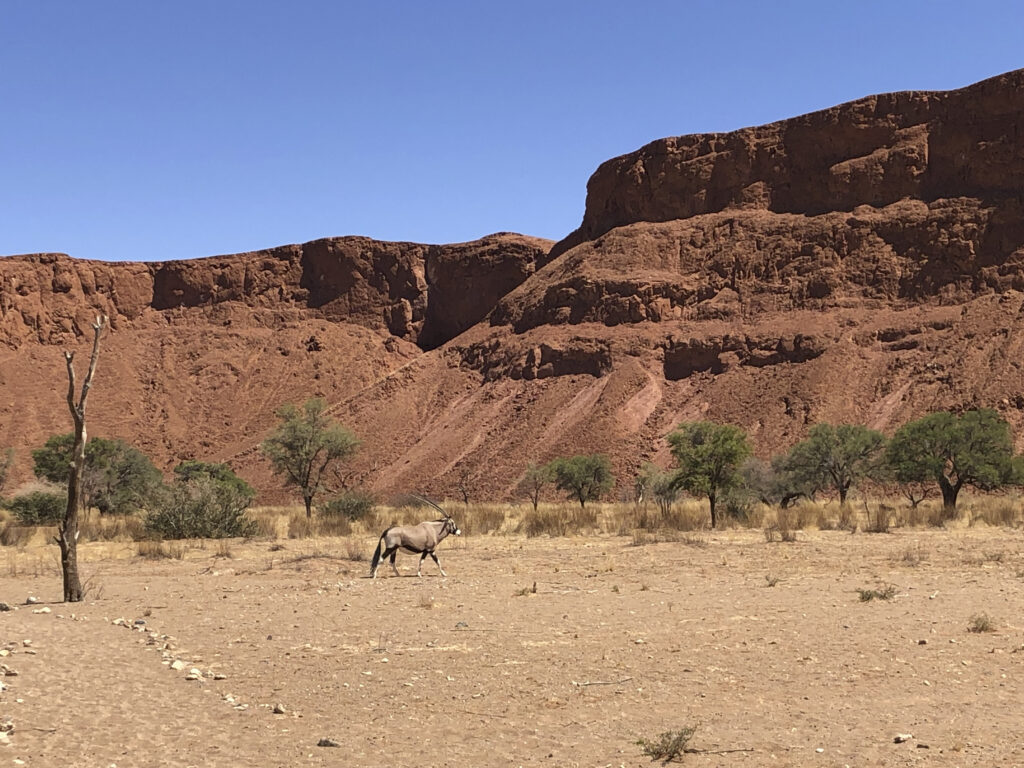
PICTURED: Some scenes from the Fairy Circle excursion with Prof. Jürgen. Photos: Zorena Jantze and Prof. Jürgen. 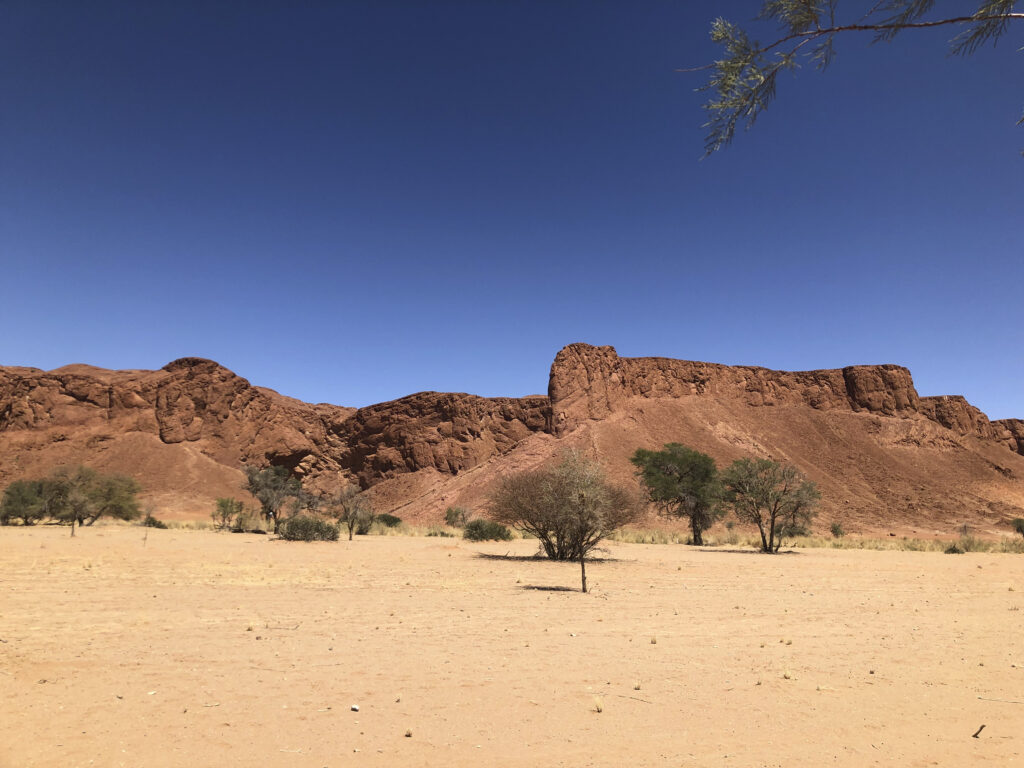
PICTURED: Some scenes from the Fairy Circle excursion with Prof. Jürgen. Photos: Zorena Jantze and Prof. Jürgen.
Prof. Jürgen explains that the sandstone is made of fossil dune fields that existed prior to 50 million years ago. He added that in the dunes, there was a short period of moisture, a rainy period, and during that time, the loose sand grains of the dunes connected, converting it from dune sand to sandstone.
The Professor, has been systematically researching the fairy circles phenomenon since 2008 and published his much-discussed explanation in the renowned scientific journal Science in 2013: Sand termites create, use and maintain the fairy circles as sustainable desert farms, with underground water reservoirs and grass “fields”.
Different scientists, have however provided alternative explanations to what causes the fairy circles, and Professor Jürgen’s wasted little time, taking the guests on an afternoon drive, demonstrating why his theory is solid.
In the field, he points out that for decades nobody understood why the grass are dying, leading to the formation of fairy circles.
“I looked for years and years, and found cases that the sand termites are the reason for the grasses dying. There is an open area for additional powers, and my guesses are, perhaps the microbes transported by termites when they bit kill the plants,” Jürgen explained.
The professor added that after the termites create the bare circle by eating the roots of the grasses, rainwater trickles away without being absorbed by grasses, creating a long-lasting water reservoir for the termites. The rings of grass around the fairy circle, referred to as the luxury belt, is used as a food source by the termites.
“I collected my nest (sand from fairy circles) and brought them to the chemist institute at Hamburg, and asked them what they found inside and outside of fairy circle nests…We know for sure, that the sand termites have a special stomach part, where bacteria without oxygen access exists. This is very similar to very ancient bacteria, similar to bacteria that lives in deep geological soil formations. These substances may be the reason why the grasses die from the termite bites. We believe sand termites are the main destructor of the root of the grasses, which is referred to subterranean herbivory.” Jürgen said.