Staff Reporter
CLOSE to fourteen million Angolans are going to the polls on the 24th of August and politicians are now crisscrossing the country canvassing votes.
Two hundred and twenty parliamentary seats are up for grabs. Seven political parties and a coalition are vying for a share.
However, it is the ruling MPLA and opposition UNITA that are the parties to watch.
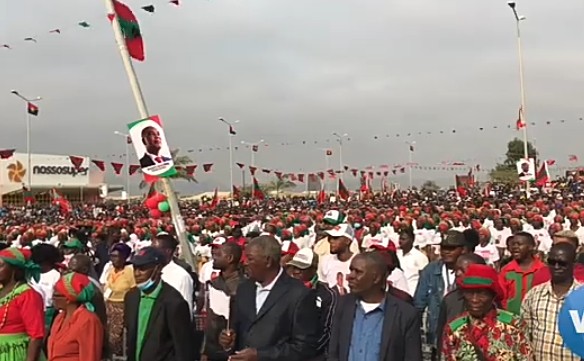
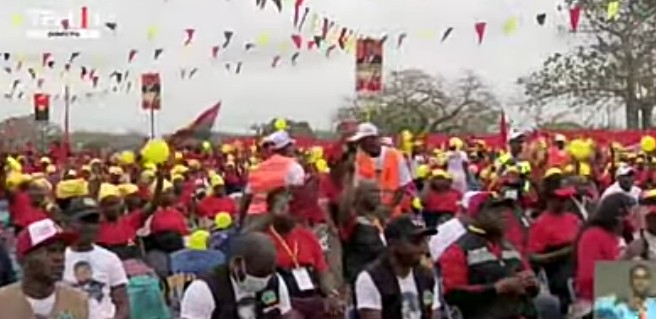
The MPLA, in power since independence in 1975, has seen its support decreasing from 80% in 2008 to 70% in 2012 and 61% in 2017, but the party remains a force to be reckoned with and is widely expected to win, although with a reduced majority.
The MPLA’s most serious challenger is the former rebel movement, UNITA, whose support has expanded considerably since 2012 when it doubled the number of its parliamentary seats from 16 to 32, before adding 19 more seats during the 2017 elections.
Angolan political watchers opine that there is a possibility of UNITA winning the elections, albeit a distant one.
According to the Angolan system, the candidate who tops the list of the winning party automatically becomes the country’s president.
Number one on the list of the MPLA is the current president Joao Golcalves Lourenco.
Adalberto da Costa Junior, UNITA president, tops his party’s list.
The other participating political parties include the historic FNLA, which currently has only one seat in parliament; CASA-CE which has 16 seats and the PRS with two seats.
Others are APN, PHA and P-Njango.
Thousands of Angolan expatriates are voting outside the country for the first time.
In Namibia the voting will take place at Oshakati, Rundu and Windhoek.
The campaign has so far been generally peaceful despite isolated incidents of violence.