Zorena Jantze
THE Namibian government plans to push ahead with the current offer by the Federal Republic of Germany for the Ovaherero-Nama Genocide of 1904-1908, amidst widespread protest to start the negotiation process afresh.
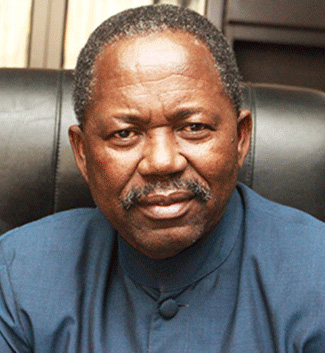
Minister of Defence and Veterans Affairs, Frans Kapofi, while reading government’s official stance on the matter in Parliament, said that the Namibian government recognises that the N$18 billion offered by the German government over the next 30 years for the genocide is not enough.
He, however, said that while government will accept the current deal, it will continue to engage with Germany in the hopes that the amount will be increased.
A sizeable crowd, including opposition parties and members of genocide-affected communities, yesterday marched to parliament to hand over a petition in which they are demanding that the process of negotiations that included an apology from the German government be restarted to include the directly affected communities.
Kapofi sympathised with the affected communities, adding that direct descendants of the genocide are now destitute, as socio-economic and cultural effects caused by the genocide are taking their toll.
“The government is prepared to admit that negotiations will not be easy,” Kapofi said.
He added that the fact that the genocide happened over a century ago made it even more difficult to negotiate reparations.
Kapofi further noted that successive changes in governments and political structures in Germany over the years also protracted the negotiation process.
“Unlike the negotiations and reparations made to the Jewish people by Germany, Namibia on its part for various reasons did not have the luxury of negotiating this issue with Germany under favourable terms and conditions, as was the case with the Jewish people,” Kapofi remarked.
He stated that the current agreement has three pillars, which include Germany accepting that it committed genocide, Germany tendering a genuine apology and paying for reparations.
Kapofi added that the texts of the apology have not yet been agreed upon by the parties involved, and that while government and the negotiating team recognise that the apology will address the moral harm, there should be some material form of reparations.
“The Federal Republic of Germany has as a fact offered €1.1 billion (around N$18 billion) as part of reconciliation and reconstruction projects over a period of 30 years. This amount for various reasons, some of which I dealt with earlier, can never be said to be satisfactory or good enough. The Namibian government has since raised issues on a number of aspects relating to the quantum and the disbursement period. It is thus encouraging that, depending on the negotiations between the parties, an improvement of the terms of reparations, particularly on quantum, is not out of the question,” said Kapofi.
He stated that the Namibian government, recognising the inadequacy of the amount offered by the German government, institute a regular assessment on the impact of the payments.
In addition, he said, an independent body will be created between the two governments to deal with reparations and that other issues or projects that will be identified by the affected communities will be dealt with.