Niël Terblanché
EXPERTS around the world can only speculate as to where a huge piece of the Chinese Long March 5B rocket that carried the main module of a new permanent space station into orbit, will fall when it re-enters the Earth’s atmosphere.
Namibia is one of the many countries around the globe that could be hit by the falling space debris when it re-enters the atmosphere.
At 22 metric tons and more than 30 metres long, the main stage of the rocket is one of the largest pieces of space debris that will fall to the Earth’s surface completely unguided. It is estimated that the huge piece of the Chinese rocket will re-enter the atmosphere during the early hours of Sunday morning.
Space agencies around the world are hopeful that the giant piece of space junk would fall into the sea, but none of them can say with any certainty that it will not fall on a highly populated landmass where it could have devastating consequences for the local residents.
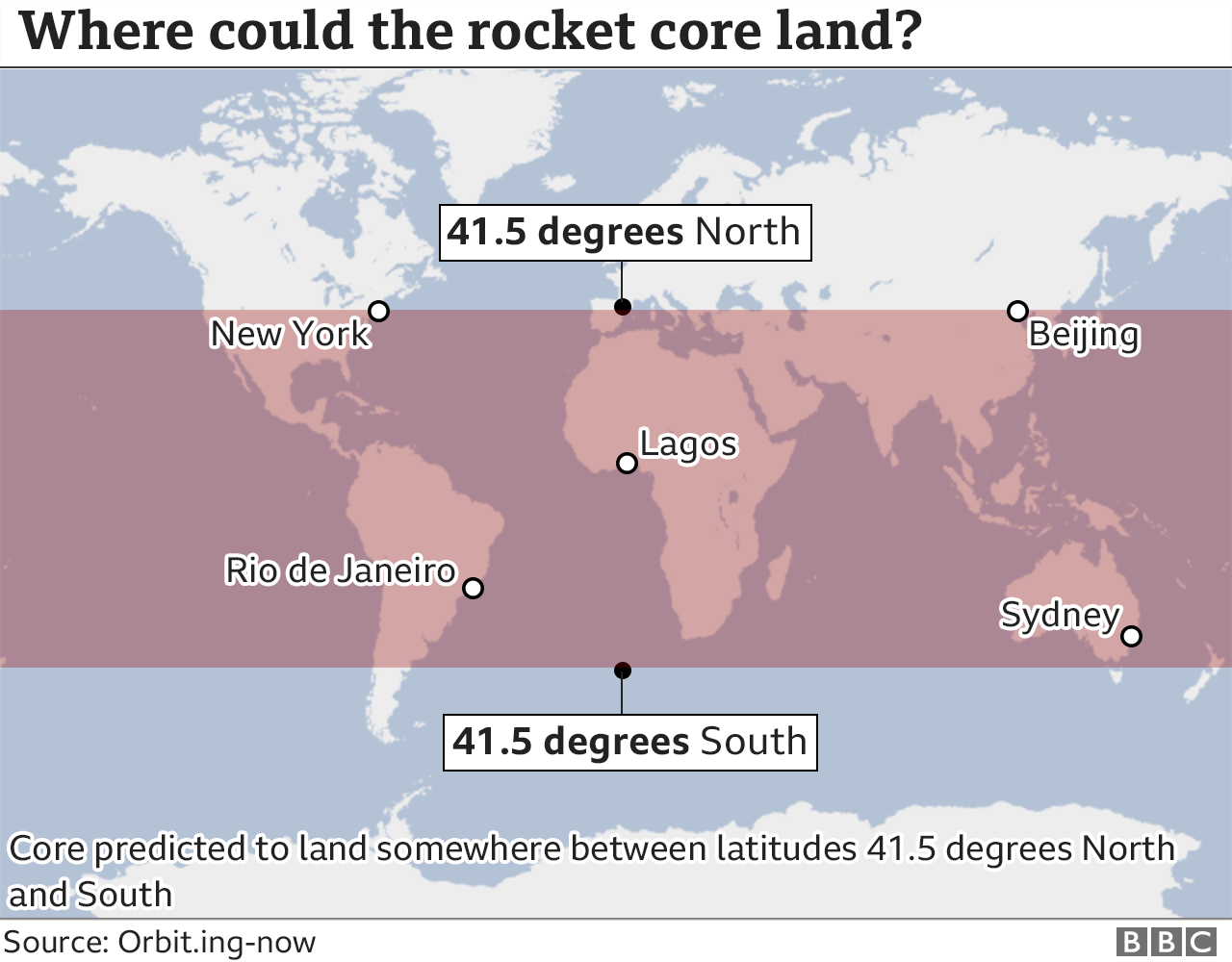
PICTURED: The launch of the Long March 5B rocket.The part that will fall to Earth and the area where experts estimate that it will come down. 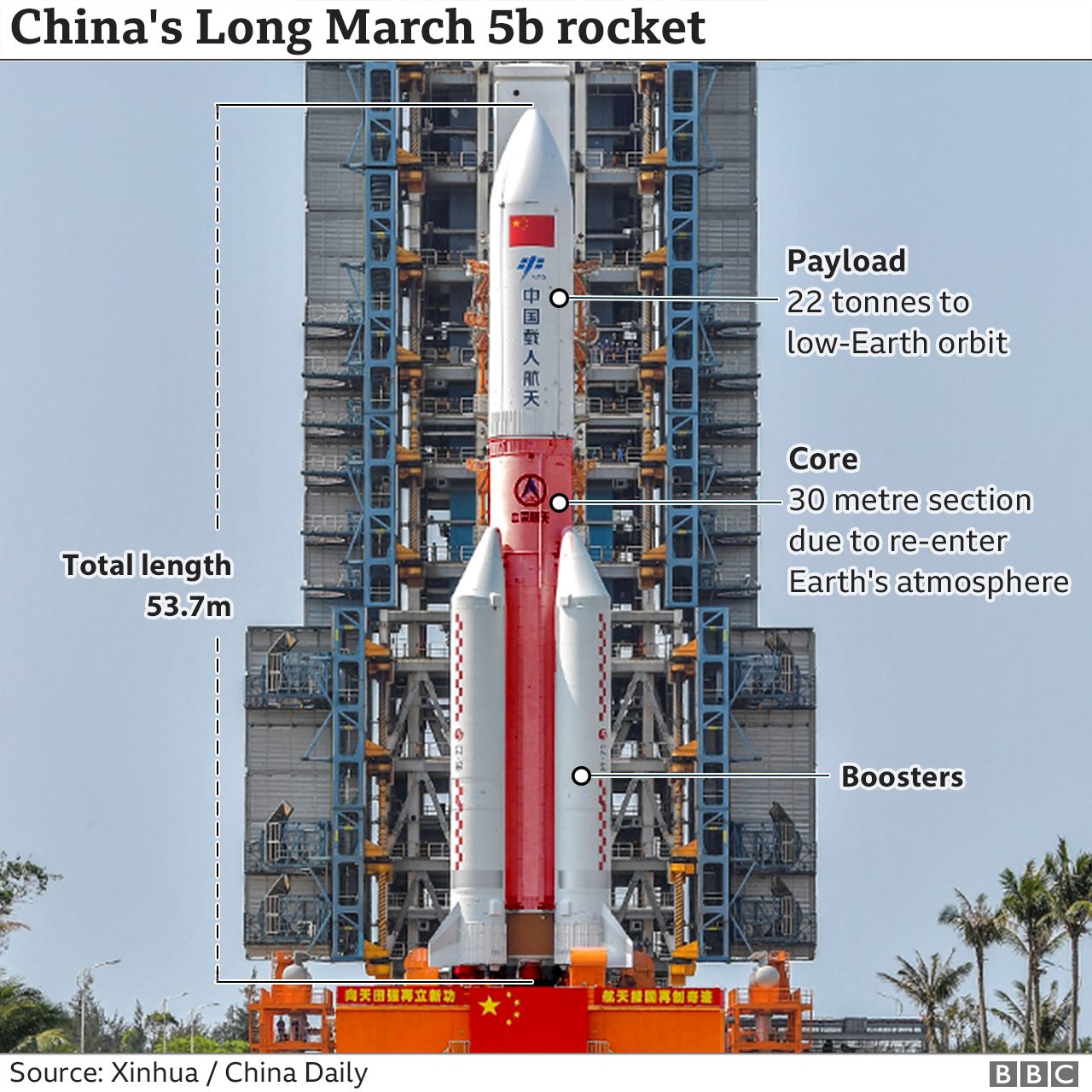
PICTURED: The launch of the Long March 5B rocket.The part that will fall to Earth and the area where experts estimate that it will come down. 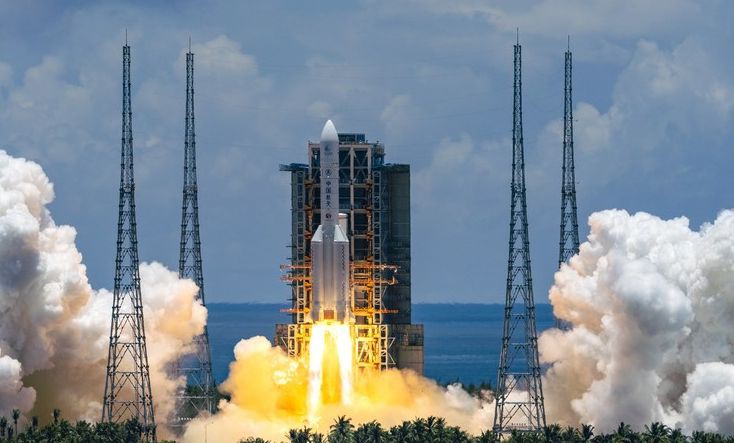
PICTURED: The launch of the Long March 5B rocket.The part that will fall to Earth and the area where experts estimate that it will come down.
The Long March-5B was launched on 29 April to put the main module of the new Chinese Space Station into orbit around the Earth and the giant stage has been floating in space and losing height ever since.
China’s foreign ministry said on Friday that most of the debris from the rocket will burn on re-entry and is highly unlikely to cause any harm.
The military of the United States of America along with many space agencies around the world are tracking the debris in order to issue an early warning if the uncontrolled re-entry of the rocket will hit a populated area.
In May 2020 pieces from the first Long March 5B rocket rained down on the Ivory Coast. Although several buildings were damaged, no injuries were reported during that incident.