Staff Reporter
THE number of confirmed COVID-19 cases is increasing gradually both in Namibia and in Angola, but the residents of the northern regions of Namibia are increasingly worried about the “open border” between the two countries.
All entry points are officially closed since 24 March and the police forces of both countries are patrolling the border to ensure compliance.
A two-day Informanté investigation found that Namibian and Angolan police officers manning the closed border posts are enforcing the regulations very strictly.
At the Oshikango border post, there are two layers of security on either side of the border.
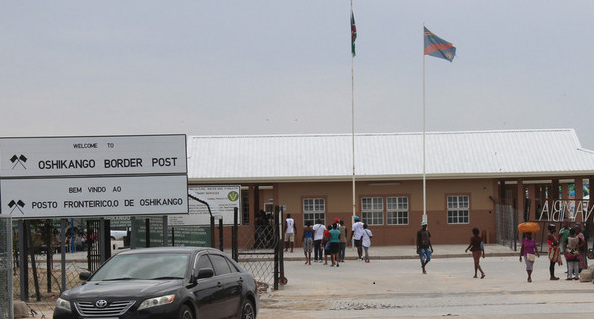
People are stopped at the first layer and only a few are allowed to proceed beyond that point, mostly those on official duty or Angolans who were trapped inside Namibia and are now returning to their country. They undergo rigorous screening to establish their identity and are tested, sanitized, and upon entering Angola they are taken directly to a quarantine facility.
However, our investigation also found proof of widespread illegal border crossings mostly in Ohangwena and Omusati regions. The border is from the Kunene River to the Kavango River a mere gravel road making it easy for people to sneak in and out.
Regardless of police patrols, many residents of Santa Clara, the Angolan town opposite Oshikango, are still doing their shopping at Oshikango using illegal crossing points.
“We can help carry your goods to the other side of the border,” said one of three Angolan women standing in front of the shop at Oshikango.
Asked how they would do that seeing that the border is closed, she replied: “Very easy”.
However, she suddenly because restless and the group walked away perhaps suspecting a trap.
The rampant illegal border crossing was confirmed by many sources at Oshikango and Santa Clara as well as police officers who patrol the border and occasionally find tracks of people who enter or exit the country.
Namibia has 31 confirmed COVID-19 cases while neighbouring Angola has 91 cases, mostly confined to the capital city Luanda which is currently cordoned off from the rest of the country.