Staff Reporter
THE Dâures Green Fertiliser Project in the Erongo Region is set to receive up to US$3.6 million (about N$58.1 million) in development funding to advance plans for large-scale production of green ammonia and fertiliser, with the project expected to create up to 115 permanent jobs and reduce carbon emissions.
SDG Namibia One, part of Climate Fund Managers’ Climate Investor Three Fund, has signed a Development Funding Agreement with Enersense Energy Namibia to support the project’s development.
The funding forms part of a total development budget of up to US$7.07 million (about N$113.4 million), with support provided by the European Union’s Global Gateway strategy and Invest International.
Located in the Dâures Constituency, approximately 50 kilometres inland from Namibia’s Atlantic coast, the project will use the area’s solar and wind resources to produce up to 20,000 tonnes of green ammonia and 80,000 tonnes of ammonium sulphate fertiliser annually for Namibian and regional markets.
The project will be supported by 60 MW of solar photovoltaic generation, 10 MW of wind generation and a 65 MWh battery energy storage system, providing renewable power for a 40 MW electrolysis facility.
The hydrogen produced through electrolysis will be converted into green ammonia and ultimately fertiliser.
Once operational, the project is expected to avoid approximately 48,000 tonnes of carbon dioxide equivalent emissions annually by displacing conventional fertiliser production using grey ammonia.
It is also expected to create up to 115 permanent jobs in the rural area, where employment opportunities are limited, while strengthening regional fertiliser supply chains and reducing Namibia’s reliance on imports.
SDG Namibia One will act as co-developer alongside Enersense Energy Namibia, with the development funding supporting activities including front-end engineering design, market development, permitting, environmental and social studies and the development of bankable offtake arrangements.
Financial close is targeted for the second quarter of 2028, with commercial operations expected to begin in the first quarter of 2030.
The project builds on the Dâures Green Hydrogen Village pilot programme developed by Enersense at the site. Approximately US$17.7 million (about N$285.5 million) has been mobilised for pilot and proof-of-concept activities, with funding from the German Federal Ministry of Education and Research, the United Nations Industrial Development Organisation (UNIDO), the United Kingdom Government and Enersense.
The pilot is expected to produce Namibia’s first locally manufactured green fertiliser by the fourth quarter of 2026, with operational data from the pilot expected to inform the development and optimisation of the commercial-scale project.
Mercia Geises, CEO of Namibia Hydrogen Fund Managers, said the project aligns with Namibia’s green industrialisation ambitions by using green hydrogen to produce a critical agricultural input locally.
She said the project could reduce reliance on imports, strengthen agricultural value chains and support food security while demonstrating how early-stage development capital can help green hydrogen projects become bankable.
Martin Nambundunga, Interim Chief Executive Officer of Daures Fertilizer Solutions, said local fertiliser production would help reduce dependence on expensive imports while creating jobs and supporting local industries.
The European Commission’s Director for the Green Deal and Digital agenda at the Directorate-General for International Partnerships, Erica Gerretsen, said the project demonstrated how green hydrogen could support agricultural development and food security.
Invest International Chief Investment Officer Jeroen Plag said green hydrogen was important for decarbonising industries that are difficult to abate, including fertiliser production.
The Dâures Green Fertiliser Project is the fourth investment made by SDG Namibia One, following investments in Hyphen, Namibia’s first gigawatt-scale green hydrogen project; HyIron’s Oshivela Project, Africa’s first climate-neutral iron plant; and the Zhero Molecules Walvis Bay Project, an industrial-scale green ammonia facility.
Together, the investments cover various parts of Namibia’s energy transition and green hydrogen value chain, including green hydrogen production, green iron, green ammonia and fertiliser.
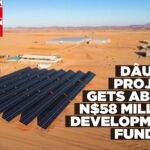
Photo: Daures Green Fertiliser Project