Staff Reporter
THE Ministry of Education has officially launched the Norms and Standards Framework for Schools, together with the National Minimum Standards for the Operation of Hostels in Namibia.
“When we speak about standards, we must be careful not to reduce the conversation to checklists, inspections, forms or compliance. Standards are ultimately about people. They are about the learner sitting in a classroom in Windhoek. They are about the learner in a remote rural circuit. They are about the child who walks to school every morning. And they are about the child who lives hundreds of kilometres away from home and depends on a hostel to provide not only accommodation, but safety, nutrition, care and a sense of belonging,” Edda Bohn, the Ministry’s Deputy Executive Director for schools and formal education, said while speaking on behalf of the Deputy Minister of Education, Dino Ballotti.
Bohn explained that the education system had relied on the National Standards and Performance Indicators for many years. However, she said the changing global environment, particularly the growing influence of artificial intelligence on how knowledge is produced and accessed, required the education sector to adapt.
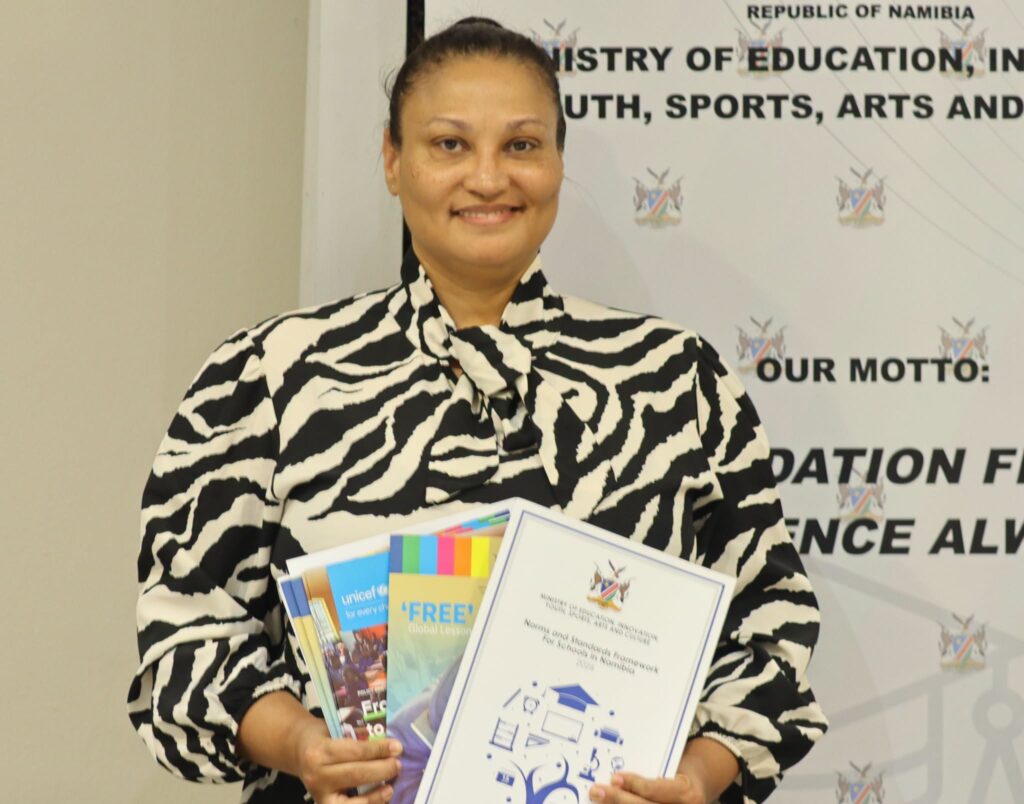
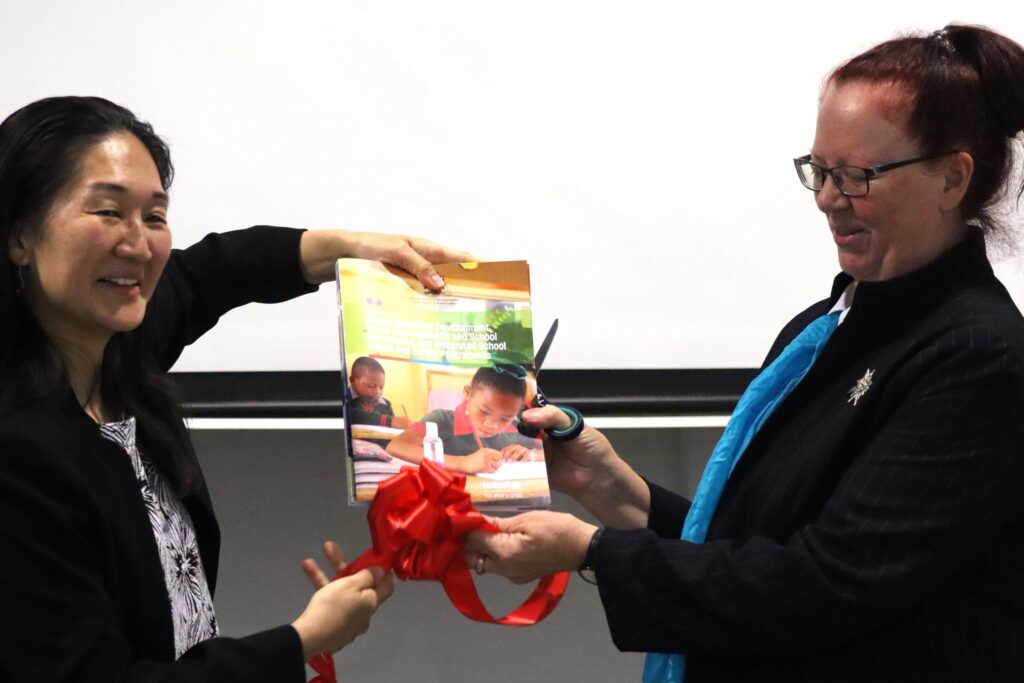


Photos: Ministry of Education Innovation, Youth, Sports, Arts and Culture
“It is an acknowledgement that the education system we build today must prepare learners not only for the world that exists, but for the world that is coming. That means putting technology, ICT literacy and emerging technologies into the conversation about quality education. But technology alone will not transform education. People will. Teachers will. School leaders will. Parents will. Communities will. And learners themselves will. Technology is a tool but our greatest resource remains the human potential of our children and the people entrusted with developing it,” she continued.
Bohn explained that the Norms and Standards Framework for Schools is built around seven key areas aimed at improving the quality of education.
“First, the provision of resources, because quality education requires human, physical and financial support. Second, curriculum attainment, because our policies and curricular frameworks must translate into meaningful teaching and learning. Third, the teaching and learning process, placing the learner at the centre and embracing modern approaches and emerging technologies. Fourth, the school as a social unit, education is not only about academic performance. It is also about morale, ethics, relationships and psychosocial support. Fifth, management and leadership as good institutions require professional, accountable and visionary leadership. Sixth is linking parents and communities because schools do not exist in isolation. Seventh, regional and circuit links, ensuring that schools are connected to the wider education system and supported professionally,” Bohn explained.
Turning to the National Minimum Standards for the Operation of Hostels in Namibia, Bohn said the standards establish clear requirements for hostel infrastructure, welfare, nutrition, health and safety. She stressed that hostels carry a significant responsibility because they serve as homes away from home for thousands of Namibian children.
“For thousands of Namibian children, a hostel is a home away from home. That phrase carries enormous responsibility. When a parent sends a child to a hostel, that parent is entrusting the State, the institution and its officials with something that cannot be replaced: the safety and wellbeing of their child. That trust must never be taken lightly,” Bohn added.