Staff Reporter
EFFORTS are underway to convert the Strategy for the Transformation of the Agri-food Sector (STAS) into a comprehensive programme with clearly defined priorities, workstreams and investment packages aimed at strengthening Namibia’s food and nutrition security.
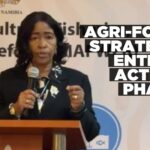
This was announced by the Minister of Agriculture, Inge Zaamwani, during the recent STAS Development Partners Network Breakfast, a high-level engagement with development partners aimed at fostering a shared understanding of the sector’s ambitions while enhancing coordination, collaboration and joint implementation.
Zaamwani noted that turning the strategy into an actionable programme would require strong commitment and close cooperation among all stakeholders.
“Through this programming process, we will lay the foundation for coordinated action, strategic investment and lasting impact across Namibia’s agri-food sector. At the same time, we must act with urgency. This process should build on the valuable work, lessons and experiences already gained through previous initiatives, ensuring continuity, avoiding duplication and accelerating the delivery of tangible results,” Zaamwani explained.
The minister revealed that the aim is to produce a draft STAS programming framework within the next few months, with the expectation that, by October 2026, when the STAS Assembly is expected to convene, the process will have advanced beyond planning to a practical framework ready for implementation.
“We would therefore welcome technical expertise, financial support and other appropriate instruments to advance this work in close collaboration with the STAS Secretariat. In line with our commitment to act with urgency and deliver tangible results, we should aim to convene the STAS Assembly before October 2026. By that stage, our work should have progressed beyond planning to a practical, actionable framework that is ready for implementation and capable of delivering measurable benefits for the sector and the people of Namibia. Furthermore, this Assembly must ultimately be sector-owned and sector-driven,” Zaamwani said.
According to the minister, the Agri-food Sector Assembly will provide development partners with an opportunity to present both current and planned contributions in support of the STAS. She said this will improve the visibility of interventions, strengthen coordination, identify synergies and better align investments with the Strategy’s priorities.
“I urge the STAS Secretariat to work with a sense of urgency. We cannot afford to lose momentum. Namibia continues to face significant challenges in achieving food and nutrition security. The increasing likelihood of another El Niño event during the 2026/27 season and the growing risk of transboundary animal diseases remind us that the coordinated transformation of Namibia’s agri-food sector must be expedited. Yet these very challenges present an unprecedented opportunity,” Zaamwani said.
She emphasised that the transformation of the country’s agri-food sector should benefit both communal and commercial farmers while strengthening sustainable fisheries and aquaculture, promoting equitable land governance and improving productive land use. She also highlighted the importance of enhancing water security through climate-smart water management technologies.
“Similarly, we must harness the opportunities presented by renewable energy to enhance agricultural productivity, lower production costs and build resilient food systems. Equally important is the role of women and young people, who are at the heart of our agricultural production, fisheries, agribusiness, innovation and rural transformation. Their meaningful participation across the entire agri-food value chain is essential if we are to unlock the full potential of the sector,” Zaamwani continued.
She added that, with the governance and coordination structures now in place, development partners have multiple avenues through which to contribute to the implementation of the STAS.
“The success of the STAS will depend on active participation across all stakeholder groups. We therefore encourage you to engage through the governance structures that best align with your expertise, comparative advantage and strategic priorities,” Zaamwani said.
She called on development partners to align their support with the priorities of the STAS and join the Government in mobilising investments, partnerships and technical cooperation required to translate the Strategy into practical actions that will deliver meaningful impact across Namibia’s agri-food sector.
“The Government remains fully committed to this agenda. However, the transformation of Namibia’s agri-food sector cannot be achieved by Government alone. Every stakeholder—commercial farmers, communal farmers, smallholder producers, agribusinesses, financial institutions, civil society, development partners and academia—is a co-creator and co-implementer of this transformation,” Zaamwani said.
Photo: Ministry of Agriculture, Fisheries, Water & Land Reform