
Staff Reporter
WHEN managed constructively and fairly, complaints provide valuable insights into systemic challenges, communication gaps, and opportunities to improve patient care, said Dr Cornelius Weyulu, the Registrar of the Health Professions Council of Namibia.
Speaking at the launch of the Ministry of Health and Social Services’ Standard Operating Procedure (SOP) for the Management of Complaints in Windhoek on Wednesday, Weyulu said complaints create an opportunity not only to identify areas needing correction but also to strengthen systems, refine practices, and elevate service delivery.
“This understanding is essential if we are to foster a health care environment that is not driven by fear of punishment or one in which complaints are ignored, but by a shared commitment to quality improvement, patient safety, professional growth, and public confidence,” he said.
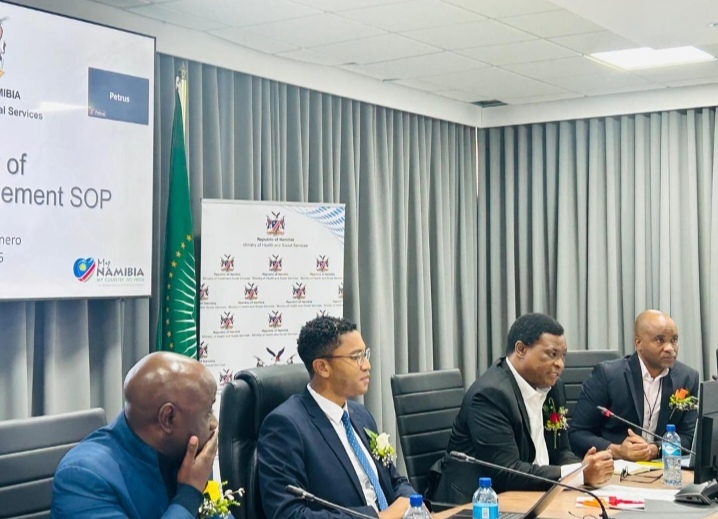


Photos: Contributed
Weyulu described the new SOP as a significant milestone in strengthening accountability, responsiveness, and quality assurance within the health system. “More importantly, it demonstrates the Ministry’s commitment to enhancing public trust and confidence in health care delivery.”
Timely acknowledgement, investigation, and resolution of complaints are not merely administrative obligations, he said. They are essential elements of patient-centred care and good governance. A prompt response reassures complainants that their concerns are taken seriously, helps de-escalate tensions, reduces frustration, and fosters constructive engagement.
“Institutions that respond swiftly and fairly to concerns demonstrate professionalism, transparency, and a genuine commitment to continuous improvement,” Weyulu said.
He stressed that confidentiality must be maintained throughout the complaints process. The process often involves sensitive personal, clinical, and professional information. “It is therefore imperative that confidentiality be maintained, not only to protect the dignity of the complainant, but also the professional integrity of the healthcare practitioner involved.”
Patients must be guaranteed that information shared during the process will be handled responsibly and discreetly, he said. Likewise, health professionals are entitled to procedural fairness, protection from premature public scrutiny, and assurance that allegations will be addressed objectively.
“Confidentiality is not an obstacle to accountability. Rather, it is a safeguard that protects the integrity, fairness, and credibility of the process,” Weyulu said.
He emphasised that the SOP should not be viewed solely as an instrument for punitive action against healthcare professionals. While accountability remains essential, an effective complaints system must also serve as a mechanism for learning, improvement, and professional development.
“Where shortcomings are identified, the process should support the rehabilitation, guidance, and professional development of healthcare practitioners, enabling them to improve competencies, strengthen ethical practice, and scale up the quality of care they provide,” he said. Such an approach benefits the practitioner, the patient, the institution, and the public.
Weyulu added that the Health Professions Council of Namibia recognises the importance of clear, fair, and effective complaints management systems. “We wish to assure the Ministry, health facilities, practitioners, and the public that the Council remains available to provide guidance, support, and professional direction where necessary in matters concerning professional conduct, ethical obligations, and related regulatory issues.”