
Staff Reporter
THE United Nations Resident Coordinator in Namibia, Hopolang Phororo, has called for stronger coordination, expanded support for small businesses and improved alignment between employment programmes to help Namibia achieve its ambitious target of creating 500,000 jobs.
In an opinion piece titled From Promise to Practice: Accelerating Namibia’s Employment Ambitions, Phororo stressed that while Namibia already has numerous job creation initiatives in place, the country now needs to focus on ensuring that these efforts produce measurable results and reach more people.
“Different headlines. Different angles. But they all point to the same reality: jobs and livelihoods matter deeply to Namibians,” Phororo said, referring to ongoing public discussions around youth unemployment, entrepreneurship and skills development.
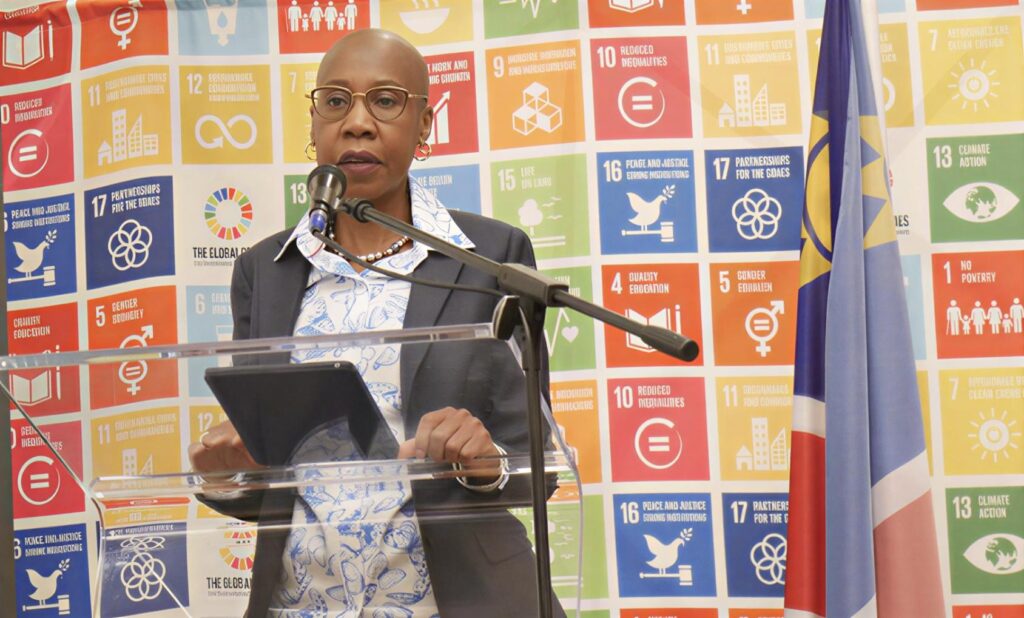
PICTURED: UN Resident Coordinator to Namibia, Hopolang Phororo. Photo: FAO Namibia
According to the Namibia Statistics Agency, youth unemployment stood at around 44% in 2023, highlighting the urgency of creating sustainable economic opportunities for young people.
Phororo explained that the United Nations is supporting Namibia’s employment ambitions through the Global Accelerator (GA) on Jobs and Social Protection for Just Transitions, an initiative aimed at aligning employment policies, investments and implementation efforts between Government, development partners, the private sector and UN agencies.
The initiative brings together agencies such as the Food and Agriculture Organization, the International Labour Organization and the United Nations Development Programme to support employment creation, skills development and entrepreneurship.
Phororo said Namibia already knows which interventions contribute to job creation, including better training opportunities, support for small businesses and stronger private sector participation.
“The question is whether we are organised to deliver at scale,” Phororo said.
She added that one of the major challenges remains the lack of a coordinated system to track employment programmes, measure results and identify successful initiatives that can be expanded nationwide.
“As a result, promising initiatives are not consistently amplified or replicated, and the collective impact remains below its potential,” she added.
Phororo further highlighted the importance of micro, small and medium enterprises (MSMEs), saying thousands of small businesses across Namibia continue to sustain livelihoods despite facing high failure rates.
She warned that many small businesses struggle to survive beyond their first few years, raising concerns about whether entrepreneurship programmes are creating sustainable businesses or only short-term enterprises.
“If Namibia is to make meaningful progress toward its job creation ambitions, these enterprises must be encouraged not only to start, but to grow,” she said.
Phororo also linked Namibia’s employment ambitions to the Government’s recent push to expand access to free tertiary education, warning that the country must ensure the economy is able to absorb increasing numbers of graduates entering the labour market.
“Without corresponding progress on job creation, there is a real risk of increasing numbers of educated but unemployed youth,” she cautioned.
Hopolang Phororo concluded that Namibia’s employment challenge will require stronger coordination, accountability and a greater focus on expanding programmes that deliver practical results.
“As Namibia looks beyond 35 years of independence, the opportunity is clear: to move from well-intentioned initiatives to a more coordinated and results-driven approach to job creation,” Phororo said.