


Staff Reporter
THE Parliamentary Standing Committee on International Relations, Defence and Security has raised concern over stalled negotiations with Germany on genocide reparations, calling for a more inclusive and transparent process that formally involves Parliament.
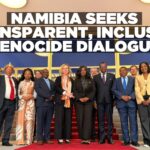
The committee, led by Acting Chairperson Utaara Mootu, is currently on an official visit to Germany, where it engaged members of the German Bundestag on the long-running negotiations concerning redress for the Herero and Namaqua Genocide.
While acknowledging Germany’s 2021 recognition of the genocide and its €1.1 billion development support pledge, the committee said it shares the dissatisfaction expressed by affected communities, who view the offer as inadequate and not reflective of genuine reparations.
Mootu stressed that the current negotiation framework, which is largely limited to government-to-government engagement, excludes key democratic institutions and stakeholders.
“We cannot accept a process that speaks about our people without fully including their elected representatives. Parliament must not be an observer; it must be a central participant in these negotiations,” she said.
She further emphasised that a Parliament-to-Parliament approach is essential to ensure accountability and inclusivity, adding that affected communities continue to question why their historical grievances are being treated differently compared to other global cases of redress.
“This is not only about financial commitments; it is about justice, dignity and recognition. Any outcome that does not reflect these principles will not be sustainable,” Mootu said.
The committee called on the Namibian government to formally include Parliament in all current and future negotiations with Germany, particularly on issues of historical justice and national significance.
The delegation also highlighted the need for transparency and broader participation, noting that a meaningful resolution must reflect the expectations of the Namibian people, especially the affected Ovaherero and Nama communities.
Photo: Parliament of the Republic of Namibia


