
Maria David
DEPUTY Prime Minister and Minister of Industries, Mines and Energy, Natangue Ithete, said they are committed to overcoming unique electrification challenges and leveraging the country’s abundant natural resources.
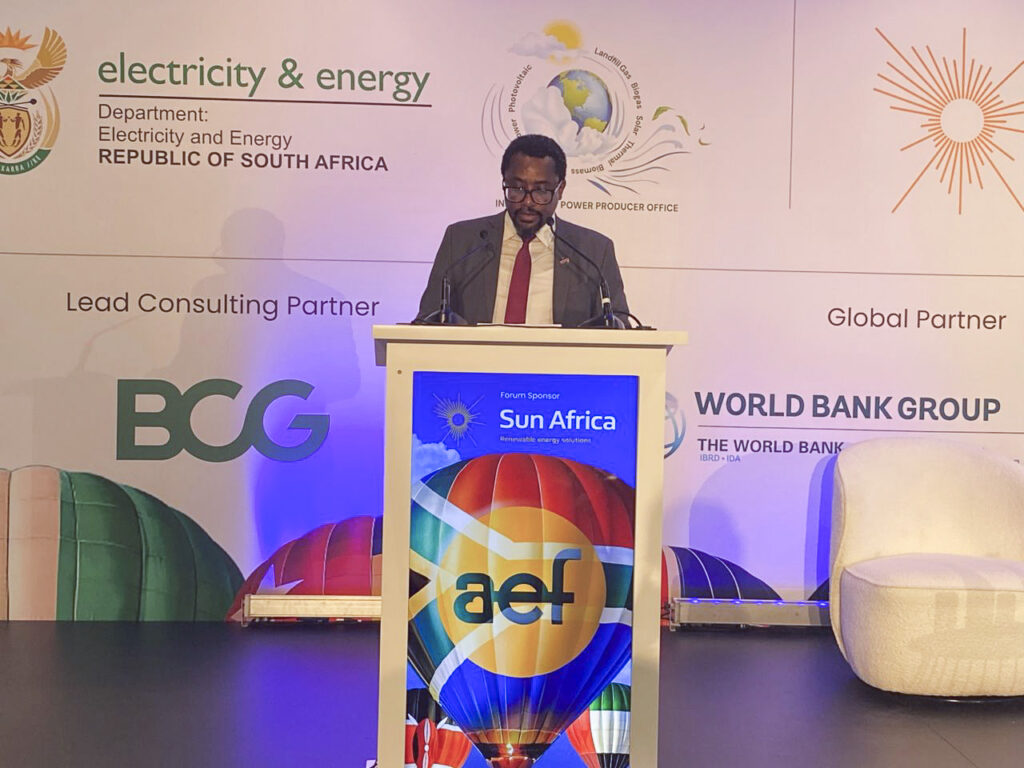
Ithete made the remarks during the official opening of the Africa Energy Forum in Cape Town, South Africa, on Thursday.
According to Ithete, Namibia faces the significant hurdle of electrifying a sparsely populated terrain. The high-income inequality further compounds this challenge, leading to some of Africa’s highest per-connection costs in reaching remote, underserved communities.
Despite these obstacles, Ithete said Namibia remains resolute, buoyed by a conducive policy environment, strong political will, and inherent stability.
“Our ultimate aim is to achieve at least 70% electricity access by 2030 and 80% renewable energy capacity by 2028,” he said.
He added that this translates to an Energy Compact target of connecting an additional 210,000 households by 2030, representing a remarkable sevenfold increase over the current pace.
Ithete indicated that this ambitious goal is underpinned by comprehensive policy, institutional, and financial reforms.
Further, he said that Namibia’s energy compact efforts are firmly supported by its national development priorities and a wealth of natural endowments, including solar, wind, and emerging hydrogen and gas resources.
“The nation is strategically leveraging these resources to strengthen domestic generation capacity and reduce dependence on imports,” he added.
He added that to facilitate this transformation, the government is actively reforming its procurement frameworks, creating a results-focused National Electrification Fund, and opening new avenues for private sector investment, including in transmission.
Moreover, Ithete said the implementation of the Modified Single Buyer Model and enabling frameworks for Independent Power Producers (IPPs) are clear indicators of this progressive direction.
He stressed that the compact aligns with a broader vision to transform Namibia into a hub for green manufacturing, regional energy trade, and job creation.
“We are building an energy system, and at the same time we are building a resilient, inclusive energy economy,” he affirmed.
Ithete then said that Namibia is also looking forward to advancing the M300 agenda, which aims to connect 300 million Africans to electricity by 2030 in the second cohort of countries.
He then indicated that they stand ready to partner—with governments, investors, development banks, and innovators—to deliver on this Compact.
He acknowledged the substantial scale of the challenge but emphasized the nation’s unwavering resolve, proudly saying: the scale of the challenge is great, but so too is their resolve—after all, they are the land of the brave.