Maria David
IN pursuit of a more food-secure Namibia, the strategic cultivation of rice, a crop well-suited to the country’s wetland areas, is taking centre stage.
Farmers, having undergone intensive training at the Ogongo Campus, are now leveraging their acquired knowledge to tackle cultivation challenges and work towards a future where their communities and the nation can thrive through local food production.
Sister Maria Magdalena Shetunyenga, one of the rice farmers from Epalela’s St Anselm Project, said they are proud and grateful for the opportunity the campus has granted them to gain knowledge so they can feed themselves and their neighbours.
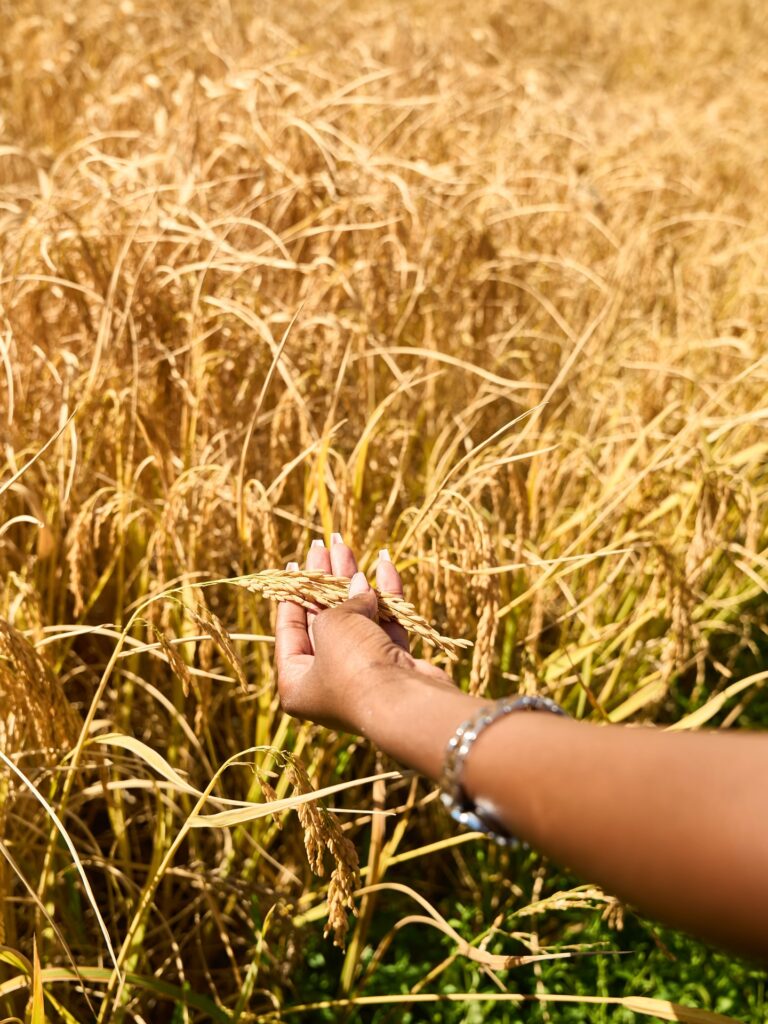
Picture for illustrative purposes only. Photo: Miss Namibia Facebook
According to Shetunyenga, their journey with rice farming began in 2021 with four open pans. At that time, their skill was still limited, resulting in a small harvest.
“For our rice plantations, we utilize canal water, which is sometimes scarce. Additionally, manure and fertilizers are expensive, leading to limited application and occasionally a poor harvest,” she said.
She added that the main challenges they face are water scarcity and birds that feed on their rice crops.
Last year, Shetunyenga indicated that they harvested 1.7 tons, and this year, they expect to harvest more compared to last year.
She explained that the benefit of rice is that it is very tasty and healthy for the nation because it comes from the fields ready for cooking without any preservatives added.
“It also provides income for our own local people. I only have a request to society to see the need so that the number of rice farmers will increase to ensure food sufficiency in our country,” she added.
She then requested the government to train more citizens in rice farming and to assist them with machines for rice milling.
Shetunyenga also expressed her gratitude to the Namibia-Japan Rice and Mahangu Project for their impactful contributions in equipping them with the skills to cultivate rice in Namibia.
University of Namibia (UNAM) Vice Chancellor Kenneth Matengu said that since its inception, the Ogongo Campus has trained about 4,000 farmers in the Ogongo area in rice cultivation.
He added that this year, 20 farmers who received training in rice planting have successfully harvested their yields, demonstrating the viability of the initiative.