Investments increase to N$114.9 billion in four years
Zorena Jantze
SINCE 2021, the cumulative net Foreign Direct Investment (FDI) inflows have reached N$114.9 billion, a figure that far exceeds the N$50.5 billion in net FDI inflows recorded over the entire period from 2009 to 2020.
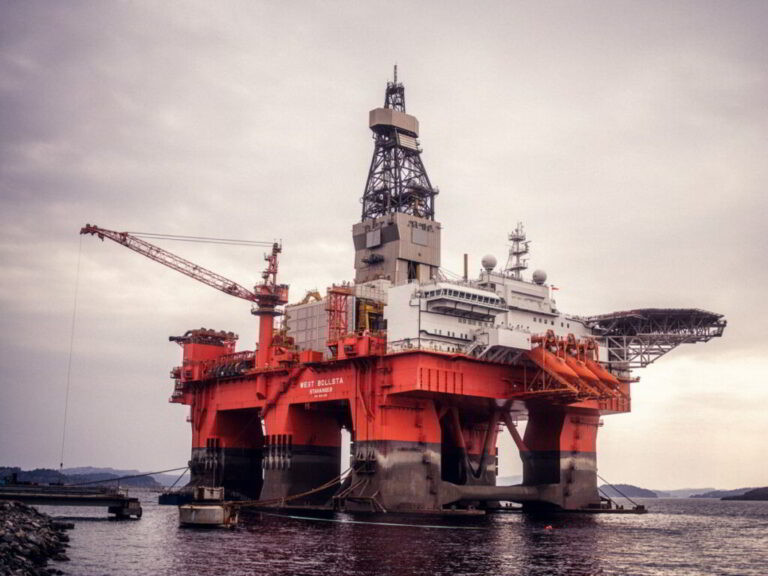
While total FDI inflows between 2021 and 2024 amounted to N$114.9 billion, this surge has been largely driven by oil and gas investments (N$58.9 billion).
However, net FDI excluding this sector still amounts to N$56.0 billion over the period. This suggests that, even without the oil and gas sector, recent investment inflows remain robust, reflecting notable growth sustained and investor interest in other sectors of the economy. The surge comes after the country, between 2016 and 2020, faced a period of economic difficulty, characterised by declining investment inflows and net outflows due to structural challenges and external shocks.
This is revealed in the country’s first-ever FDI Report, released by the central bank, the Bank of Namibia, in conjunction with the Namibia Investment Promotion and Development Board (NIPDB).
The report detailed that the number of employed persons by Foreign Direct Investment Enterprises (FDIEs) rose, mirroring the growth in FDI inflows, on average.
Foreign-owned enterprises altogether were estimated to have employed 62,817 persons (including temporary employees and contractors) in 2023, compared to 55,982 persons employed in 2019. This translated into 6,835 new jobs created over the span of five years, mainly stemming from the wholesale and retail, mining and quarrying, and financial sectors.
In 2020, however, employment by FDIEs declined by 2.9%, in line with the trend observed in FDI flows into Namibia during that period. FDIEs accounted for about 11.5% of total employment as per the 2023 Labour Force Survey, reflecting the fact that FDI is predominantly directed towards high-paying, capital-intensive sectors such as mining and quarrying and financial intermediation, which require a highly skilled workforce. As a share of formal employment numbers, however, employment by FDIEs was estimated at 27.2% in 2023.
The wholesale and retail trade sector generated most of the FDIE jobs despite the relatively low FDI inflows and positions. The sector was the largest employer because it is highly labour-intensive and service-oriented, employing about 18,566 persons. Between 2019 and 2023, the sector further created about 2,213 jobs in FDIEs.
Namibia’s net FDI inflows were mainly from China, the Arab Gulf States, the United Kingdom, and France between 2022 and 2024. In 2024, Namibia’s FDI inflows were mostly directed towards the mining sector, more specifically for oil and gas exploration and appraisal activity. A bulk of these inflows were sourced from the Arab Gulf States, Portugal, France, and the United Kingdom. Inflows from China remained among the top three, although declining to N$4.3 billion in 2024 from N$10.0 billion, largely due to lower uptake of intercompany debt by foreign-owned enterprises operating in the mining sector.
Notwithstanding the slowdown in FDI flows globally and across African economies, Namibia climbed to 7th place among Africa’s top FDI destinations, attracting USD2.4 billion. This marks a significant improvement from its 16th place ranking in Africa in 2022. This outcome not only positively impacts the country’s continental ranking but also highlights the impact of oil discoveries, as well as the growing investor confidence in Namibia, improving Namibia’s attractiveness as an investment destination in Africa and shaping the global perception of Namibia as an investment location.
The Greenfield FDI Performance Index assesses the number of greenfield investment projects relative to the size of an economy. As per FDI Intelligence magazine, the Greenfield Performance Index adopts a methodology developed by the United Nations Conference on Trade and Development (UNCTAD) for general FDI to focus exclusively on greenfield FDI, excluding mergers and acquisitions, intercompany loans, and other types of cross-border investments. In the overall index, Namibia was ranked 15th globally in 2023, and on the African continent, Namibia ranked 3rd.
According to UNCTAD, Namibia’s value of announced greenfield FDI projects totalled USD1.2 billion, up from USD572.0 million in 2022. Greenfield FDI, which involves foreign entities investing to establish new facilities/plants/factories, is critical for Namibia as it seeks to diversify its economy, foster emerging industries, and nurture new growth opportunities — signalling green shoots of development.