Placido Hilukilwa
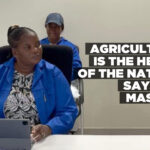
THE Deputy Minister of Agriculture, Fisheries, Water and Land Reform, Ruthy Nchinzobe Masake, said that agriculture is the heart of the nation, supporting families, communities, and local economies across the country.
Delivering her maiden speech in the National Assembly on Wednesday, Masake acknowledged and saluted the invaluable contributions of the farmers, fishermen, and rural communities whose unwavering dedication to agriculture, water management, and land stewardship serve as the backbone of the Namibian economy.

“Their resilience, hard work, and innovation will continue to guide the policies we develop, promote, and implement,” she said.
She also said that agriculture, fisheries, water, and land are the fundamental pillars of Namibia’s economic growth, social development, and environmental sustainability.
“These sectors,” she said, “are not only crucial for ensuring food security but also for providing livelihoods to millions of our people.”
Masake said: “In the face of global challenges such as climate change, dwindling natural resources, and heightened competition, we bear a collective responsibility to strengthen these sectors in a way that is sustainable, inclusive, and forward-thinking.”
According to her, the future of agriculture lies in embracing modernization and sustainable practices.
“As such, we must leverage innovation and technology to enhance productivity while protecting our land and water resources. A key priority will be the continued empowerment of our farmers, particularly women and youth, through improved access to markets, modern farming techniques, and financial support,” she said, adding that the fisheries sector plays a crucial role in food security and provides essential livelihoods to coastal communities and the nation as a whole.
She stressed the need to address challenges such as overfishing, climate change, and infrastructure gaps by adopting responsible fishing practices, strengthening regulatory frameworks, and investing in the sustainable management of marine resources. “These actions are vital to ensuring the long-term prosperity of this sector for future generations,” she said.
Masake described water as “our most precious resource” that requires careful and effective management, especially as the nation confronts the pressures of urbanization and shifting climate patterns.
“Our approach to water management,” she said, “will prioritize policies aimed at ensuring equitable access to clean, safe water for all citizens, enhancing water conservation, and promoting responsible usage across all sectors.”
Turning to Land Reform — a central issue in shaping the socio-economic landscape of the nation — she declared her commitment to advancing land justice, ensuring that land reform programs are fair and transparent, and contributing to sustainable agricultural development.