Staff Reporter
PRESIDENT Nangolo Mbumba has officially inaugurated the extension of the Department of Wildlife Management and Tourism Studies at the University of Namibia (UNAM) Katima Mulilo Campus, which aims to provide education focused on wildlife management, conservation, and tourism.
“Many of us may recall that in the past, Africa, and Namibia in particular, lacked the capacity to develop its own human resources. We were unable to produce graduates with high-level competence and skills to conduct research, analyse and diagnose problem areas, and formulate evidence-based policies. Today, we can take pride in our growing capacity, through UNAM and other tertiary institutions, to provide targeted, effective, and relevant solutions pertaining to community challenges, the environment, and wildlife,” the president said.

INAUGURATED: Scenes from the inauguration of UNAM’s Department for Wildlife and Tourism in Katima Mulilo. Photos: Namibian Presidency. 
INAUGURATED: Scenes from the inauguration of UNAM’s Department for Wildlife and Tourism in Katima Mulilo. Photos: Namibian Presidency. 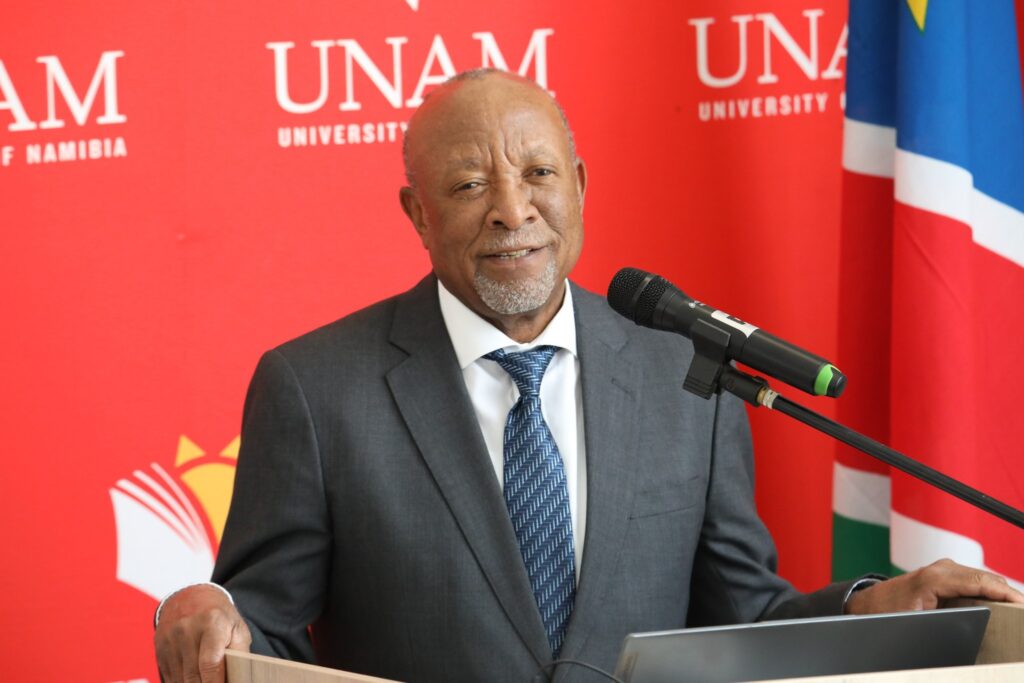
INAUGURATED: Scenes from the inauguration of UNAM’s Department for Wildlife and Tourism in Katima Mulilo. Photos: Namibian Presidency. 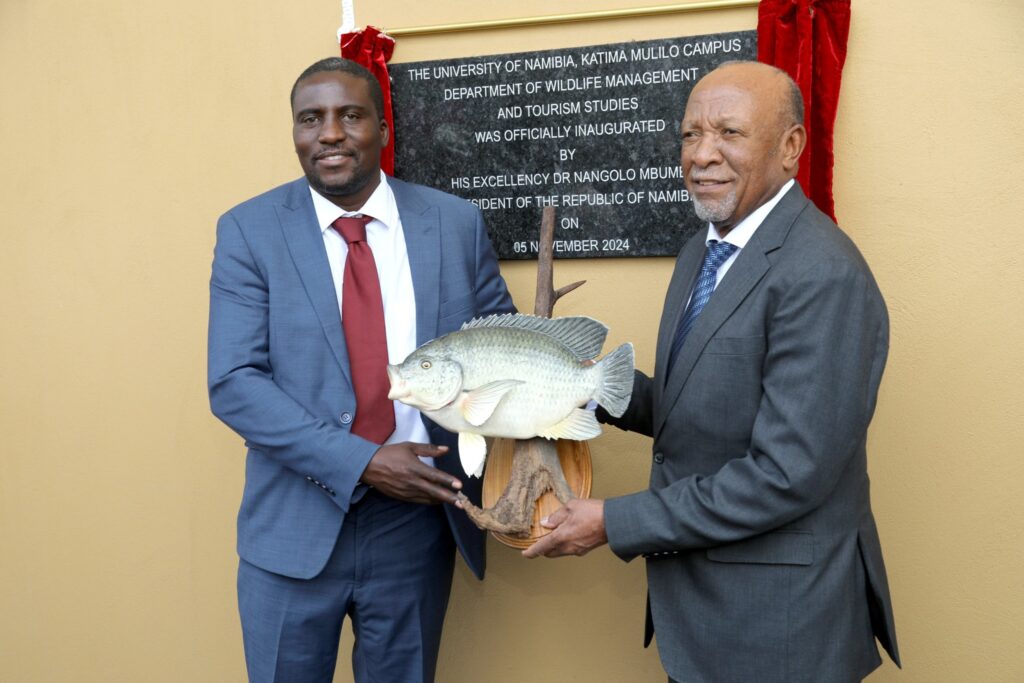
INAUGURATED: Scenes from the inauguration of UNAM’s Department for Wildlife and Tourism in Katima Mulilo. Photos: Namibian Presidency. 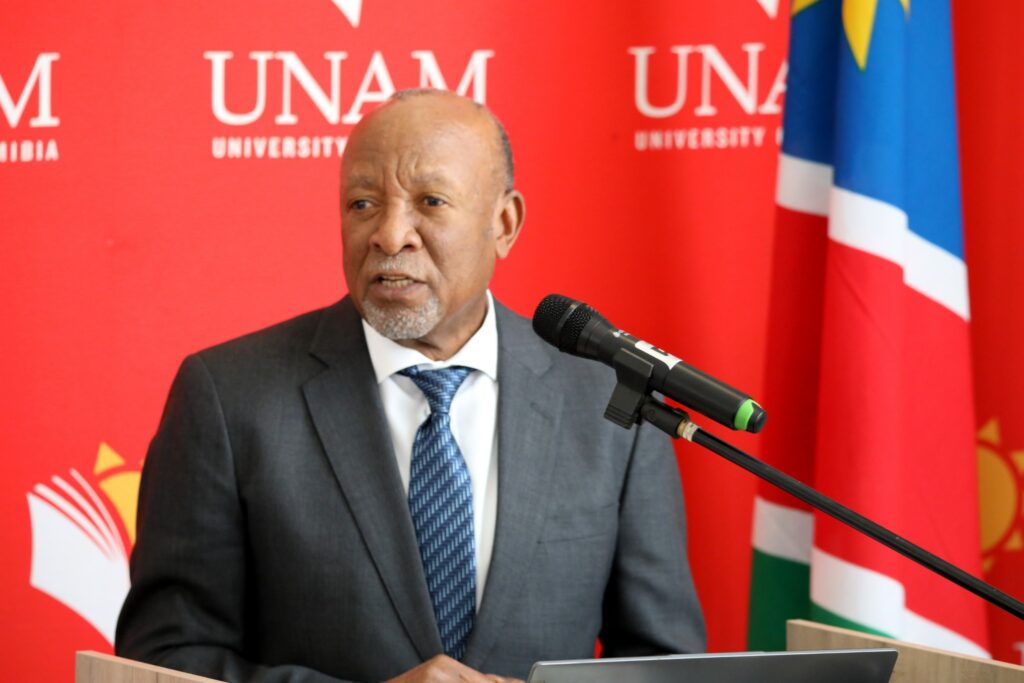
INAUGURATED: Scenes from the inauguration of UNAM’s Department for Wildlife and Tourism in Katima Mulilo. Photos: Namibian Presidency. 
INAUGURATED: Scenes from the inauguration of UNAM’s Department for Wildlife and Tourism in Katima Mulilo. Photos: Namibian Presidency. 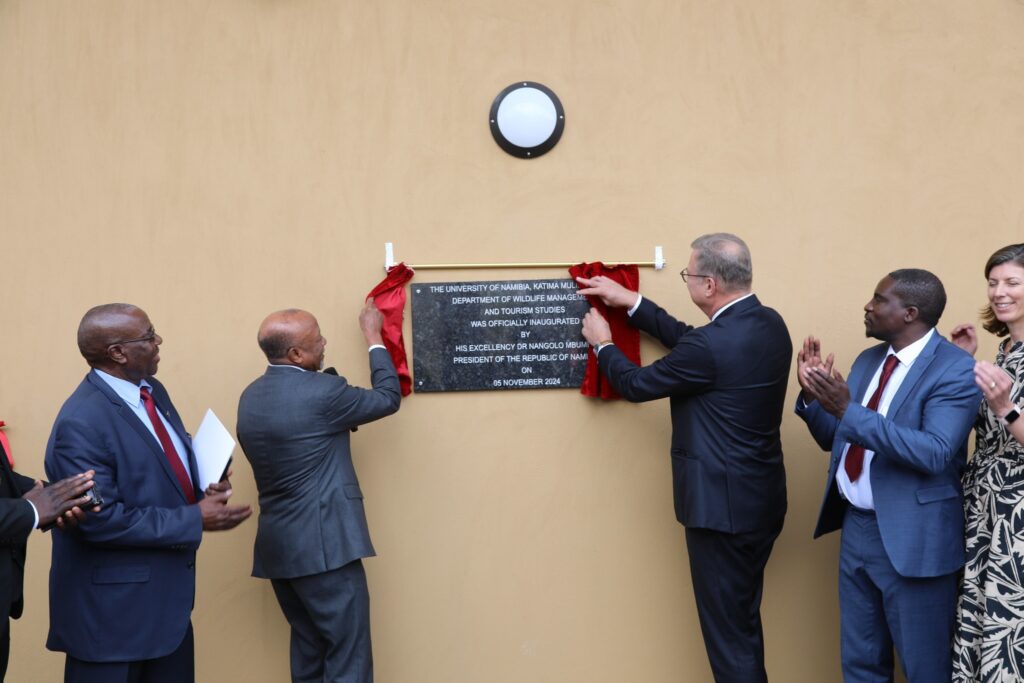
INAUGURATED: Scenes from the inauguration of UNAM’s Department for Wildlife and Tourism in Katima Mulilo. Photos: Namibian Presidency.
He highlighted that the Zambezi Region and the Kavango-Zambezi Transfrontier Conservation Area (KAZA TFCA) are home to several national parks with rich biodiversity. However, these areas also face unique challenges that threaten their biodiversity.
“One of the ways to address the immense challenges and development prospects in the area is through the development of youth by motivating them to take advantage of the opportunities the parks present. If our youth are equipped with the requisite skills in research, technology, wildlife and tourism management practices, and many others, they will be able to help us address the manifold challenges of wildlife management. They will also help us enhance and extract the maximum value that our communities could derive from our natural resources,” President Mbumba said.
The president further highlighted the rising issue of human-wildlife conflict in northern Namibia, emphasising that UNAM’s presence and expansion in Katima Mulilo strengthens communities by training students in peaceful human-wildlife coexistence.
“The establishment of the Department of Wildlife Management and Tourism will enable local communities from Zambezi—and, I hope, from the five countries comprising the KAZA TFCA—to send university-age students to tap into the educational opportunities on their doorstep. We are confident that such students will graduate from this institution with the competencies, skills, knowledge, and adaptability that we expect our future leaders to possess in order to uplift our communities from poverty,” President Mbumba added.