
Maria David
TO improve the efficiency of banking, NamPost formally introduced its digital banking channels on Thursday.
NamPost has a branch network of 136 service points across the country.
Minister of Information, Communication, and Technology, Emma Theofelus, said they have recently finalized the Namibia National Digital Strategy (NDS) for the period 2024-2028.
According to Theofelus, this comprehensive blueprint outlines their strategic framework for Namibia’s holistic digital development. The NDS charts the course for the nation’s digital transformation, with a focus on bridging the digital divide, promoting digital literacy, providing access to citizen-centric digital public services, and creating greater economic opportunities for all Namibians.
“Through the inclusive implementation of this strategy, we aim to empower digitally enabled citizens and drive nationwide progress. NamPost has already demonstrated its readiness as a key stakeholder in this journey, positioning itself as a leader in our shared vision for a digitally inclusive Namibia,” she said.
She added that they are strengthening their commitment to Namibia’s economic development. Consider the 271,000 VISA SmartCard holders—Namibians who now enjoy access to affordable payment services backed by secure savings facilities, and the 126,618 individuals insured through NamPost, many of whom are low-income earners. This demonstrates the fruits of adaptation—a proactive step towards digital transformation for the future.
Theofelus indicated that NamPost’s fees remain among the lowest in the market, making essential financial services accessible. Its post offices, fleet, warehouses, and IT systems have become a launchpad for further development.
Speaking at the same event, Chief Executive Officer of NamPost, Festus Hangula, indicated that over the years, NamPost has gone through a series of changes, akin to metamorphosis or transmutation, with postal operations also running financial services under the “savings bank.”
“It is clear that savings banks were primarily established to serve the unbanked, underbanked, and low-income people. That aspect has not changed; we remain firmly focused on financial inclusion,” he said.
He added that NamPost had assets of roughly N$69 million, which have now grown to over N$8.1 billion.
In 2009, Hangula indicated that assets were N$1.5 billion, reflecting significant growth over the past ten years. Notably, a significant portion of those assets consists of financial assets from the savings bank.
He stressed that savings bank account holders, especially those with savings and transactional accounts, need access to their funds to transact, pay bills, send money, etc. It is in that context that they are providing a convenient digital platform to meet these needs.
Hangula said that in 2006, they introduced biometric verification, and it is only recently that other financial service banks have begun discussing the possibilities.
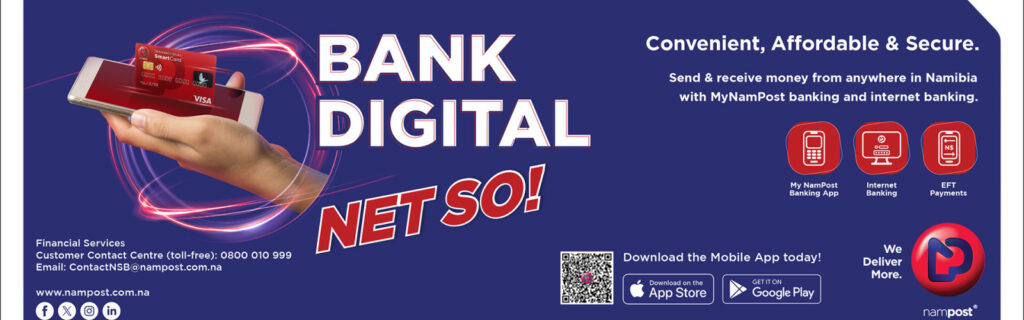
NamPost has now launched a NamPost App, giving customers the ability to perform EFT transactions, access their accounts online, check balances, and make payments through the app.