Staff Reporter
Agriculture, Water, and Land Reform Minister Calle Schlettwein said that although water is central to Africa’s economic and social development, political stability, and peacebuilding efforts, African governments are not investing enough to guarantee a climate-resilient and water-secure future for the continent.
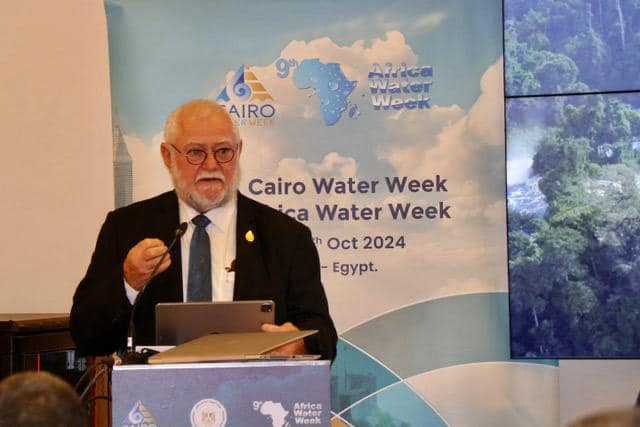
He was speaking at the official launch ceremony of the Africa Water Investment Platform for the Continental Africa Water Investment Programme (AIP) in Cairo, Egypt, recently. The Platform is a commitment of the African Union High-Level Panel to assist with the promotion of “a credible pipeline of bankable projects.”
Schlettwein expressed his satisfaction with the latest developments, saying that they were the results of an extensive consultative process with all stakeholders and represent the first step in realizing the goals in the ambitious journey to bring financing for Africa’s water sector to sustainable levels.
He said that over the past 50 years, disasters related to weather, climate, or water hazards have caused an average of roughly 120 fatalities and losses estimated at more than US$200 million (N$3.5 billion) daily at the global level.
“In addition,” he said, “the number of weather- and climate-related disasters increased fivefold over the 50-year period, driven by anthropogenic climate change causing more extreme weather events.”
Water resources under pressure
According to the Minister, water resources are under increasing pressure due to demographic, economic, social, and climatic changes, along with the ever-growing global demand for energy, food, and water. He stressed that better management of water resources requires strengthened transboundary cooperation, the application of water diplomacy tools, climate-proof security policies, and improved water governance.
“We are running the risk of losing the race against climate change. We could have acted earlier but chose not to,” said Namibia’s water affairs minister. He emphasized the need for new ideas and approaches at regional and international levels, noting that rivers, lakes, oceans, and aquifers have no political or community boundaries.
“We need to move away from old practices of monitoring and managing these vital resources on fragmented and isolated bases.”
Schlettwein further said that the capital requirements for Namibia—a small economy of about 3 million people—to ensure secure bulk water supply up to the year 2037 countrywide stand at just above N$10 billion, with operational costs expected to increase by at least 5-6% due to inflation.
Additional funding required
Minister Schlettwein said that additional investment in the water sector over the next ten years is required to satisfy demand. He added: “A secure water supply is not only dependent on good water quality and availability, but equally on the financial and human capacities to develop, operate, and maintain the required infrastructure to bring clean water to all consumers. Development is possible only when water, capital, and human resources are sufficiently available.”
The minister further said that for Africa, there remains an investment gap of approximately 30 billion US dollars per year to achieve water security and realize the human right to water and sanitation.
During the March 2023 UN Water Conference, the African Union’s International High-Level Panel on Water Investments for Africa released its landmark report, “Africa’s Rising Investment Tide,” proposing a bold vision for how Africa can raise an additional 30 billion US dollars annually by the year 2030 to achieve water security and sustainable sanitation.
Schlettwein cautioned that Africans cannot seek financial assistance from development partners while underbudgeting for the developmental and operational costs of the water and sanitation sector.
No water, no development
“We must appreciate the fact that our overall developmental aspirations may not be fulfilled when the provision of water and sanitation services remains substandard,” said Schlettwein, adding that water and sanitation are key enablers for development, and without them, development is impossible.
Finally, he said that whether we have too little or too much water, one thing is certain: “we humans must survive together with other life on the planet.”