Staff Reporter
THE construction of the second desalination plant in the Erongo Region is set to begin in January 2025, with fresh desalinated water expected from the plant early in 2027.
Calle Schlettwein, the Minister of Agriculture, Water and Land Reform, announced this at the Land Development Conference in Henties Bay. He revealed that the desalination plant to be constructed is expected to have a capacity of about 20 to 25 million cubic metres.
The minister explained that the Erongo Region currently has enough water to meet its needs for the next five years. However, according to him, future demands might exceed the capacity of current water sources, making the additional water supply from the new desalination plant necessary to avoid a future water scarcity crisis.
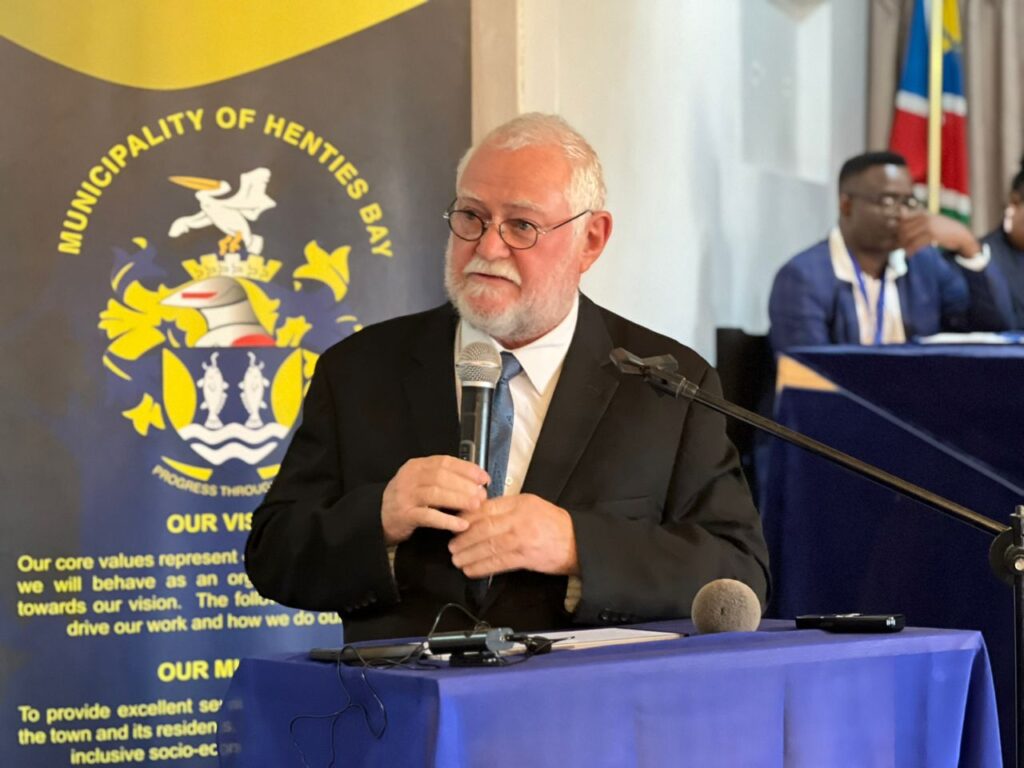
“Through NAMWATER, we are set to ensure a secure, sustainable, and affordable supply of fresh and clean water. Currently, we achieve that by exporting two groundwater aquifers, the Omaruru Delta close by and the Kuiseb Delta in the vicinity of Walvis Bay. Thirdly, we are supplied with clean desalinated water from the Orano Desalination Plant,” Schlettwein explained.
He pointed out that these three sources – the two aquifers and the Orano Desalination Plant – are fully integrated by a complex network of pump stations, pipelines, and reservoirs, which ensure the reliable and resilient supply of water. However, he said, the region has now reached the ceiling of sustainable supply from these resources, which currently stands at just under 30 million cubic metres per year.
“Your ambitious development plans, as well as those of Walvis Bay and Swakopmund, increased mining activities and industrial demand, and last but not least agriculture and food production, have increased the projected demand beyond what the sources can deliver,” the minister said.
He therefore emphasised the significance of constructing the second desalination plant, highlighting it as essential to prevent a future water crisis.
“This is a very exciting project. I believe that it puts us ahead of the curve. We will have enough water for now, for the next five years. These sources can pull us through, but thereafter, not anymore, and we will be in time for adding another resource that avoids a water crisis in this area,” Schlettwein added.