Staff Reporter
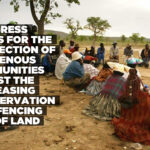
NAMIBIA is one of the leading countries in terms of wildlife-protected areas, with about 45% of the land under conservation and over 80 conservancies established in the country. However, the increasing efforts to fence off land for conservation have affected local communities and indigenous peoples, with some being labelled as poachers or expelled from the areas they once inhabited. In order to adopt a rights-based approach to conservation, Namibia is hosting the Indigenous Peoples and Local Communities Conservation Congress, which has brought together community leaders from across the African continent in Namibia from 25 to 27 October 2023. Some case studies in Namibia include [mention specific case studies].
Speaking at the event, the Deputy Minister of Environment, Forestry, and Tourism, Heather Sibungo, stated that the event will lead to the establishment of a body dedicated to protecting the rights of indigenous peoples amidst conservation efforts. Prior to the event, Sibungo highlighted a conference held in Kigali, Rwanda in July 2022. She added that the Kigali call for action supports the rights and identities of IPLCs and aims to promote the fair sharing of benefits associated with conservation. She emphasized that the next three days will focus on people-centred conservation and the roles local communities play in wildlife protection.
“Hailing from the Zambezi, I am aware of the challenges people face while coexisting with wildlife. These challenges cannot be addressed by a single country. I urge all African countries and development partners to support the government’s initiatives,” Sibungo said.
Deputy Minister of Marginalized Communities, Royal Johan Kxao ǀUiǀoǀoo, noted that there are groups recognized as marginalized communities in Namibia, including the San and Ovahimba peoples. He mentioned that the constituency he represents in the NyaeNyae conservancy is currently threatened by external intrusion and emphasized the need to protect cultural rights. He emphasized that dictatorship should not be imposed on indigenous communities and stressed the importance of their consultation and participation in projects concerning them.
“Let us participate in your projects; there should be nothing about us without us,” ǀUiǀoǀoo said.