Maria David
THE first-ever mineralogical and mining museum was formally inaugurated in Tsumeb on Tuesday as a means of preserving the town’s extensive mining history.
Additionally, this was done to promote Tsumeb as a popular tourist destination and to strengthen the local economy.
Over 300 rare stones discovered throughout the area are now housed at the recently opened museum. These stones have been put on display in the museum so that everyone who visits can see the various stones.

OPENED: The first Tsumeb mineralogical and mining museum was officially opened for public. -Photos: Maria David. 
OPENED: The first Tsumeb mineralogical and mining museum was officially opened for public. -Photos: Maria David. 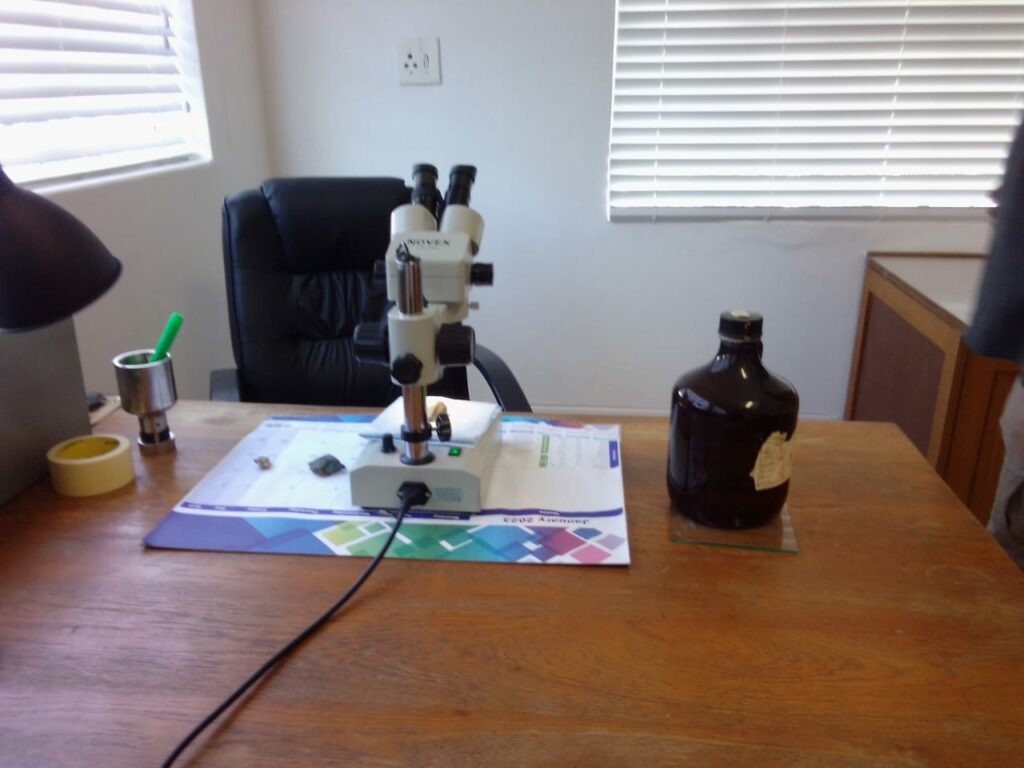
OPENED: The first Tsumeb mineralogical and mining museum was officially opened for public. -Photos: Maria David.
The Mayor of Tsumeb, Mathews Hangula, said that the Tsumeb Municipal Council is currently working to include Tsumeb’s industrial mining site into the town for the benefit of everyone and to help the nation of Namibia, which is endowed with natural resources, to prosper economically.
“This formerly active historic mining site provides the best setting for disseminating information about the significant geological, mineralogical and historical components of the Tsumeb mines and the town itself,” he said.
Thus, Hangula said, the council is working with relevant local and international stakeholders to try and preserve some of the historical and technical aspects of the area for its potential recognition.
In 2021, a decision was made by the municipality and the National Heritage Council of Namibia to develop the historic mining site into a national heritage site.
Cultural officer at the Embassy of the Federal Republic of Germany, Clarissa Judmann, said they availed approximately N$300 000 to the Tsumeb Museum for the repairs of the historic mineralogy building, which was built in 1950.
This was also meant for later use as a museum and for the preservation and safeguarding of the existing sample and map archives.
“The former historic mine site offers ideal conditions for conveying knowledge about the important geological, mineralogical and historical aspects that makes up the Tsumeb Mine and the mining town of Tsumeb,” she said.
Judmann indicated that the restored mineralogy can thus make an important contribution to communicating the natural-cultural importance of the place to the young population of Namibia, a country that is rich in natural resources.