Staff Reporter
THE witnessing of multiple dead carcasses of cattle at the state-owned Kavango Cattle Ranch (KCR) due to thirst has brought about action from government, after the Ministry of Industrialisation and Trade (MIT) and the Ministry of Environment, Forestry and Tourism (MEFT) has agreed on co-financing to fast-track the rehabilitation of the water supply points immediately.
Earlier this month, Mihe Gaomab, the Chief Executive Officer (CEO) of the Namibian Industrial Development Agency (NIDA), refuted reports that alleged that over 100 head of cattle died at the KCR in the Kavango West region. According to reports, NIDA houses over 10 000 head of cattle at the ranch.
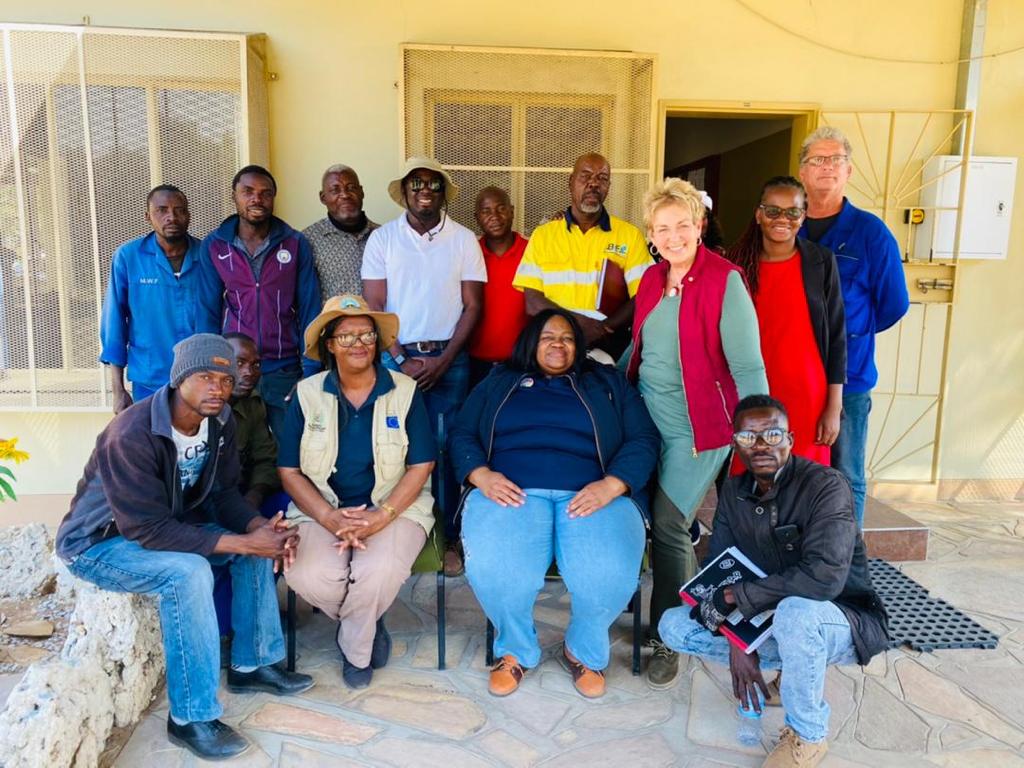
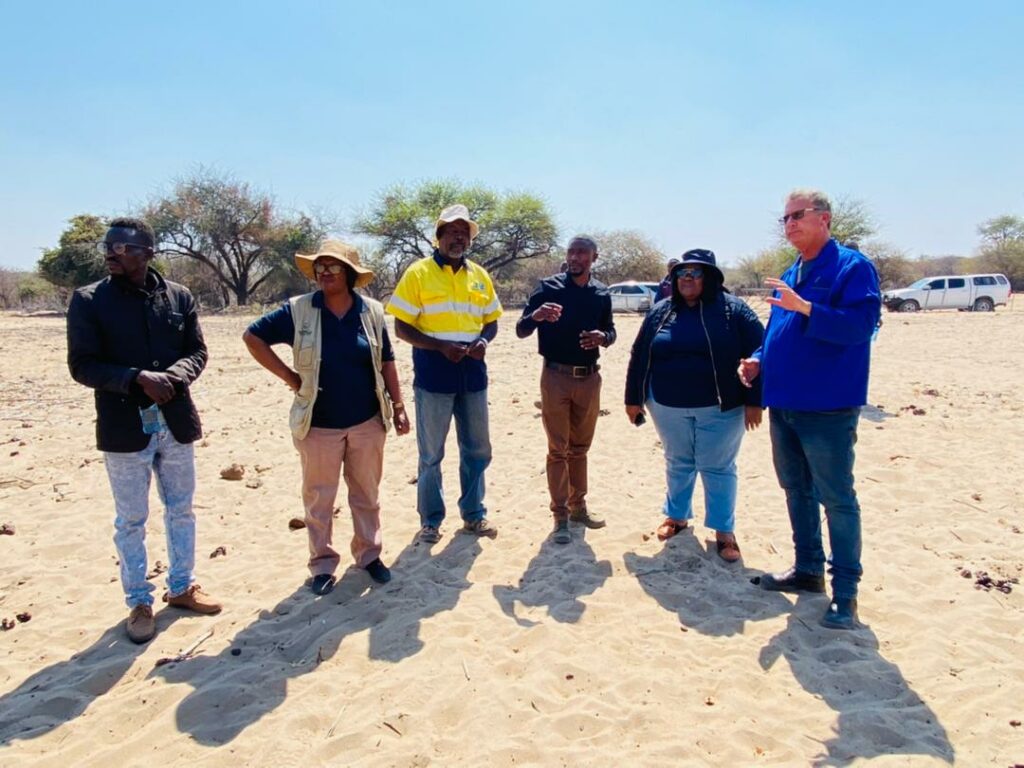
At a visit to the site, Lucia Iipumbu, the Minister of industrialisation and Trade, stated that with regards to the identified game and livestock mortalities due to thirst, both governmental parties have secured all necessary internal approvals and endorsement.

Secondly, to fast-track the bringing on stream of the wildlife reserve option, both MIT and MEFT will finalise a Memorandum of Agreement (MoU) to ensure a management plan to support both breeding and nature-based tourism enterprise development, Iipumbu shared.
She noted that the visit by MIT’s delegation was necessitated by recent developments and media reports regarding both livestock and wildlife mortalities due to thirst a the KCR.
“The situation is highly regrettable, especially at a time when as a country we are trying to make inroads on our much-needed economic recovery. It is therefore disheartening to observe the undesirable state of affairs at KCR. The MIT has duly taken note of the Namibia Industrial Development Agency Management’s recent visit here at the farm and commitments have been made to turn around the state of affairs,” Iipumba said.
She noted that MIT has also taken note of the media release by the NIDA on its position and elucidating what transpired.
However, as the Ministry, under which NIDA and by extension KCR’s operational mandate resorts, the Minister stated that they saw it prudent to conduct an assessment at the macro-level to allow government to devise appropriate policy interventions.
The upgrading and optimisation of KCR was identified as a flagship project for value addition in the Growth at Home Execution Strategy for industrialisation. Consequently, the MIT developed a business plan for KCR, which was completed and endorsed in 2017. The endorsement led to ensuring its programming within the MIT’s development budget portfolio under the National Planning Commission (NPC).
The KCR Business Plan is premised around four business and development areas: an abattoir and a meat processing facility, fodder production, game reserve as well as ensuring construction of labour housing.
This business and development pivot are meant to ensure the creation of private sector opportunities. However, given the state that KCR, as an asset, was in 2016, the Business Plan correctly identified the need for additional public investment to bring the facility to some level of development to ensure the optimisation of private sector investment attraction.
The resultant public investment pertains to substantial fencing work, rehabilitation of waterpoints and debushing work.
These public investment measures entail a delicate balancing act to ensure a viable elephant management strategy whilst work is ongoing, but also mainstreaming micro, small and medium enterprises (MSME) employment opportunities.
Given the development budget, programming the MIT along with NIDA has been implementing the work within the above-described context.