Zorena Jantze
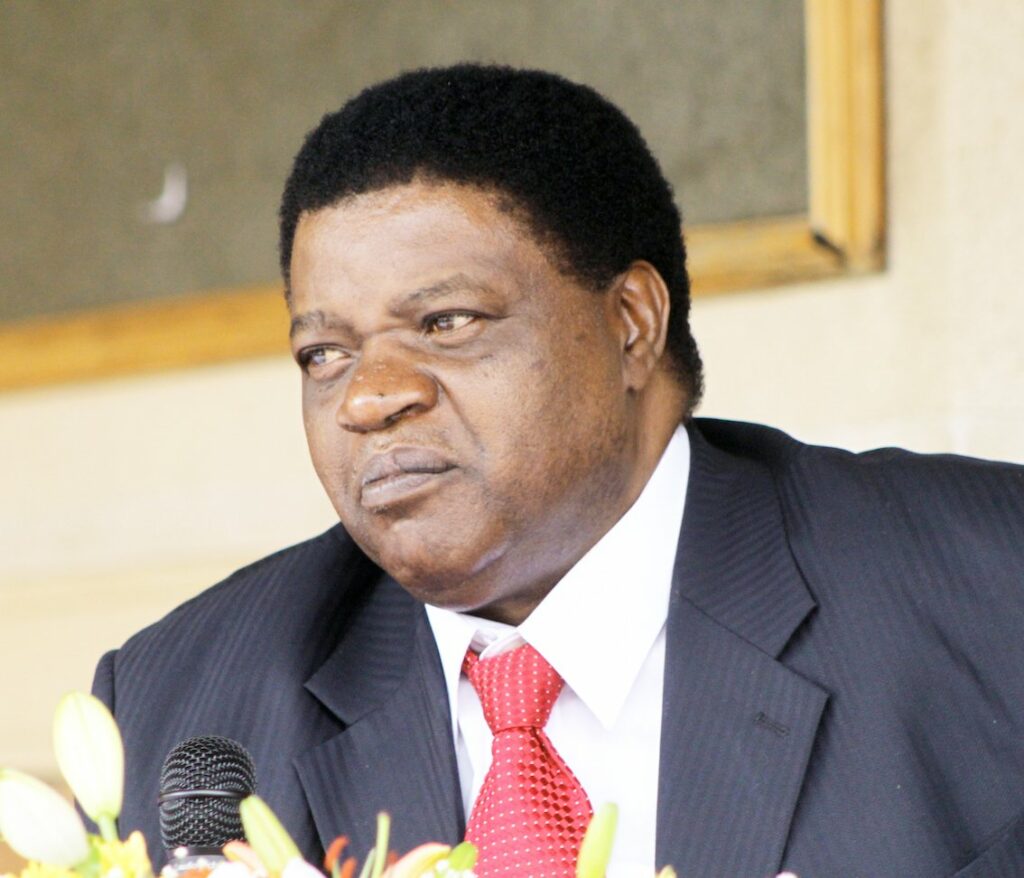
THE Minister of Labour, Industrial relations and Employment creation, Utoni Nujoma, has said that the planned mass public service servants strike will only weaken our economic base, disrupt public service delivery, and distort all recovery efforts.
In their letter dated 11th July 2022, the Namibia Public Workers Union (NAPWU) and the Namibia National Teachers Union, (NANTU) indicated to Government that they received a mandate from their members to act in terms of sections 74 and 76 of the Labour Act, 2007 (Act No. 11 of 2007) respectively and hence have decided to conduct the ballot process on the 28th and 29″1 July 2022, across all sectors in the Public Service in respect of the unresolved dispute for public servants to decide their next course of action.
“Without being preemptive of the outcomes of the ballot exercise scheduled for the 28th – 29th July 2022, we wish to point out that there are consequences for the Government, the public servants and the country at large,” Nujoma said.
Should public servants go on strike, Nujoma said that government is under no obligation to remunerate any of the employees that partake in the industrial action.
“Government throughout the negotiations has been very open, accommodating and transparent with the trade unions in terms of the financial position and the difficulties the country faces. It is in light of the above, that our offer which places additional income in the hands of our staff members in the form of transport allowance and housing benefit, be considered under the difficult economic times, as it is the best offer that Government can make at this time,” Nujoma stated.
The Trade Unions Demands were: increment in Basic Salary by 9%. Housing Benefit — 9% and Transport Benefit – 10%.
To this, the minister of Labour stated that the government cannot meet these demands.
“In the light of the dwindling Government revenue, poor performance in the economy, hardships caused by Covid and the geopolitical developments, which impact negatives on many aspects of the economy and leading to deterioration in our fiscal position i.e. revenue, debt and deficit, the Government’s fiscal position is not able to afford the full scale of demands presented by the Trade Unions,” Nujoma said.
The minister stated that the economy suffered terribly from the impact of Covid-19 leading to the economic activities declining by a record high of 7.9% and more than 4000 lives lost. “The Government stimulus package to mitigate the impacts of COVlD-19 amounted to over N$8 billion thus far,” Nujoma explained.
The minister stated that over 12 000 Namibians lost their jobs due to Covid-19 and others suffered pay cuts up to 50%, while public servants continued to enjoy the benefits that they already have even in the face of these difficult circumstances.
“The situation is already undesirable with government spending up to 48.9% of the National Budget on public servants who make up only about 4.2% of the population and just over 10% of the Namibian workforce. This leaves only 51.1% of the budget to be spend on government services and programs to benefit the rest of the Namibian population,” Nujoma said,
Anna Nghipondoka, Minister of Education, Arts and Culture of Namibia Esther Ngipondoka stated that school closures will have an impact on hostel accommodation as children will not have anyone to look after them, adding that most food items in hostels such as perishables will go bad.
This would be a loss to parents who have payed hostel fees Ngipondoka said. She added that School closures increase children being exposed to crimes, sexual violence, teenage pregnancies and suicide.
“In the event of a teachers strike, concerns are there that learners have already suffered a learning loss over the past two years, and some are still underperforming and a strike by teachers will make matters worse,” Nghipondoka said.