Business Reporter
The second and final day of the Namibia International Energy Conference (NIEC) on 21 April 2022, cemented agreements on the continent’s need to utilise its energy diversity and further industrialise as it formulates a just transition to a greener energy mix on its own terms.
At the conference, different ministers in the energy sector, including Tom Alweendo – together with his Equatorial Guinea and Zambia counterparts, Gabriel Obiang Lima and Peter Chibwe Kapala, as well as. Dr Omar Farouk Ebrahim: Secretary-General, African Petroleum Producers Organisation (APPO) – declared that a just energy transition was necessary for Africa’s industrialisation and economic development.
In a panel discussion on how to formulate a just energy transition, there was overwhelming agreement that Africa must shape its own narrative and define for itself what a just energy transition must look like.
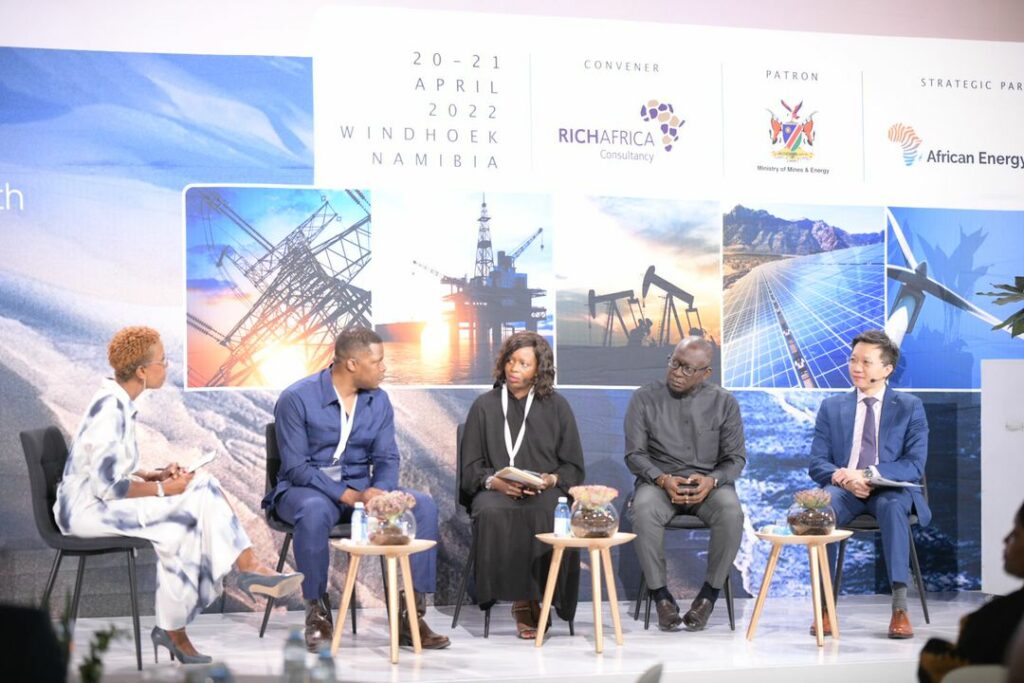
These were sentiments shared by Paulo Gomes, founder and Chairman of Orango Investment Corporation.
NJ Ayuk, Chairperson of the Africa Energy Chamber, further iterated that a just transition cannot exist without oil and gas. Being in varying states of economic, industrial maturity and carbon footprint emission levels, the developed world “needs to decarbonise, and Africa needs to industrialise,” said Ayuk. The panel proposed that Africa must take an united message to COP27, which takes place in Egypt later this year.
The calls for Africa to exploit its existing resources to create and leverage an energy mix to transform its industrial and economic development comes at a time when there is a decline in investment in oil and gas in Sub-Saharan Africa.
According to global investment trends shared by Osam Iyahem of the Africa Finance Corporation, investment and finance institutions have increasingly reallocated financing previously directed to energy capital towards renewable energy, where investment in fossil fuels reached its lowest levels yet in over 10 years in 2020.
The ministers concurred that while capital is available, access to investment is also hamstrung by how countries navigate their regulatory environments, the feasibility and the preparation and bankability of projects. A good regulatory environment, where the needs of both the country and investors are met, where the state facilitates energy share; prompt exploration; addresses environmental concerns and local content through training and local employment as well as activity controls, can make the difference between profit and plunder.
In her closing remarks at the conference, Namibia’s Deputy Minister of Mines and Energy, Kornelia Shilunga, affirmed that the end of the 4th edition of this conference has helped Namibia to understand the magnitude of the task of migration and fast tracking transformation to cleaner sources of energy to reach the remotest parts of the country, while maintaining its position to use hydrocarbon resources to help solve Namibia’s socioeconomic challenges with the oil discoveries.
“We are cognisant of the energy poverty that needs us to act in a quicker fashion as we navigate the rocky path of the geopolitics in an environmentally friendly manner, with the necessary investment, funding and resources. This must happen to the benefit of the Namibian nation,” said Shilunga.