Staff Reporter
PRIVATE veterinarians supporting Namibia’s Foot-and-Mouth Disease (FMD) response have proposed nine measures to strengthen surveillance, improve traceability and speed up the country’s recovery towards FMD-free status, including the immediate deployment of more than 20 private veterinarians who have volunteered to assist.
The veterinarians said their assessment was intended to support the DVS and not undermine it, arguing that Namibia’s early movement standstill and functioning livestock traceability system provide important foundations for containing the outbreak.
They said the next several weeks would be critical to determining whether the outbreak can be contained and Namibia can work towards restoring its FMD-free status.
The proposals form part of an industry assessment, prepared by private veterinarians who said they were volunteering under the command of the Directorate of Veterinary Services (DVS).
The veterinarians proposed that the estimated date of initial infection be published and used as the reference point for trace-back windows, inspection intervals and movement restrictions.
They also recommended that the cattle traced from the infected farm to Otjozondjupa remain under surveillance and undergo the inspections and sampling required under the National FMD Contingency Plan, rather than being considered fully cleared after a single round of negative tests.
The assessment calls for compensation arrangements to be announced within seven days, including provisions for small stock, and for the virus serotype and topotype to be published once confirmed by the relevant laboratory.
The veterinarians also proposed a dedicated surveillance standard for sheep and goats in the containment zone, including sentinel flocks, repeat serological sampling and a clearly defined level of disease detection.
They said clinical inspection alone may not reliably detect FMD infection in sheep and goats and argued that surveillance should take this into account.
Another recommendation is that the 30-day period used for certain livestock movement decisions should be linked to the estimated date of infection rather than the date of the latest veterinary notification.
The veterinarians also recommended extending trace-back investigations to fodder consignments that left //Kharas before the current movement restrictions were introduced.
A further proposal is the immediate deployment of more than 20 registered private veterinarians who have volunteered to assist the DVS.
According to the assessment, the veterinarians have provided registration details, contact information, vehicles and availability, while some have offered to work without payment. Farmers have also offered vehicles and accommodation.
The veterinarians said the National FMD Contingency Plan provides for private veterinarians to be appointed to perform specified disease-control functions under the supervision of veterinary officials.
They argued that administrative procedures should be completed alongside deployment rather than delaying the mobilisation of additional field teams.
The assessment further proposes that surveillance teams should not move to another holding until the test results from the previous holding are known, while ensuring that enough teams are deployed so that this requirement does not halt surveillance.
The final recommendation is for the DVS to publish a projected recovery date and update it regularly based on developments in the outbreak.
The veterinarians said a clear timeline would allow the livestock industry to track the progress towards the restoration of Namibia’s FMD-free status.
The assessment argues that the speed of the response is important because additional infected holdings could increase the number of animals requiring control measures and potentially affect the timeline for recovery.
It cites the World Organisation for Animal Health (WOAH) framework, under which an FMD-free zone without vaccination can regain status three months after the disposal of the last animal killed, provided the relevant conditions and evidence requirements are met.
The veterinarians said the practical target should therefore be to complete any necessary disposal as early as possible, while recognising that the eventual timeline depends on the disease situation and acceptance of the evidence by WOAH.
The assessment also asks business and agricultural stakeholders to support the DVS publicly, while pressing for the publication of the serotype, compensation arrangements and small-stock surveillance standard.
It further urges stakeholders to support the deployment of private veterinarians and avoid pressure for restrictions to be relaxed before sufficient surveillance evidence is available.
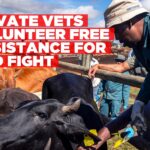
Picture for illustrative purposes only. Photo: Contributed