


Staff Reporter
“CHILDREN are being killed and injured because of the violence around them.
“The United Nations has so far verified the deaths of 142 children, with nearly 230 injured. The true figures are most certainly much higher given the scale of attacks. And they have been hurt in the very places where they should be safest – their homes, emergency shelters, even hospitals.”
These were the remarks of Manuel Fontaine, Emergency Programmes Director of the United Nations Children’s Fund (Unicef), at a press briefing on the situation in war-ravaged Ukraine.
Sunday marked Day 53 of Russia’s invasion of and attacks on its Eastern European neighbour.
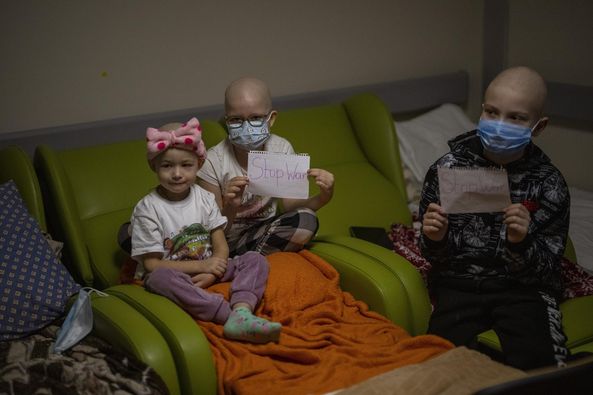
Oncology patients in the basement of a children’s hospital in Kyiv. Photo: Emilio Morenatti/AP 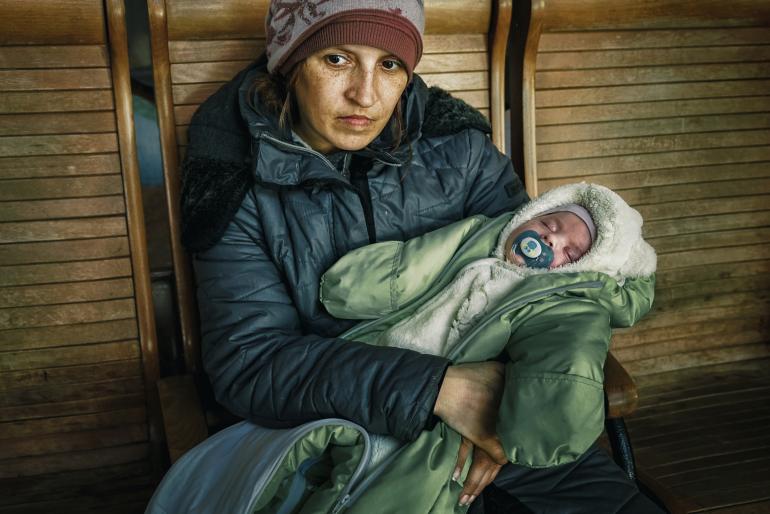
A mother and her two-month-old baby sit at the Uzhhorod train station in Ukraine after fleeing conflict. Photo: Unicef 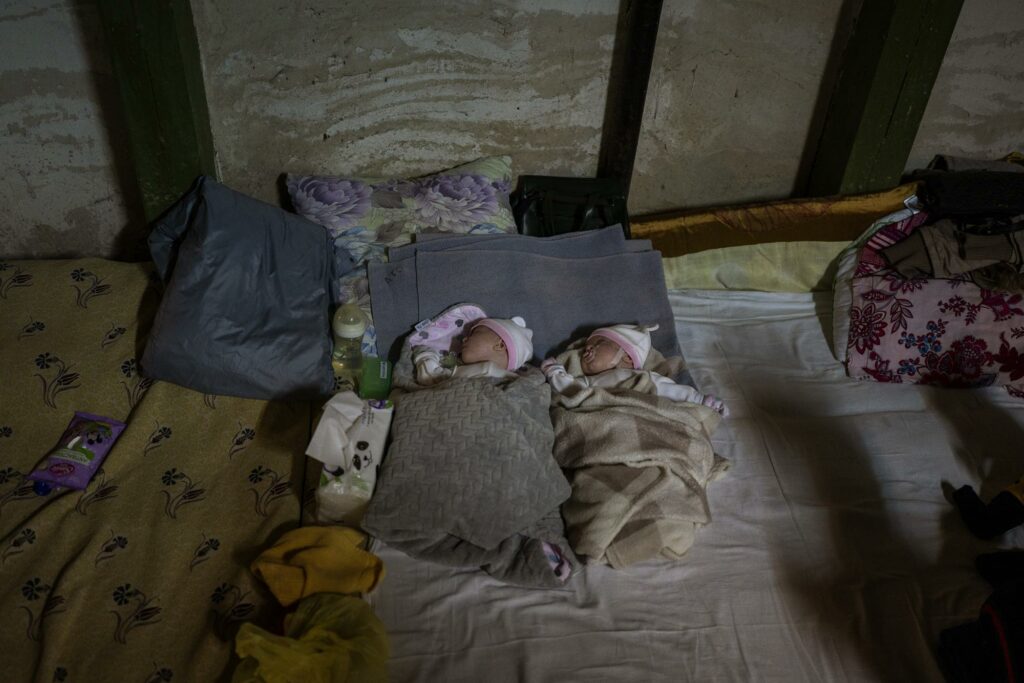
Newborn twin brothers sleep in a basement used as a bomb shelter at the Okhmadet children’s hospital in Kyiv. Photo: Emilio Morenatti/AP 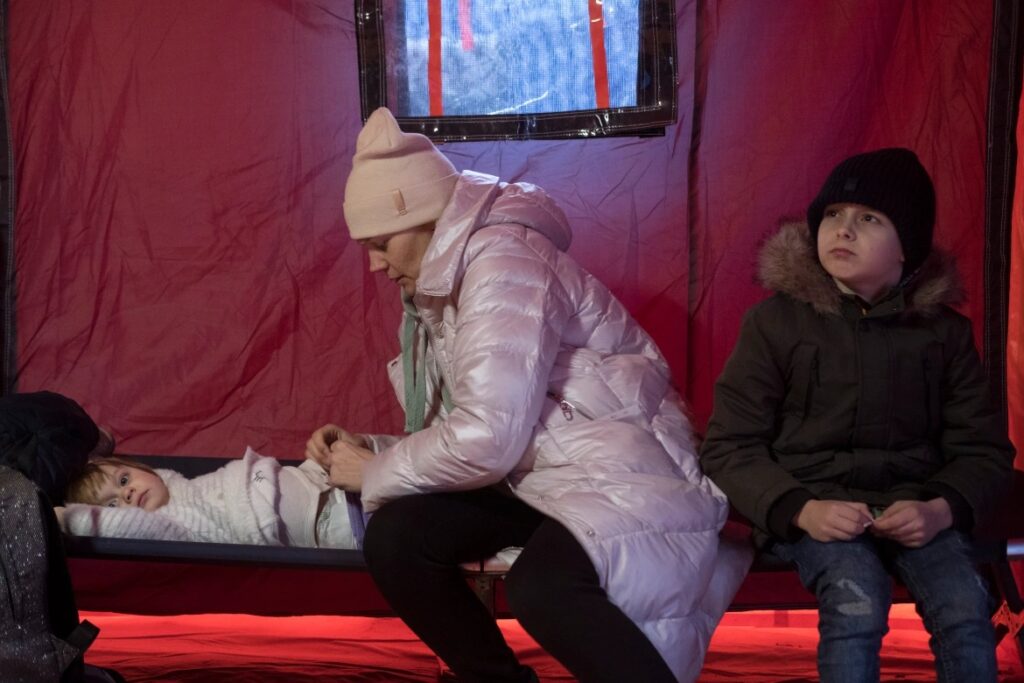
A Ukranian mother tends to her children near the Siret border crossing. Photo: Alexandra Radu/Al Jazeera
“Attacks using explosive weapons continue in populated urban areas. Homes, schools, hospitals, water systems, power plants, and places where civilians seek shelter continue to come under attack. According to the World Health Organisation, there have been more than 100 attacks impacting health care facilities,” Fontaine said.
“Families are risking their lives to escape. They should not have to do this. As we all saw, Kramatorsk train station in Donetsk oblast was attacked, killing dozens of civilians, including children, many of whom were seeking to evacuate to relatively safer areas.”
According to the UN, more than 10 million people have fled their homes in Ukraine since the start of the war.
Fontaine said he visited Zaporizhzhia in the southeast, where he spoke with children and families who escaped areas of intense fighting.
“At the intensive care unit, I met four-year-old Vlad. He had been injured by two bullets to his abdomen. His grandfather told me that Vlad was in a vehicle with ten people when they came under fire. Thankfully, the doctors think he will survive.”
The head of the hospital told Fontaine that since the start of the war, they have treated 22 children who have lost limbs because of the violence.
“The reports of grave violations and other serious rights violations against children are devastating. Children should never be the victims of conflict and must be protected by all parties in accordance with applicable international law,” Fontaine said.
“And across the country, children are facing severely curtailed access to essential services like health care, protection, water, sanitation and education. The scale and scope of the need for services will only grow as the war drags on and fighting intensifies in other areas.”
One year ago, the United Nations Security Council unanimously adopted Resolution 2573, recalling the international humanitarian law (IHL) obligations of all parties to armed conflicts to protect civilians and civilian infrastructure, including water facilities.
However, civilian infrastructures have been destroyed, severely hampering people’s access to vital services.
On 7 April, the UN General Assembly adopted a resolution calling for Russia to be suspended from the Human Rights Council.
According to Unicef, water and electricity networks are “devastated”, leaving 1.4 million people without access to safe water in the east of the country and a further 4.6 million people with only limited access.
Over 6 million people in Ukraine are struggling every day to have drinking water.
“Water is essential for life and a right for everyone,” said Osnat Lubrani, the Humanitarian Coordinator for Ukraine, warning about the health risks caused by water stoppages, particularly for children and the elderly.
“Poor water quality can lead to diseases, including cholera, diarrhoea, skin infections and other deadly infectious diseases. People are having to live in crowded conditions and are unable to follow basic hygiene measures. This has to be solved,” added Lubrani.
Humanitarian organizations providing water, sanitation and hygiene services to people impacted by the war in Ukraine reiterated calls to all parties to the conflict to avoid the use of explosive weapons in populated areas and remove military hardware and personnel from positions close to civilian infrastructure.
“Young children who live in conflict zones are 20 times more likely to die from diarrhoeal diseases linked to unsafe water than from direct violence, as a result of war,” said Unicef Ukraine Representative Murat Sahin.
“Their access to water, wherever they are, must not be jeopardized as a result of war – for children, it is a matter of life and death,” added Sahin.
Russia continues its attacks and threats.
Stung by the loss of its Black Sea flagship, the missile cruiser Moskva, and indignant over alleged Ukrainian aggression on Russian territory, Russia’s military command had warned of renewed missile strikes on Ukraine’s capital.
In the towns and villages outside Kyiv, bodies of more than 900 civilians have been found, most of them shot dead.
In Bucha, more than 400 bodies were found, and the death toll could rise as minesweepers comb the area, officials said.
Russia’s President Vladimir Putin earlier warned that United States and NATO shipments of the “most sensitive” weapons systems to Ukraine were “adding fuel” to the conflict there and could bring “unpredictable consequences.”
This came as America’s President Joe Biden approved an expansion in the scope of weapons being provided to Ukraine, an $800 million package including 155 mm howitzers — a serious upgrade in long-range artillery to match Russian systems — coastal defence drones and armoured vehicles, as well as additional portable antiaircraft and antitank weapons and millions of rounds of ammunition.
Ukrainian President Volodymyr Zelenskyy said about 2 500 to 3 000 Ukrainian troops have died so far in the war with Russia.
Moscow gave a figure of about 1 350 soldiers killed in its ranks.
Sources: Unicef/UN/BBC/Al Jazeera/Washington Post/AP/AFP


