Zorena Jantze
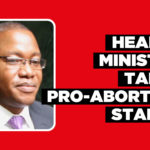
THE Executive Director of the Ministry of Health and Social Services, Ben Nangombe, said there is a need to review the current abortion law of 1975 as it is obsolete and does not speak to the realities on the ground where women continue to lose their lives due to unsafe abortions.
Nangombe made these remarks during a session on which the Parliamentary Standing Committee on Gender Equality, Social Development and Family Affairs is hearing the opinions of various groups on whether or not to legalise abortion in Namibia.
Nangombe explained that he is the health ministry’s stance on the subject matter, in light of worldwide statistics which show that abortions are on the rise, whether they are safe or unsafe.

“According to the World Health Organisation (WHO), a total of 73 million abortions took place between 2015 and 2019. Although the contribution of unsafe abortions to maternal deaths in Namibia is not fully known, a 2006 study showed that unsafe abortions contributed 12% to 16% of maternal deaths,” Nangombe said.
He further noted that global evidence underlines unsafe abortions as a great contributor to maternal deaths and on the back of this, WHO has recommended that member states treat unsafe abortions as a major public health issue.
“For Namibia, this highlights the need to address the current archaic legislation which entails the Abortion and Sterilization Act no. 2 of 1975. A review of this Act is needed in Namibia so it sticks to the prevailing realities of sexual and reproductive health rights, including the provision of safe abortion services,” Nangombe said.
He further noted that government is fully aware of constitutional rights such as privacy and choice and the fact that the law was inherited from the Apartheid regime.
He added that the violation of the Abortion and Sterilisation Act no. 2 of 1975 is punishable by a fine of N$5,000 or five years in prison, or both.
“It has been highlighted by specialists that the criminalisation of abortion in Namibia has led many women towards unsafe abortions,” Nangombe said.
Namibia added its signature to the Convention on the Elimination of All Forms of Discrimination in 1992 in Beijing and that this convention obligates state parties to take all appropriate measures to eliminate discrimination against women in the field of healthcare in order to ensure, on a basis of equality of men and women, access to healthcare services, including those related to family planning, said Nangombe.
“State parties shall ensure to women appropriate services in connection with pregnancy, confinement and the post-natal period, granting free services where necessary, as well as adequate nutrition during pregnancy and lactation,” Nangombe said.
According to statistics from Dr. David Emvula, an obstetrician and gynaecologist at the health ministry, from April 2018 to March 2021, a total of 14 women in Namibia died due to complications resulting to unsafe abortions.
He added that unsafe abortions in Namibia are a reality and according to the current maternal mortality rate in Namibia, for every 100 00 babies born, an estimated 109 women die as a result of child birth.
Dr. Emvula explained that Namibia wishes to reach the WHO target of less than 70 maternal deaths per 100 00 births.