
Churches and pro-choice activists clash in opinions
Zorena Jantze
THE Parliamentary Standing Committee on Gender Equality, Social Development and Family Affairs yesterday commenced public hearings on the petitions to either legalise or maintain the current struts quo on abortion in Namibia.
The public hearings come after a petition with over 60,000 signatures demanding for the legalisation of abortion in Namibia was last year handed over to parliament.
The hearings yesterday were mainly between the Churches Coalition of Namibia (CCN), with a pro-life organisation stance, and the Voices for Choices and Rights Namibia (VCRN), which is the legalisation of abortion in the country.
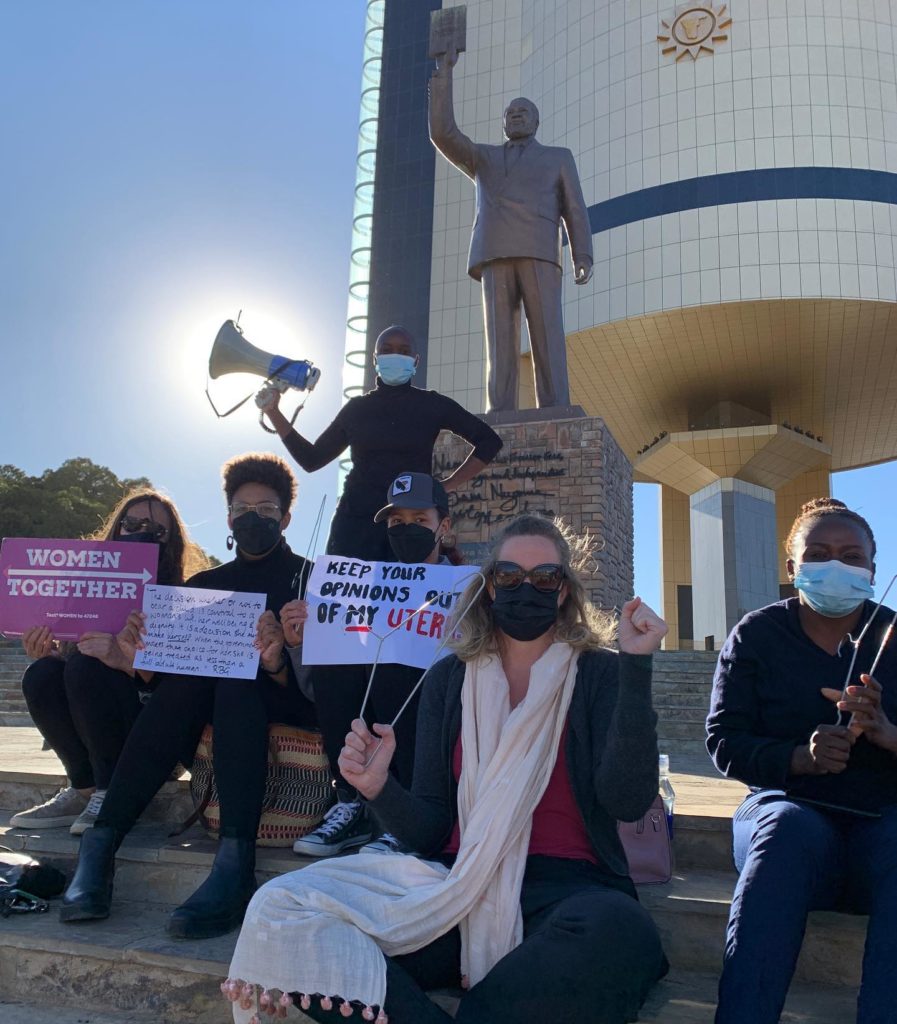
During the opening arguments, Pastor Francios Louw from the CCN stated that abortion leaves an open wound on society, the expectant mother, as well as the unborn fetus.
He added that research shows that most women post abortion fall into feelings of guilt, denial and depression due to the fact that they went through with an abortion.
“They try to abuse alcohol or want to commit suicide. There are higher rates of suicide and psychological problems reported after abortion. It is stated that women are six times more likely to commit suicide after going through with an abortion, while 60% said a part of them has died after committing the abortion. We are humans, who feel things. We are not made of stone,” Pastor Louw said.
He further stated that the legalisation of abortion could lead to a suppressed public conscious as society would be telling children that it is okay to commit “murder”.
“Namibia’s morality and family values are under attack. We are teaching our young ones that what is wrong is not wrong. Although we are a circular state, 80% of Namibians identify as Christian and as such we can still be led by the word,” Pastor Louw said.
Activist and representative member of the VCRN, Ndiilo Nthengwe, presented that Namibia currently has not approved any private institutions to carry out abortions except state hospitals and clinics.
She added that in addition to this, when a woman would like to apply for a sterilization procedure she is required to have a written letter from a psychiatrist and may only be allowed to have the procedure if it’s a threat to her health, if she has a hereditary condition or has psychological problems.
In addition to this, she added that rape victims are required to explained why they have not opened cases when applying for abortion.
Nthengwe stated that all these laws amount to State determined pro-creation and infringes upon the bodily autonomy of woman.
“There are some cases in which the ministry runs out of contraceptives, whilst in other cases people in remote areas cannot access State hospitals which administer abortion procedures. Access to safe abortion is an essential service,” Nthengwe said.
She added that backdoor abortions have an impact on the state’s budget as more money is spent on complications arising from backdoor abortion and as such, the current law should be repealed to create space for a safer and more inclusive abortion law.
Reverberating Nthengwe’s argument’s, former lecturer at UNAM and Gender activist, Dr. Lucy Edward-Jauch stated that over 7,000 women were committed in a space of 10 months due to complications arising from abortions or incomplete abortions.
“Namibia is a secular state, and the current abortion law is in contrast to our democratic laws and constitutional human rights. Only women can fall pregnant, and they are the only ones who can determine if they wish to carry out the pregnancy. The current restrictive abortion laws especially infringe on the rights of black women, as they cannot afford to go to South Africa to carry out abortions legally,” Dr. Edward-Jauch said.
She concluded that fetal rights do not trump the rights of woman.
“Fetal right do not take precedence over the rights of woman. The fetus is not a child and does not have human rights. Restrictive abortion laws cause undue problems to women and their right to life and reproductive health,” Dr. Edward-Jauch explained.