Staff Reporter
NAMPORT, the Namibian ports authority, has dismissed claims of a congestion crisis at the Port of Walvis Bay, stating that increased activity at the port and the rerouting of some ships are normal maritime activities.
This was said by Elias Mwenyo, the executive of commercial operations at Namport, who stated that the volumes of cargo being handled by the Port of Walvis Bay have almost doubled compared with the figures recorded last year, which signals that the economy is healthy.
“We are an enabler of trade as a port. We are sweating the port infrastructure. The rerouting of vessels is normal. If vessel volumes increase at the port, it means more waiting time, some vessels opt not to wait, and such reroute to another port, it is a normal maritime activity,” Mwenyo said.
The statement comes after the Independent Patriots for Change (IPC), in a press release, said that it views with grave concern the mounting crisis at the Port of Walvis Bay, as evidenced by recent notifications from major international shipping lines, including MACS Shipping, Maersk, COSCO and CMA CGM, confirming that multiple vessels are bypassing the country’s shores entirely.
“With vital container vessels such as the Blue Master II, Maersk Sydney, APL Santiago and Cosco Korea omitting Walvis Bay due to severe port congestion, and cargo being offloaded at foreign ports like Cape Town, Luanda and Pointe-Noire for expensive transhipment, Namibia is facing a profound supply chain emergency,” Nelson Kalangula, IPC member of Parliament, said.
He further added that the decision by international carriers to bypass Walvis Bay is not merely a logistical inconvenience; it is an economic blow with far-reaching consequences for every Namibian.
He added that the recent rerouting of carrier vessels has led to the following consequences: local businesses facing severe delivery delays, with crucial goods delayed by weeks (such as on-carriers only expected in early December).
“These disruptions will inevitably drive up operational costs, create artificial shortages and fuel inflation, placing an unbearable burden on consumers already grappling with high costs of living. Escalating logistics costs – forcing cargo to be transshipped through secondary ports introduces exorbitant additional freight, handling and storage costs. These expenses will either cripple small and medium enterprises (SMEs) or be passed directly onto the end consumer,” Kalangula said.
He added that when international liners bypass Walvis Bay, regional clients lose confidence in the country’s corridors, risking the permanent diversion of lucrative transit trade to rival ports in neighbouring countries.
“The international maritime community operates on reliability, predictability and efficiency. The current state of congestion and the resulting vessel omissions project an image of operational failure and institutional unpreparedness. This damages Namibia’s hard-earned reputation as a stable, efficient trade hub and signals to global investors that our critical trade infrastructure is buckling under pressure,” Kalangula said.
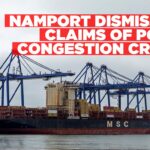
Picture for illustrative purposes only. Photo: The Namibian Ports Authority – Namport