
Staff Reporter
THE Ministry of Environment, Forestry and Tourism has supported the revival of the Otjindakui Community Garden in the Sesfontein Conservancy in the Kunene Region, aiming to improve food security, create income-generating opportunities and reduce human-wildlife conflict by strengthening local livelihoods.
Through its Human-Wildlife Conflict and Wildlife Crime Project, the ministry has helped restore the garden, which produces a variety of crops, including carrots, beetroot, tomatoes, spinach, onions, squash, pumpkins, maize and butternuts.
The produce is intended to provide food for about 200 people, improve local food availability and generate income through the sale of surplus crops.
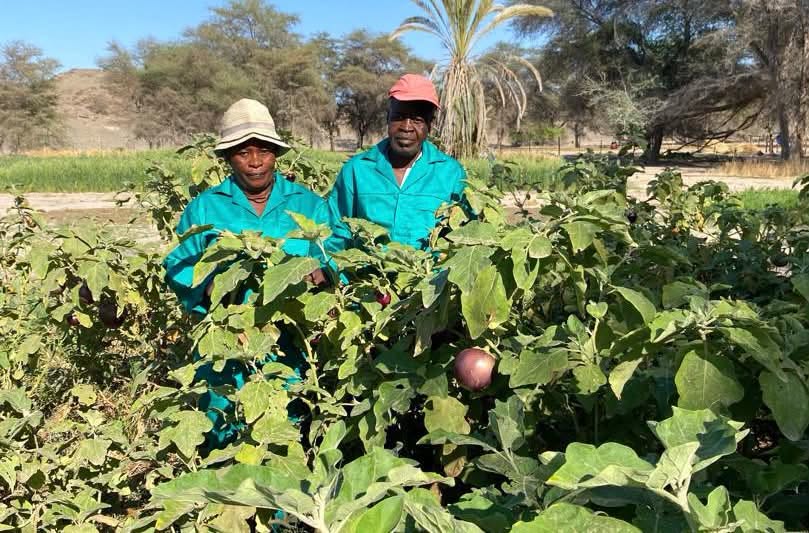
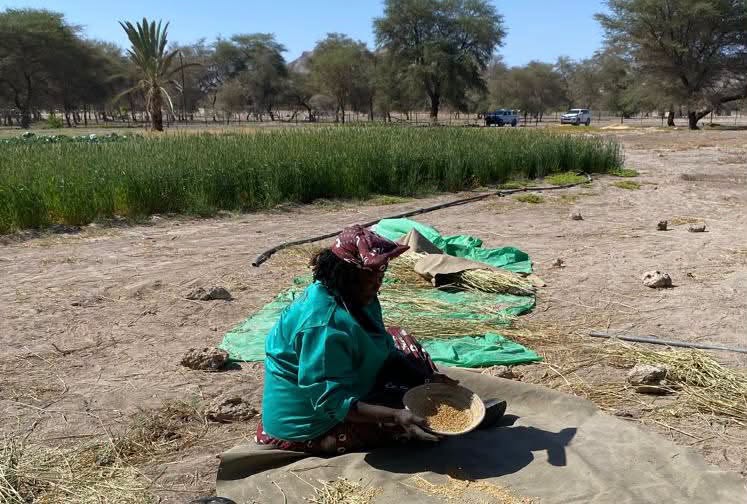
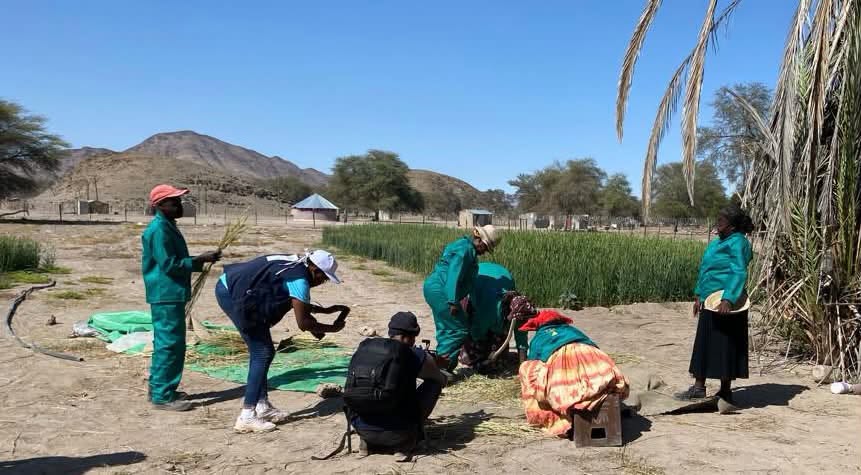
Photos: Ministry of Environment, Forestry and Tourism
The initiative aims to reduce the community’s reliance on natural resources, ease pressure on the environment and minimise competition between people and wildlife. This is expected to support peaceful coexistence between communities and wildlife in the region.
Otjindakui Community Garden is one of four government-supported community gardens in the Sesfontein area. The others are the main Sesfontein garden, Warmquelle and Gowareb.
The garden was initially established by the then Ministry of Agriculture, Water and Forestry in the late 1990s to encourage smallholder farmers to grow crops for household consumption and sale.
The initiative was aimed at improving food security in the arid and drought-prone region.