Staff Reporter
THE Ministry of International Relations has assured the public that the Namibian Government is working with the Angolan Government and other stakeholders to find a lawful, humane and lasting solution to the situation involving suspected Angolan women and children living on the streets in Namibia.
“The Government of the Republic of Namibia remains fully committed to pursuing a lawful, humane, durable and dignified approach to the situation of suspected Angolan women and children wandering the streets of towns in Namibia. The matter continues to be dealt with in consultation with the Government of the Republic of Angola and other relevant stakeholders, consistent with the principles of sovereignty, good neighbourliness, regional cooperation and the longstanding bonds of friendship and solidarity between Namibia and Angola,” the Ministry of International Relations said.
The Ministry made the remarks in response to a report published by Amnesty International on 2 September 2026 on the situation of “Angolan women and children displaced by drought into Namibia”.
The report said Angolans displaced by drought have limited options for regularising their stay in Namibia, as the country’s existing immigration and protection laws do not adequately address the realities of climate-driven displacement. According to the report, this has left many people in an irregular status after crossing the border in search of food, water, grazing land, healthcare, family support and employment following droughts that have destroyed crops, livestock and livelihoods.
Amnesty International also alleged that Angolan children had been subjected to government-facilitated forcible returns, without sufficient publicly available information to establish whether appropriate safeguards had been applied. The report further argued that Namibia’s existing immigration framework does not adequately address the circumstances of people displaced across the border by drought.
“Although Angolan passport holders can enter Namibia visa-free through official border posts for limited periods, this does not provide a right to work, longer-term residence or a dedicated protection pathway. Many people from drought-affected border communities also lack passports or other documentation and use informal crossing points. Once in Namibia without regular status, they have few accessible options to regularize their stay,” the report continues, “This has left thousands of Angolans in fear of arrest, detention and deportation, a fear that shapes daily decisions about whether to seek healthcare and other services. Amnesty International found that for those already living in northern Namibia, housing, water and sanitation conditions fell far short of international law and standards. Many families live in makeshift shelters, built from branches, plastic and cardboard, in severely overcrowded conditions or, in some cases, entirely without shelter.”
The report also alleged that undocumented Angolans were charged higher fees at hospitals than Namibian nationals, leading some to delay seeking treatment until their illnesses became severe or avoid healthcare facilities altogether over fears that they were linked to immigration enforcement.
In response, the Namibian Government reaffirmed that the management of international migration, including the entry, transit and presence of persons in Namibia, is conducted in accordance with the country’s Constitution, immigration laws and policies, as well as its international and regional obligations under treaties and conventions to which Namibia is a party.
“These obligations include the protection of human rights and fundamental freedoms, the safeguarding of the rights and welfare of women and children, respect for the family unity, and access to essential basic services for all persons on Namibian Territory. The movement of persons across the Namibia—Angola border is a matter of mutual interest and concern, which requires close cooperation and coordination between our two countries,” the Ministry of International Relations said.
According to the ministry, the government is willing to engage openly and constructively with all relevant stakeholders with a view to ensuring that matters concerning international migration are addressed in a manner consistent with applicable national laws and Namibia’s international obligations, as well as the principles of humanity, dignity, security and regional cooperation.
“The Government remains committed to protecting the rights and dignity of all persons on its territory and to address matters of humanitarian concern lawfully, and in a principled and collaborative manner,” the Ministry of International Relations said.
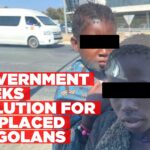
Picture for illustrative purposes only. Photo: Contributed