Staff Reporter
THE Meatco Foundation is set to roll out its Farmer Business School (FBS) programme nationally from October 2026, with approximately 800 smallholder and subsistence farmers expected to receive practical business and farming skills aimed at helping them transition towards more commercially viable and resilient farming enterprises.
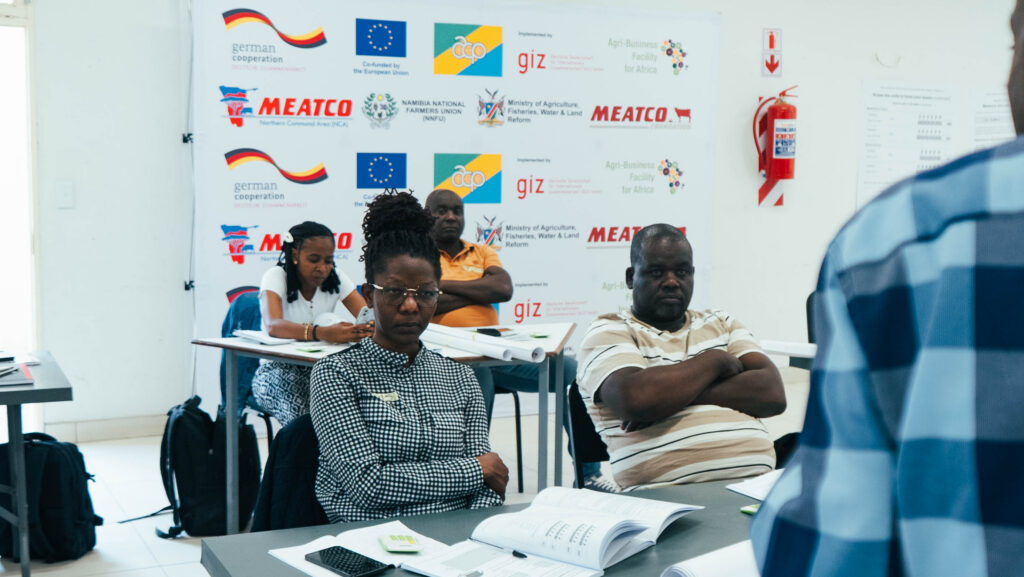
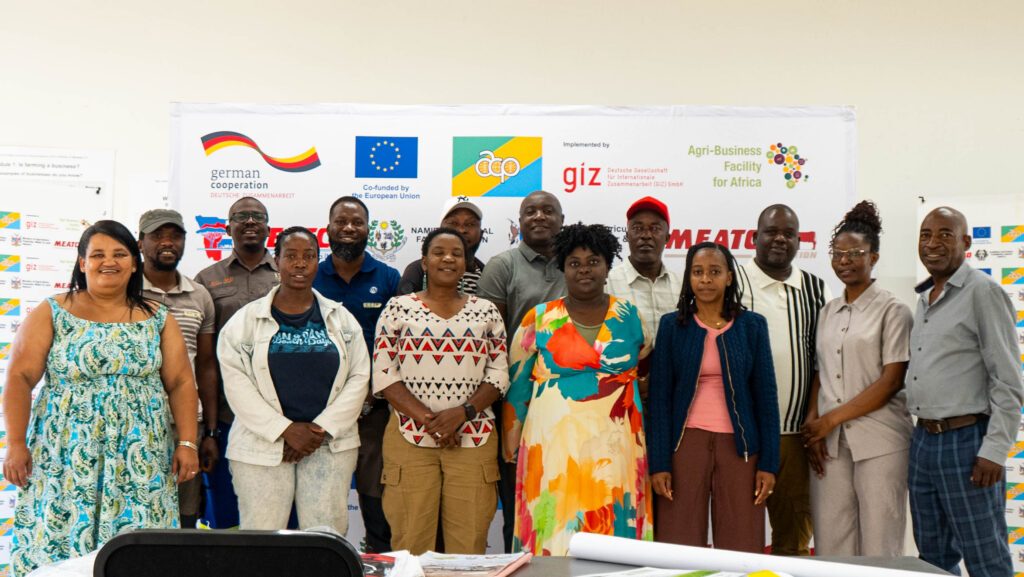
The planned rollout follows the successful completion of a five-day FBS Trainer Refresher Training held at the Mashare Agricultural Development Institute (MADI) in the Kavango East Region from 7 to 11 September 2026.
The initiative follows a pilot programme conducted at Tsumamas in the Kunene Region in May 2026 and is designed to help farmers approach farming not only as a means of food production, but also as a business requiring planning, financial management, market awareness, sound production practices and informed decision-making.

Photos: Meatco
The Meatco Foundation is implementing the programme in partnership with Meatco Northern Communal Areas (NCA), the Namibia National Farmers Union (NNFU), the Ministry of Agriculture, Fisheries, Water and Land Reform (MAFWLR) and GIZ Farming for Resilience (F4R).
The programme forms part of the Joint Action “Business Support Facility for Resilient Agriculture Value Chains”, supported by the European Union (EU), the Organisation of African, Caribbean and Pacific States (OACPS) and the German Federal Ministry for Economic Cooperation and Development (BMZ). It is implemented by GIZ through the Competitive Matching Grant Fund under the Agri-business Facility.
The latest training brought together 12 agricultural extension officers and technicians, predominantly from MAFWLR, to strengthen their capacity to deliver the FBS methodology to farmers in different regions.
Meatco Foundation Manager Dalicia Oliver said the programme was intended to create lasting capacity within farming communities rather than simply provide short-term training.
“The Meatco Foundation is committed to supporting farmers with the knowledge and practical tools required to move beyond subsistence production and progressively develop viable, commercially oriented farming enterprises. By investing in people and strengthening the capacity of trainers on the ground, we are creating a model that can continue supporting farmers beyond the life of an individual project,” Oliver said.
The involvement of government agricultural extension officers is expected to strengthen the programme’s reach and sustainability by providing a direct link between trained facilitators and farming communities across the country.
MAFWLR Technician Vevangapi Kahipura said the programme would give farmers practical knowledge that could contribute to improved production, food security and profitability.
“We are expected to go out and train farmers to familiarise themselves with technologies that will help improve their farming practices. This would increase food security and nutrition at the farm level and help farmers make good profits from their farming enterprises,” Kahipura said.
The FBS programme follows a three-phase approach: piloting the methodology, building the capacity of trainers and rolling out the training to farmers across Namibia.
Farmers participating in the programme will be exposed to practical tools for managing their farming activities as businesses, including farm planning, production, financial management, record-keeping and market orientation.
For the Meatco Foundation, the national rollout represents a broader investment in farmer empowerment and the development of Namibia’s agricultural value chains.
The Foundation believes that strengthening farmers’ business knowledge and confidence can help unlock greater productivity, improve household incomes and support the gradual transition of emerging farmers into commercially oriented enterprises.
The move from a regional pilot to a national programme is expected to establish a sustainable farmer-development platform, with trained facilitators supporting farmers beyond the initial project intervention.
The initiative forms part of the Foundation’s broader commitment to leveraging development interventions to strengthen the livestock sector and create opportunities for smallholder and subsistence farmers to participate more meaningfully in Namibia’s agricultural economy.