
Staff Reporter
BOTSWANA and Namibia have completed the feasibility study for the proposed Trans-Kalahari Railway, marking a major step towards determining the project’s financing, procurement and implementation.
The milestone was confirmed by Botswana’s Minister of Transport and Infrastructure, Noah Salakae, and Namibia’s Minister of Works and Transport, Veikko Nekundi, during a Joint Ministerial Committee meeting in Kasane.
The feasibility study, prepared by external consultants, provides recommendations on the proposed route alignment, engineering requirements, commercial viability and possible implementation models. The two governments will now review the findings and determine appropriate financing structures and procurement processes.
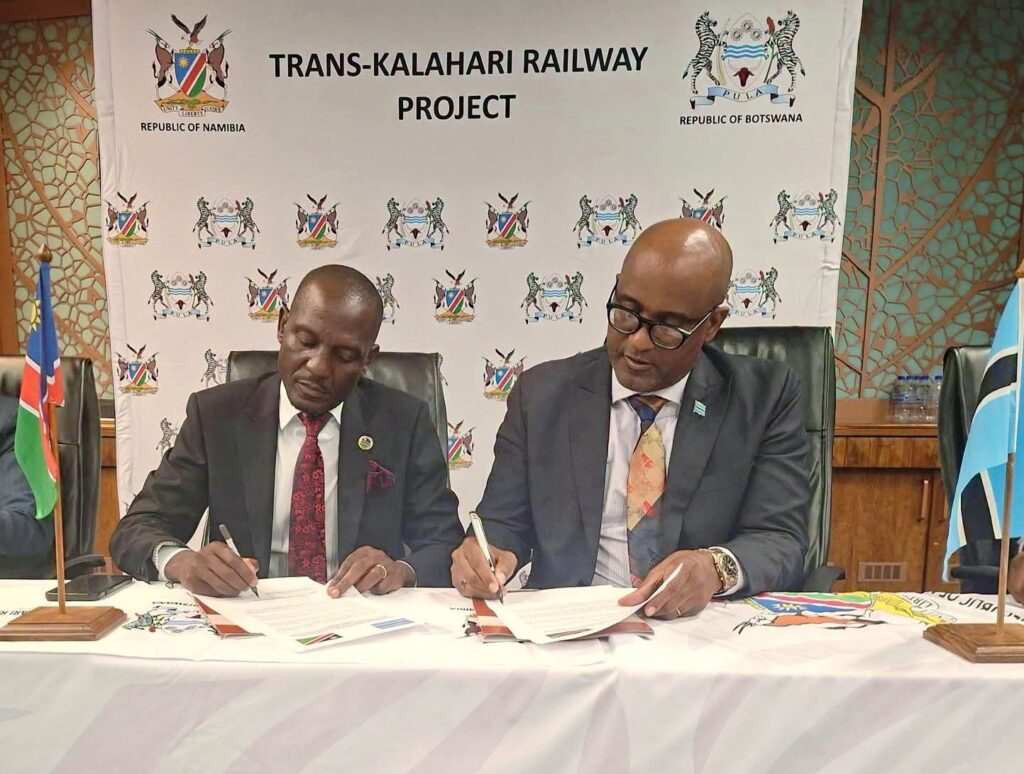
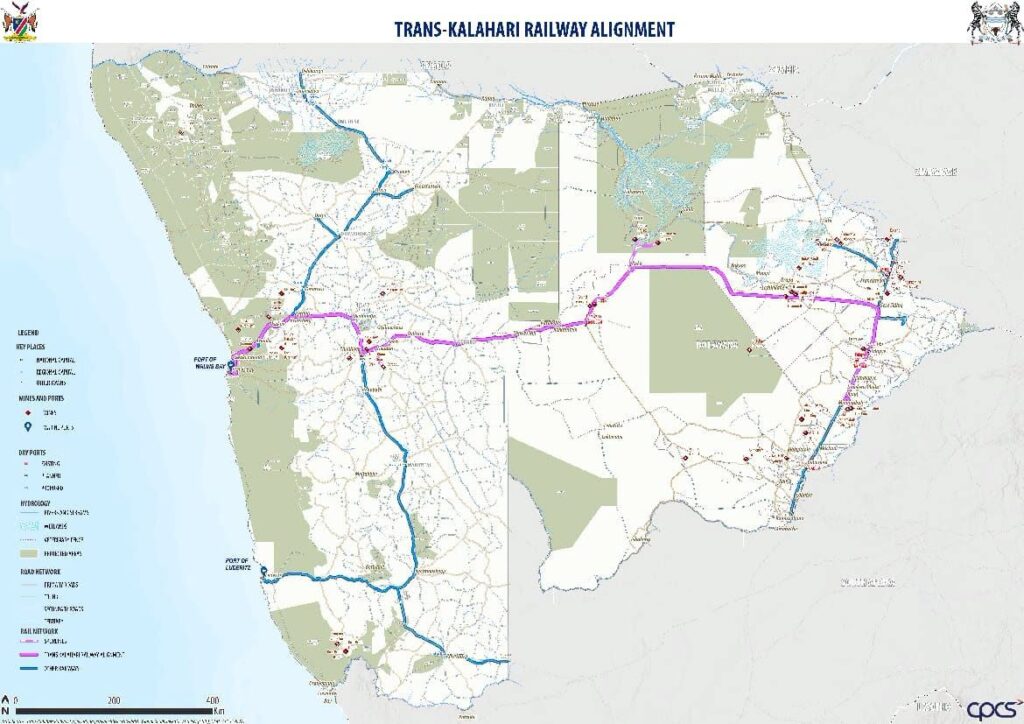
Photos: Ministry of Transport and Infrastructure – Botswana
The Trans-Kalahari Railway will span approximately 1,850 kilometres, linking Botswana and Namibia through a combination of new and upgraded railway infrastructure. The route will comprise about 1,025 kilometres of greenfield railway, involving entirely new track, and 825 kilometres of brownfield railway, involving upgrades to existing rail lines.
The combination of new construction and upgrades is intended to accelerate delivery of the project while maximising the use of existing railway infrastructure.
The proposed railway is expected to link Botswana’s mining areas with Namibia’s Port of Walvis Bay, creating a dedicated freight corridor for bulk commodities such as copper, coal, manganese, soda ash and uranium.
The project is expected to shift significant volumes of heavy freight from road to rail, reducing pressure on the A1 and A2 highways, improving road safety, lowering road maintenance costs and reducing carbon emissions.
The railway is also expected to support economic activity in communities along the proposed route, including Charleshill, Ghanzi, Kuke and Sese Siding, through employment opportunities and the development of industries linked to the rail network.
The project forms part of the broader Trans-Kalahari Corridor and is expected to complement the existing Walvis Bay Corridor logistics network, strengthening Namibia’s position as a gateway for Botswana and other landlocked countries in the region.
Both governments said continued engagement with stakeholders and affected communities would remain important as the project progresses, particularly regarding land acquisition, environmental approvals and social considerations.
Officials have indicated that construction could begin as early as December 2026, subject to financing, procurement and regulatory approvals.
The project has been under development for more than a decade. Botswana and Namibia signed a Memorandum of Understanding on the development of the Trans-Kalahari Railway in 2010, followed by a bilateral agreement in 2014 covering the development of the cross-border railway and associated facilities.
The two countries renewed their commitment to the multibillion-dollar project in 2022, with the railway initially envisaged as a link between Botswana’s mineral resources and Walvis Bay.
With the feasibility phase now complete, attention is expected to shift towards securing funding, determining freight commitments and tariffs, and establishing the procurement and risk-sharing arrangements needed to move the project towards construction.