Staff Reporter
THE National Council Standing Committee on Transport, Infrastructure and Housing hosted a stakeholder engagement meeting in the Erongo Region on the motion, “Urgent Need for Critical Measures to Combat the Rising Road Accidents in Namibia.”
According to statistics from the Motor Vehicle Accident Fund, a total of 1 333 road crashes were recorded across Namibia between 1 January and 21 June 2026. The crashes resulted in 2 273 injuries and 229 fatalities during the six-month period.
George !Garab, the chairperson of the Transport Committee, said that the committee seeks recommendations to reduce road traffic accidents, assess the effectiveness of existing road safety regulations, legislation, policies, enforcement mechanisms and institutional arrangements, and identify factors contributing to the high rate of road accidents.
“We gather today at a time when our nation continues to confront one of the most painful and urgent public safety challenges of our time, the escalating number of road traffic crashes and the unacceptable loss of precious human lives on our roads. Road accidents are not merely statistics recorded in reports; they represent fathers, mothers, children, breadwinners, professionals and future leaders whose lives are suddenly interrupted. Each life lost leaves behind grieving families, affected communities and a nation that bears the social and economic consequences of these tragedies,” !Garab said.
He added that the National Council has therefore deemed it necessary to place this matter firmly on the national agenda through the motion on “The Urgent Need for Critical Measures to Combat the Rising Road Accidents Crisis in Namibia.”
“This motion is anchored on the recognition that road safety is not only a transport matter; it is a national development imperative, a public health concern, an economic issue and a fundamental responsibility of the State to protect human life. As Namibia advances towards the implementation of the Sixth National Development Plan (NDP6), road safety must remain an integral component of our national transformation agenda. Efficient, safe and reliable transport systems are essential enablers of economic growth, regional integration, tourism development, trade facilitation and equitable access to services,” !Garab said.
He added that international experience has demonstrated that road crashes are preventable.
“The traditional approach of attributing accidents solely to driver behaviour is no longer sufficient. We must embrace the principles of the Safe System Approach, which recognises that human beings make mistakes and that our transport systems must therefore be designed, managed and regulated in a manner that prevents those mistakes from resulting in death or serious injury,” !Garab said.
He added that the Safe System Approach calls upon us to address the interaction between all elements of road safety — safe roads, safe vehicles, safe speeds, safe road users and effective post-crash response mechanisms. It requires collaboration among government ministries, agencies, private sector players, communities and individuals.
“This means strengthening road infrastructure standards; improving vehicle inspection and roadworthiness systems; enhancing law enforcement capacity; addressing dangerous driving behaviours; improving emergency medical response; strengthening public awareness; introducing innovative technologies; and ensuring that vulnerable road users, including pedestrians, cyclists, passengers and communities living along major transport corridors, are adequately protected. This engagement is therefore not merely a consultation exercise. It is part of Parliament’s evidence-based oversight responsibility to understand the realities on the ground, assess existing interventions, identify gaps and recommend practical, sustainable and implementable solutions,” !Garab emphasised.
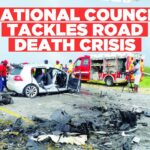
NATIONAL CARNAGE: File photo for illustrative purposes only.